If you want to press a few ironable linen scarves flat, a compact steam iron is usually the best fit. A steam generator is more worthwhile if you also iron a lot of other laundry or often tackle stubborn creases, according to the Consumers’ Association. A clothes steamer is best for freshening garments while they’re hanging, rather than achieving a crisp, pressed finish. Always follow the care label on the individual scarf: the label, not just the fibre name, determines the maximum temperature, as GINETEX advises.
Who is this for?
For anyone who wants to press a few scarves quickly
After a busy week at school, you may want to neaten up a few scarves without getting a large appliance ready. A compact steam iron is well suited to a small ironing job; the Consumers’ Association cites compact size and a light ironing workload as reasons to choose this type. The care label tells you what the fabric can withstand.
For anyone who handles delicate fabrics with care
If your scarf has a lining, delicate details or an unusual care label, follow the instructions on the label. GINETEX advises using the maximum temperature stated there, rather than relying only on the fibre name or a general claim about the appliance.
For anyone who irons scarves as part of a larger load
If you’re ironing scarves along with lots of other laundry, or often deal with stubborn creases, the extra steam from a steam generator may be useful. The Consumers’ Association also points out that these appliances cost more and have a separate water tank and steam hose.
What should you look for?
Standard steam iron
Choose this if: you mainly want to press a few ironable linen scarves flat and are looking for a compact appliance.
Bear in mind: the water tank is built into the iron; a steam generator may be a better choice for larger loads of laundry.
Steam generator
Choose this if: the scarves are part of a larger weekly ironing load, or you often have stubborn creases to tackle.
Bear in mind: this type has a separate water tank and steam hose, and costs more than a compact iron, according to the Consumers’ Association.
Clothes steamer
Choose this if: you mainly want to freshen a scarf while it’s hanging and a crisp, pressed finish isn’t your priority.
Bear in mind: capacity and running time vary by model; claims about other fabrics don’t prove that it will press linen scarves effectively.
| What to consider |
What to check before buying |
Who should pay extra attention? |
| Quick to start and easy to store |
Check the dimensions, tank capacity and how much storage space the appliance needs. |
If I only have a few scarves to iron after a busy week, I want to get started quickly and put the appliance away easily. Around 36% of consumers prioritise speed and compact storage. |
| Pressing out stubborn creases |
Look at the difference between continuous steam and a short steam boost, and consider whether you also iron lots of other laundry. |
When there are creases, I want to press a scarf smooth, not just freshen it while it’s hanging. Around 29% of consumers give pressing performance their top priority. |
| Protecting the scarf from damage |
Check the ironing symbol and whether ironing and steam are allowed; adjust the settings accordingly. |
If my scarf has an unusual care label, a lining or delicate details, the permitted treatment matters more than speed or extra steam. Around 21% of consumers prioritise fabric protection. |
| Maintenance and running costs |
Check the instructions for the exact model to find out how to descale it, what type of water to use and whether it needs a replaceable cartridge. |
If I use the appliance regularly, I want to know what maintenance it needs and whether it requires cartridges. Around 14% of consumers prioritise easy maintenance. |
Avoiding common buying mistakes
-
Assuming linen can always be ironed on the highest setting
The fibre name alone doesn’t determine the maximum ironing temperature. A scarf may have its own care label, lining or delicate details.
Before ironing, check the ironing symbol and adjust the temperature and steam to suit the individual scarf.
-
Buying a clothes steamer when you want to press scarves flat
A steamer and an iron are designed for different ways of working. A steamer’s claims for other fabrics don’t prove that it will give a linen scarf a crisp, pressed finish.
Decide in advance whether you want to freshen the scarf while it’s hanging or press it flat.
You may also need an iron and a suitable surface for pressing scarves flat.
-
Confusing an anti-scale feature with maintenance-free use
According to the Consumers’ Association, an anti-scale system slows limescale build-up, but maintenance is still needed.
Check the manual for the exact model to see how to clean the system or replace a cartridge.
Models with replaceable cartridges may have ongoing costs.
Brands to consider
Philips
Worth considering if you’re weighing up a compact iron for smaller jobs against a steam generator for a larger ironing load.
- Philips lists a ceramic soleplate and a 300 ml tank for the DST3031/20, and a separate 1.5 l tank and OptimalTEMP for the GC7840/20.
- Philips’ fabric protection claim for a model doesn’t replace the care label on your scarf; these features don’t automatically apply to other models.
Tefal
The range includes both steam irons for pressing flat and compact clothes steamers for use on hanging garments.
- Tefal lists a continuous steam output of 45 g/min for the Easygliss Plus FV5736E0 and a 70 ml tank and vertical steaming for the Pure POP DT2022E1.
- These are model specifications, not independent tests on linen scarves. Check the full model code when viewing an offer.
Braun
The TexStyle range is worth considering if a precision tip and controls for different ironable fabrics are important to you.
- Braun lists a precision tip, iCare mode and automatic shut-off for the TexStyle 9 SI9188EBK.
- The ‘safe temperature’ description is Braun’s claim for ironable fabrics, not for textiles whose care label says not to iron.
Rowenta
Worth considering if model-specific support and spare parts are important factors in your choice.
- Rowenta asks for the product reference number to help you find the right spare part.
- A spare-parts catalogue doesn’t mean that every part is available for every model.
Joybuy products for pressing scarves flat
These product picks are steam irons for scarves you want to press flat. When considering a specific offer, check for the required CE marking and safety information: CE marking is required for electrical appliances covered by the relevant EU rules, according to the Dutch Government and the European Commission.
 No image available
Philips 3000 Series Steam Iron DST3031/20
A steam iron for anyone who wants to press a few scarves flat; follow the scarf’s care label for temperature and steam settings.
- Continuous steam: 40 g/min
- Steam boost: 180 g
- Water tank: 300 ml
- Ceramic soleplate
View at Joybuy
 No image available
Xiaomi Handheld Steam Iron BHR9034EU
A good fit if you’re looking for a lightweight iron with manual temperature and steam controls; adjust how you use it to suit the scarf’s care label.
- Removable tank: 0,15 l
- Adjustable thermostat
- Vertical steam
- Dual voltage
View at Joybuy
 No image available
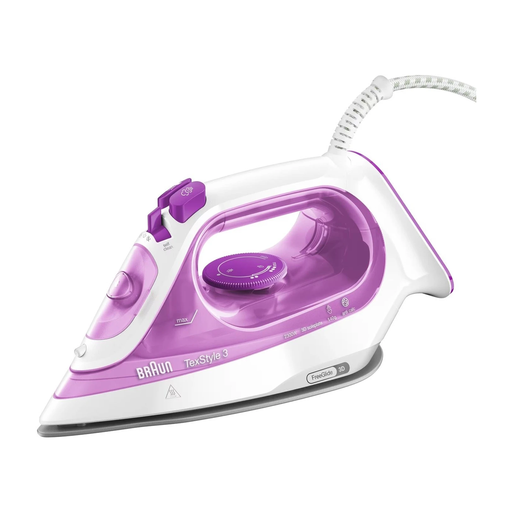
Braun TexStyle 3 SI3030 Steam Iron
An option if you want to iron scarves flat and value a precision tip for seams and pleats.
- Ceramic soleplate
- Water tank: 270 ml
- Self-cleaning system
- Precision tip
View at Joybuy
 No image available
Braun FreeStyle 5 SI5037 Steam Iron
A good fit if you’re looking for an iron with continuous steam and a steam boost for flat ironing; follow the scarf’s care label.
- Continuous steam: 50 g/min
- Ceramic soleplate
- Water tank: 300 ml
- Precision tip
View at Joybuy
 No image available
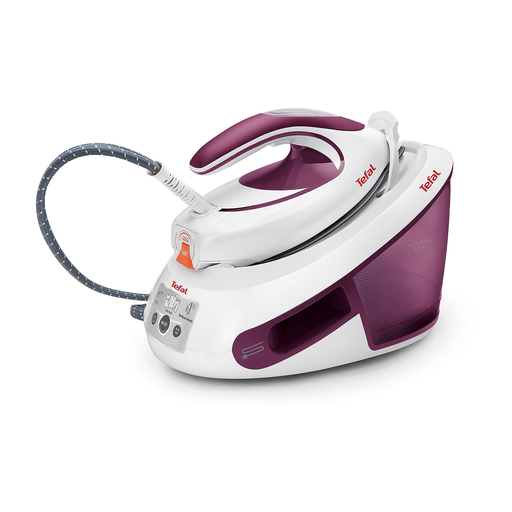
Tefal Express Anti-Calc SV8054 Steam Iron
An option if you’re considering a larger water tank for your ironing; check that the settings are suitable for the scarf’s care label.
- Power: 2800 W
- Variable steam: up to 50 g/min
- Water tank: 1,8 l
- Durilium soleplate
- Precision tip
View at Joybuy
Frequently asked questions
Can I iron every linen scarf on the highest setting?
No. Choose the maximum soleplate temperature according to the scarf’s care label, not just its fibre name. Don’t treat a scarf marked ‘do not iron’ as though a linen setting is automatically suitable.
How can I stop a scarf getting too wet while ironing?
Iron the fabric when it’s slightly damp, don’t keep pressing the steam button, and iron it dry without steam after steaming, advises the Consumers’ Association. Don’t use steam before the iron is hot enough.
What water and maintenance does a steam iron need?
Follow the instructions for the exact model to check what water to use and how to descale it. The Consumers’ Association says that steam irons can generally be used with Dutch tap water; check the model instructions, especially if mixing it with demineralised water. Don’t add perfume or ironing water.
Is a two-year manufacturer’s guarantee the same as the legal guarantee in the Netherlands?
No. The Dutch Government states that the Netherlands has no fixed legal guarantee period; a manufacturer’s guarantee is an extra. If a product is faulty, contact the seller.
What safety rule applies to an electric iron sold in the Netherlands?
CE marking is required for electrical appliances covered by the relevant EU rules, according to the Dutch Government and the European Commission. Check the marking and safety information for the specific offer; a mention on a product page doesn’t confirm that the item delivered will have the same marking.


