
Scarf wearer with different care labels
You want to follow the care label for each scarf, rather than ironing every scarf labelled ‘linen’ on the same setting. GINETEX stresses that the label determines the maximum temperature.


For one or a few scarves, a compact steam iron with adjustable steam is a practical choice. A steam generator is better suited to anyone who also regularly irons larger loads of laundry with stubborn creases. Always follow the care label on the individual scarf: GINETEX advises basing the maximum temperature on the label, rather than on the word ‘linen’ alone.
You want to follow the care label for each scarf, rather than ironing every scarf labelled ‘linen’ on the same setting. GINETEX stresses that the label determines the maximum temperature.
You usually iron one or a few scarves and want an appliance that’s easy to pick up and put away. The Consumers’ Association recommends considering a steam iron if you don’t iron much or have limited storage space.
As well as scarves, you regularly iron other fabrics with stubborn creases. The amount of laundry you have and the space available can help you decide whether a larger water tank would be useful.
Start by checking the care label on each scarf, then consider whether you mainly do quick ironing sessions or regularly iron larger loads as well.
| What to consider | What should you look for? | Who should pay particular attention? |
|---|---|---|
| Settings for each scarf | Read the care label and check whether temperature and steam can be adjusted separately. GINETEX symbols indicate maximum soleplate temperatures of 200 °C, 150 °C and 110 °C; steam must not be used at 110 °C. | Do you want to follow the care label for each of your different scarves? Around 39% of consumers prioritise having suitable settings for each scarf. |
| Quick ironing routine | Compare the size and weight, and check whether the tank is practical for a short session. The Consumers’ Association cites having little to iron and limited storage space as reasons to consider a steam iron. | Do you usually have just one or a few scarves to iron, and want to store your appliance compactly? Around 31% of consumers prioritise this kind of quick routine. |
| Capacity for larger loads | Estimate how much you iron besides scarves and how much room you have for a larger appliance. For longer sessions, compare the continuous steam output in g/min, not just the steam shot. | Do you also regularly iron larger loads of laundry with stubborn creases? Around 15% of consumers prioritise this extra capacity. |
| Maintenance and ease of use | Check the descaling instructions in the manual and, for the exact model, look for features such as an anti-drip function or automatic shut-off. | Do you mainly want to focus on maintenance and ease-of-use features when choosing? Around 15% of consumers make this their main consideration. |
The permitted treatment depends on the care label on the individual scarf. Going by the fibre name alone could lead you to choose a temperature or steam setting that isn’t allowed.
Read the care label before ironing, then set the temperature and, if appropriate, the steam.
A steam shot and continuous steam output describe different functions. A high steam-shot figure on its own doesn’t tell you how much steam an appliance continues to produce during a longer ironing session.
For longer sessions, compare the stated continuous steam output and tank size separately.
A generator’s larger tank and extra steam are most useful if you also have a lot of laundry to iron. The larger appliance takes up more storage space and may require a suitable ironing board.
First work out how much you really iron besides scarves, and take into account the space the appliance will need.
In the Netherlands, there is no set statutory guarantee period that applies equally to every product. ACM ConsuWijzer explains that the seller may be responsible if, under normal use, a product doesn’t perform as you could reasonably expect.
Keep your proof of purchase and contact the seller if the appliance develops a fault prematurely.
The Easygliss Plus FV5736 is a standard steam iron worth considering if you’re looking for adjustable steam for quick ironing sessions.
The TexStyle 5 SI5256BL is worth considering if you want a manual temperature dial and adjustable steam.
The Azur 8000 Series DST8050/20 is a model to compare if you iron other laundry as well as scarves.
The BA 3261 is worth comparing if you’re looking for an iron with variable steam output.
These products available at Joybuy are handheld steam irons; their settings and features vary by model. Follow the care label for each scarf.
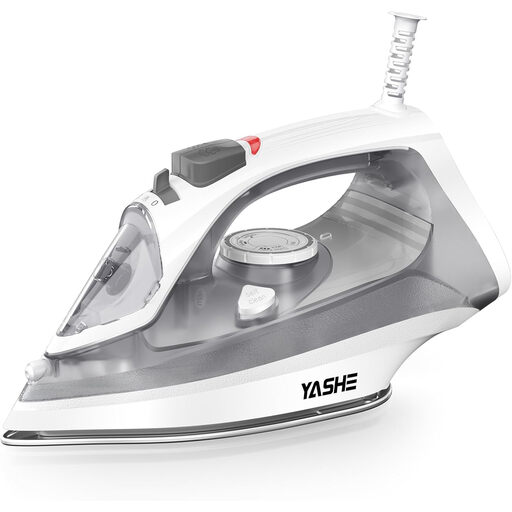 No image available
The adjustable thermostat and steam control are useful if you want to follow the care labels on different scarves.
 No image available
Five temperature settings and several steam settings give you options for different ironing tasks; only use settings permitted by the scarf’s care label.
 No image available
The manual temperature and steam controls can be useful if you want to follow the care label for each scarf.
 No image available
This model is described as compact and lightweight. Its manual temperature and steam settings are useful if you iron scarves with different care labels.
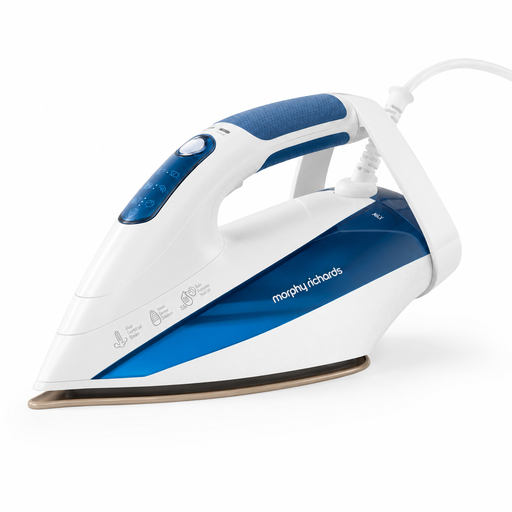 No image available
The variable steam and precision tip are useful features if you also want to iron the edges of scarves.
No. Follow the care label on the individual scarf. GINETEX advises using the maximum temperature shown on the care label; a symbol indicating a maximum of 110 °C means you must not use steam.
Follow the descaling instructions for the exact model. The Consumers’ Association notes that limescale can affect performance; check the manual for how often to descale and the correct procedure.
If you only need to iron one scarf, a standard steam iron is likely to be more suitable. A generator makes more sense if you also do a lot of ironing or regularly tackle stubborn creases, but it takes up more space.
In the Netherlands, you may still be covered by statutory consumer rights. ACM ConsuWijzer explains that there is no fixed time limit and that the seller may be responsible if the product doesn’t perform as you could reasonably expect.
Electrical equipment covered by the EU Low Voltage Directive must meet safety requirements and obligations concerning matters such as CE marking and safety information. Check that the model being offered is suitable for use in the Netherlands; a brand name alone doesn’t confirm this.