If you only iron a few placemats from time to time, a regular steam iron is often more practical. A steam generator becomes a more appealing option if you also regularly tackle larger piles or stubborn creases. First, check the care label, then weigh up the space needed, ease of handling, steam settings and maintenance.
Who is this relevant to?
If you iron a few placemats
You want to smooth out a small amount of table linen after a weekend away and decide whether a separate steam station is worth the extra space. The Dutch Consumers’ Association describes a regular steam iron as a practical option if you do little ironing or have limited storage space.
If you iron larger piles
You iron your placemats as part of a longer session and want a generously sized water tank and an iron that’s easy to handle. Remember to consider how much space the base station takes up, too.
If you take care with textiles
You want to tackle creases without ignoring instructions about colour, finish or any blended fibres. GINETEX explains that the care label indicates the most intensive treatment the specific item can withstand.
What should you look for when choosing?
Regular steam iron
Suitable for: ironing a few placemats occasionally, getting started quickly or having limited storage space.
The trade-off: the Dutch Consumers’ Association describes this as a more compact option for lighter ironing loads; the water tank is usually smaller than that of a steam generator.
Compact steam generator
Suitable for: ironing placemats regularly and wanting to refill less often during a longer session.
The trade-off: the separate tank can be handy for longer ironing sessions, but the station takes up more space on the shelf and in the cupboard.
Larger steam generator
Suitable for: regularly tackling large piles or heavier items as well as placemats.
The trade-off: a larger station with a higher stated steam output needs more space; more steam doesn’t guarantee better results on every textile.
Compare the appliances based on what your ironing session calls for: tackling creases, finishing a quick job, treating the placemats according to their care label and putting the appliance away afterwards.
| Factor to consider |
What to look for when buying |
Who is this important for? |
| Tackling creases |
Compare adjustable continuous steam with a steam boost; follow the care label. |
If my main aim is to remove creases from my placemats, I look for a setting that suits the fabric and the ironing session. Around 33% of consumers prioritise crease removal. |
| Quick ironing sessions |
Consider the space available on your ironing board and in your cupboard, the weight of the iron and the model’s stated heat-up time. |
If I only want to iron a few placemats, I also consider how quickly I can get the appliance ready and put it away again. Around 27% of consumers prioritise quick ironing sessions. |
| Fabric finish |
Check the ironing symbol and see whether the steam and temperature settings can be adjusted. |
If I want to protect the colour or finish of my placemats, I base the treatment on the care label for those specific placemats. Around 20% of consumers prioritise fabric care. |
| Maintenance and space |
Check the descaling method, any replacement parts and the dimensions of the station. |
If I’m also thinking about maintenance and storage, I want to know what the appliance will need at home and how to look after it. Around 20% of consumers put these factors first. |
The percentages are a general indication for this specific ironing situation, not for the Dutch market as a whole. The Dutch Consumers’ Association discusses, among other things, the trade-off between doing little ironing and making space for a steam generator; GINETEX explains the meaning of textile care symbols.
Pitfalls to avoid when buying
-
Buying a steam generator just for a few placemats
A steam generator can be a good fit if you have a lot of ironing to do, but its base station is larger and heavier than a regular iron. For a small ironing job, the extra set-up and storage may be less worthwhile than the larger tank.
First, work out how much you usually iron in one go, then measure the space available on your ironing board and in your cupboard.
-
Assuming a high steam boost means proven ironing results
A steam boost is different from continuous steam. Neither figure alone predicts how your placemats will look after ironing.
Compare the stated continuous steam output and adjustability separately. If it matters to your decision, look for reviews describing ironing results under similar conditions.
-
Assuming an anti-scale feature means no maintenance is needed
According to the Dutch Consumers’ Association, an anti-scale system can slow the build-up of limescale, but maintenance is still required. Some systems use replaceable anti-scale cartridges.
Before buying, read the descaling instructions for the exact model and check whether it needs replacement parts.
Brands to compare
Philips
The 3000 Series includes the PSG3000/20 steam generator, which is worth comparing if stated continuous steam output matters to you.
- Philips gives the PSG3000/20 a continuous steam output of 120 g/min and a steam boost of 350 g.
- These are Philips specifications, not an independent assessment of its ironing performance on linen placemats. Check the maintenance instructions for this model, too.
Tefal
The Express Easy SV6131 is a model to compare if you want to be able to top up the water during a longer ironing session.
- Tefal lists a removable 1,7 l tank, Calc Clear and a locking system for the SV6131.
- A larger tank doesn’t remove the need to consider storage space and maintenance.
Braun
The CareStyle 7 Pro IS7286BK is a larger steam generator to compare if you iron frequently and have a lot to get through.
- Braun lists a continuous steam output of 190 g/min and several programmes for the IS7286BK.
- The product specifications don’t tell you what results you’ll get on your placemats. A larger station also needs enough space.
Joybuy products
These Joybuy products are steam generators for anyone considering a steam station for placemats and other items to be ironed.
 No image available
Philips 3000 Series steam generator PSG3000/20
An option to compare if you’re looking for a steam generator for placemats and longer ironing sessions.
According to the product name: 2400 W, a steam boost of 350 g and a 1,4 l water tank.
View at Joybuy
 No image available
Philips PerfectCare Compact Essential GC6842/30
A model to include in your comparison if you’re considering a compact steam generator for placemats and other items to be ironed.
View at Joybuy
 No image available
Tefal SV8026 Express Power steam generator
A model to compare if you’re weighing up a steam generator against a regular steam iron for your ironing.
View at Joybuy
 No image available
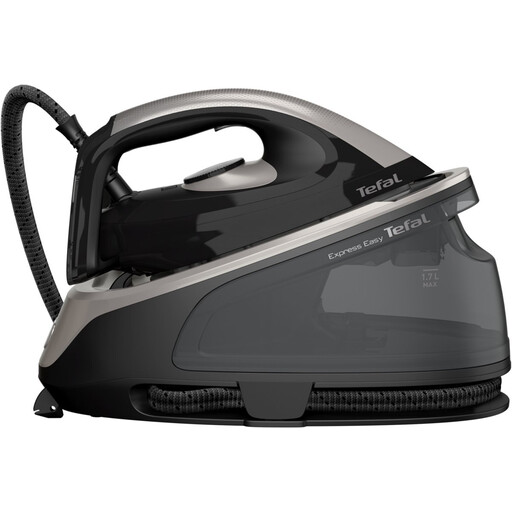
Tefal SV6140 Express Easy steam generator
An option to compare if you combine placemats with other items to be ironed during longer sessions.
View at Joybuy
 No image available
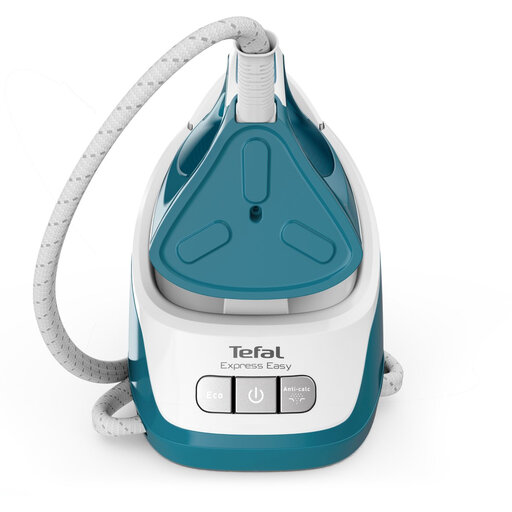
Tefal SV6131 Express Easy steam generator
An option to compare if you want to refill less often during a longer ironing session.
According to the product name: 2400 W, 5,8 bar, a steam boost of 350 g and a removable 1,7 l tank.
View at Joybuy
Frequently asked questions
Do you need a steam generator for a few linen placemats?
Not necessarily. The Dutch Consumers’ Association recommends a regular steam iron if you do little ironing, have limited space or are on a tight budget. A steam generator may be more appealing if you also regularly iron larger quantities.
Can you steam-iron all linen placemats on the highest setting?
No. Don’t choose a setting based on the fibre name alone. GINETEX explains that the care label indicates the most intensive treatment the specific item can withstand. Check it before selecting the temperature or steam setting.
What water should you use, and does a steam generator need descaling?
Follow your model’s instructions for the type of water to use and for descaling. The Dutch Consumers’ Association says that steam irons and steam generators are generally designed for tap water, but limescale maintenance is still necessary. Also check the instructions for using softened water, if applicable, and don’t use water containing perfume or other additives.
What rules apply to electrical appliances and online shopping in the Netherlands?
Electrical appliances must meet the relevant product safety requirements. According to the Netherlands Enterprise Agency, the CE mark is a declaration of conformity from the manufacturer, not an independent safety certification. The Dutch government says that, in many cases, you have 14 days to change your mind when buying online from a business. Exceptions and the terms of the specific purchase may apply.


