
Anyone who wants to press a few napkins quickly
You want to smooth out a few linen napkins after getting home, without having to set up a large appliance.


For a few linen napkins, a standard steam iron and ironing board are usually the most practical choice. A steam generator is worth considering if you regularly iron large piles. Follow the care label and iron the napkins when clean and slightly damp; after steaming, let them dry with the steam switched off. A clothes steamer is less suitable if you want crisp, flat-pressed edges.
You want to smooth out a few linen napkins after getting home, without having to set up a large appliance.
You often iron larger piles of napkins or other heavy fabrics and want to refill the water less often while you work.
You want to remove creases without exceeding the care instructions or leaving water or limescale marks.
Start with the number of napkins you usually iron, then match the heat, steam and maintenance requirements to the care label and how you plan to use the appliance.
| What to consider | What should you check? | Who should pay particular attention? |
|---|---|---|
| Pressing a few napkins quickly | Check the temperature and steam controls, soleplate and size of the appliance. | If you only want to press a few napkins after getting home, you won’t want to set up a large appliance. Around 36% of consumers prioritise being able to press a few napkins quickly. |
| Ironing large piles one after another | Compare the tank capacity and continuous steam output; don’t look at the steam boost alone. | If you regularly iron piles of laundry, you’ll want to refill less often, even if that means the appliance takes up more space. Around 29% of consumers prioritise ironing large piles. |
| Handling linen without damaging it | Read the care label and check the adjustable heat and steam settings, as well as whether there is an anti-drip function. | If you want to avoid water marks or damage, you’ll want to be able to tailor the treatment to the specific napkin. Around 21% of consumers prioritise careful fabric care. |
| Keeping maintenance simple | Check the descaling method for the exact model and the water instructions in the manual. | If easy maintenance is your main priority, you’ll want to know what cleaning steps the model requires. Around 14% of consumers prioritise ease of maintenance. |
Based on a test of clothes steamers, the Consumers’ Association (Consumentenbond) concludes that an iron removes creases more effectively. The test did not examine linen napkins.
For flat pressing, choose an appliance that you use horizontally on an ironing board. A clothes steamer is best suited to freshening garments and relaxing creases when a less crisp finish is fine.
A steam boost is not the same as the continuous steam output while ironing. For a pile of napkins, both figures and the tank capacity are relevant.
Compare the continuous steam output and steam boost separately, and check that the tank capacity suits the amount you iron in one go.
According to Tefal, limescale can reduce steam performance and cause marks or leaks. The right cleaning method varies by model.
Read the manual for the exact model before descaling the appliance, and don’t use products that it advises against.
The FV9844E0 is a steam iron, while the SV9202E0 is a steam generator for larger, regular ironing loads.
The TexStyle 7 Pro SI 7160 is a steam iron for anyone who wants to set the temperature manually.
The DST7040/80R0 from the 7000 Series is a steam iron worth comparing if limescale removal is important to you.
Another option if you also want to check whether model-specific parts are available when choosing.
These models are steam irons for horizontal ironing, including pressing linen napkins. Compare the temperature and steam controls and the maintenance requirements. CE marking is mandatory for electric irons in the Netherlands, so check that the appliance bears the required mark before buying.
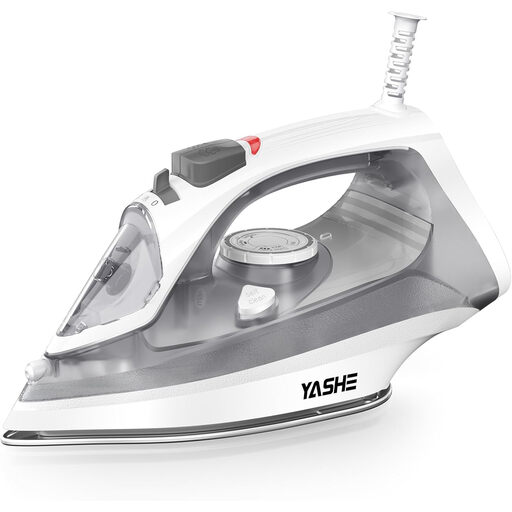 Image unavailable
An option to compare if you’re looking for an adjustable thermostat and anti-drip system for flat ironing.
2300 W; 300 ml tank; continuous steam 25 g/min; steam boost 150 g/min; non-stick soleplate; automatic cleaning.
 Image unavailable
A handheld model with a soleplate for ironing napkins horizontally.
350 ml tank; five temperature settings; adjustable steam; anti-drip system; automatic cleaning.
 Image unavailable
A steam iron to compare if you want continuous steam and an anti-drip system.
Continuous steam 45 g/min; 200 ml tank; adjustable steam.
 Image unavailable
A compact option to compare for a small ironing job with manual controls.
0,15 l tank; manual temperature and steam controls; suitable for dry and steam ironing.
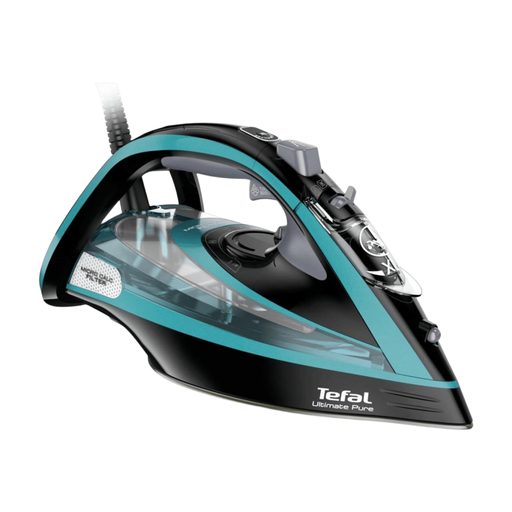 Image unavailable
An option to compare if you’re looking for a steam iron with a limescale filter and a cleaning alert.
Variable steam output; Micro-Calc filter; alert when the filter needs cleaning.
It’s best to iron them when clean and slightly damp, rather than soaking wet. Check the care label first; don’t steam continuously, and finish ironing with the steam switched off. If the napkins are soaked through, let them dry until they’re just slightly damp.
Follow the care label for the specific napkin, especially if it’s a blend or has a special finish. The word ‘linen’ on its own isn’t a reason to choose the highest setting.
Follow the manual for the exact model. Tefal describes different procedures for self-cleaning models, models with an anti-limescale rod and models with a limescale collector. Don’t use vinegar or descaler in the steam tank if the manual advises against it.
Yes. The Netherlands Food and Consumer Product Safety Authority (NVWA) states that CE marking is mandatory for electrical products covered by the applicable product rules. It is a legal conformity mark, not an independent quality report; check that the appliance bears the required mark when you buy it.
For a purchase from a business by a consumer in the Netherlands, the statutory warranty applies, with no fixed statutory warranty period. If a product is faulty, the retailer is your point of contact. According to the Dutch government, a 14-day cooling-off period applies in many cases when you buy from a business at a distance. A separate manufacturer’s warranty doesn’t limit your statutory rights.