What should you consider when choosing?
A standard steam iron is often a good fit for small quantities and limited storage space. A steam generator is mainly worth considering if you regularly iron larger piles and have room for the separate base. Consumentenbond outlines these differences between the two types of appliance.
Standard steam iron
Suitable if: you iron a few napkins at a time and want to put the appliance away afterwards.
Trade-off: its built-in water tank is not as large as a generator’s separate tank.
Steam generator
Suitable if: you often iron larger piles and have space for a separate base.
Trade-off: the base and steam hose take up extra workspace and storage space.
| What to consider |
What to look for |
Who it matters most to |
| Ironing results and fabric care |
Check the napkin’s care label and compare the temperature and steam settings of the exact model. |
I want to smooth out creases neatly without exceeding the limits on the label; around 30% of consumers prioritise careful ironing and fabric care. |
| Putting it away and using it safely |
Compare the size, resting position and cord; consider automatic shut-off as an additional safeguard alongside your own routine. |
In a shared space, I want to be able to put the appliance away safely after use; around 30% of consumers prioritise putting it away and using it safely. |
| Larger piles |
Compare the tank capacity and space required for a standard iron with those of a steam generator. |
If I iron lots of napkins in one go, I want to keep interruptions to a minimum; around 20% of consumers prioritise longer ironing sessions. |
| Descaling and maintenance |
Check the descaling process and follow the instructions for the exact model. |
I want to know what maintenance is needed for regular use; around 20% of consumers choose mainly on the basis of a maintenance routine they can keep up with. |
Joybuy products
This selection includes standard steam irons for shorter ironing sessions and a steam generator for larger piles. Choose according to how many napkins you have and how much space is available.
 No image available
Philips 3000 Series DST3031/20 steam iron
A standard steam iron worth comparing for smaller quantities in a shared space.
Steam boost: 180 g; continuous steam: 40 g/min; water tank: 300 ml.
View at Joybuy
 No image available
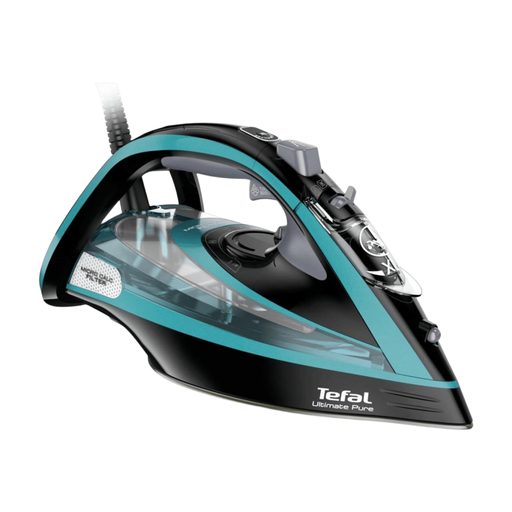
Tefal Ultimate Pure FV9844 steam iron
A standard steam iron worth comparing for ironing smaller quantities of napkins in a shared space.
View at Joybuy
 No image available
Philips 1000 Series DST1030/20 steam iron
A standard steam iron worth comparing if you are looking for a compact appliance for shorter ironing sessions.
Power: 2000 W.
View at Joybuy
 No image available
Braun FreeStyle 5 SI5037 steam iron
A standard steam iron worth comparing for smaller quantities if you want to put the appliance away after use.
View at Joybuy
 No image available
Philips 3000 Series PSG3000/20 steam generator
A steam generator worth comparing if you iron larger piles in one go and have room for the separate base.
Power: 2400 W; steam boost: 350 g; water tank: 1,4 l; suitable for vertical ironing.
The base needs a flat, stable, heat-resistant surface and extra space.
View at Joybuy
Frequently asked questions
Can you iron every linen napkin on the hottest setting?
No. Choose the maximum soleplate temperature according to the care label on the specific napkin, not just the name of the fibre. GINETEX symbols indicate maximum temperatures including 110 °C without steam, 150 °C and 200 °C. These are the meanings of the symbols, not general settings for all linen napkins.
What should you do with the iron after using it in a shared space?
Switch off the appliance, unplug it and let it cool safely before putting it away. Keep the cord and workspace tidy, and follow the manual for your model. Brandweer Nederland advises fully unwinding any cable reel in use.
How often should you descale a steam iron?
Follow the maintenance instructions for your chosen model; there is no single interval that applies to every appliance and usage pattern. Consumentenbond explains that limescale can clog the steam channels over time.
What warranty are you entitled to when buying in the Netherlands?
When you buy as a consumer, you are entitled to a product that works as it should; if there is a fault, the seller must offer an appropriate solution. A manufacturer’s or extended warranty does not replace your statutory rights, according to the Rijksoverheid.
Is CE marking required for an electric iron?
CE marking is compulsory for electrical products covered by the applicable Dutch regulations, according to the Nederlandse Voedsel- en Warenautoriteit. The marking does not prove that an individual product has been independently checked.


