
Ironing napkins once
You want to smooth out a few linen napkins, then pack the appliance away or store it easily. The Consumers’ Association says that limited storage space and a small ironing job are reasons to consider a steam iron.


For a few linen napkins before a move, a compact steam iron is the obvious choice. A steam generator may be more suitable for large or frequent piles, provided you have enough space. The Consumers’ Association says that doing only a small amount of ironing at a time and having limited storage space are reasons to consider a steam iron. Always follow the care label and, if necessary, finish ironing without steam after steaming.
You want to smooth out a few linen napkins, then pack the appliance away or store it easily. The Consumers’ Association says that limited storage space and a small ironing job are reasons to consider a steam iron.
You iron lots of napkins one after another, so you’ll want to consider refilling, ease of handling and stubborn creases. The Consumers’ Association points out that a steam generator can be larger and more difficult to move or store.
You want to follow the care instructions and avoid stains, dampness or maintenance issues, for example with napkins that have an unknown finish. The Consumers’ Association advises checking the care label and, if necessary, ironing without steam after steaming.
Choose this if: you’re ironing a small number of napkins and want to put the appliance away quickly.
Trade-off: a smaller tank may mean you need to refill sooner when ironing a large pile.
Consider this if: you often iron lots of napkins one after another and have space for the separate base unit.
Trade-off: the Consumers’ Association points out that it takes up more space and may put too much strain on a standard ironing board.
First, work out how many napkins you iron at a time and how much storage space you have. Then check the fabric settings and maintenance requirements of the specific model.
| What to consider | What to look for | Who should pay particular attention? |
|---|---|---|
| Smoothing linen without damaging it | Check the care label, temperature control and adjustable steam settings. Also see whether you can finish ironing without steam. | I want to tackle creases without damaging the fabric or leaving it too damp. For around 36% of consumers, smooth, undamaged linen is the main buying priority. |
| Ironing a large pile in one go | Compare tank capacity and continuous steam output in g/min; don’t confuse this with a steam boost. Also check whether your ironing board is suitable for a generator. | If I’m ironing lots of napkins one after another, I want to stop less often to refill. Around 29% of consumers prioritise being able to keep going with a large pile. |
| Quick to use and put away | Check the model’s overall size, heat-up time and storage options, not just the weight of the hand unit. | For a one-off job before a move, I want to get started quickly and put the appliance away easily. This is the top priority for around 21% of consumers. |
| Maintenance and safe use | Follow the manual’s instructions on water and descaling. Also check whether features such as an anti-drip function or automatic shut-off suit the way you’ll use it. | I want to keep my napkins clean and know how to maintain the appliance according to the manual. Around 14% of consumers put maintenance and safe use first. |
Wattage, steam boost and continuous steam output describe different features. The results also depend on the fabric, temperature and how you iron.
Compare continuous steam output, adjustability and tank capacity as well as the steam boost, and follow the care label.
The separate base unit needs extra space and may be too large or heavy for a standard ironing board. The higher capacity isn’t necessarily needed for a small pile of napkins.
Measure the available space and check that your board is suitable before choosing a generator.
Water and maintenance methods vary by appliance. Unsuitable additives can cause stains or damage the appliance.
Follow the water and descaling instructions for the exact model. Tefal’s instructions warn against using vinegar or descaling products when rinsing the steam tank.
The stated tank capacity for the Tefal Easygliss Plus FV5736 differs between product listings: Tefal says 270 ml, while the Joybuy listing says 200 ml.
Check the full model number and specifications of the version you choose. Also distinguish between the manufacturer’s warranty and your statutory rights.
The TexStyle 3 SI 3030 is a compact steam iron for a quick job, with a design suited to precise ironing around edges.
The Easygliss Plus FV5736 is a steam iron with adjustable steam for tackling creases in linen.
The PerfectCare PSG7200/20 represents the steam generator option for frequent, large ironing loads, rather than the compact choice for a few napkins.
The Joybuy product picks below focus on compact steam irons and a handy iron for a small pile of napkins; they don’t include the steam generator option.
 No image available
A compact steam iron for a small ironing job, with steam settings you can adjust to suit the fabric.
For the FV5736E0, Tefal lists continuous steam of 45 g/min and a steam boost of 220 g/min. Tank capacity is listed differently, so check the exact version before relying on this specification.
 No image available
A compact steam iron for a small job. Check the fabric settings and whether you can finish ironing without steam after steaming.
The product name lists 2000 W.
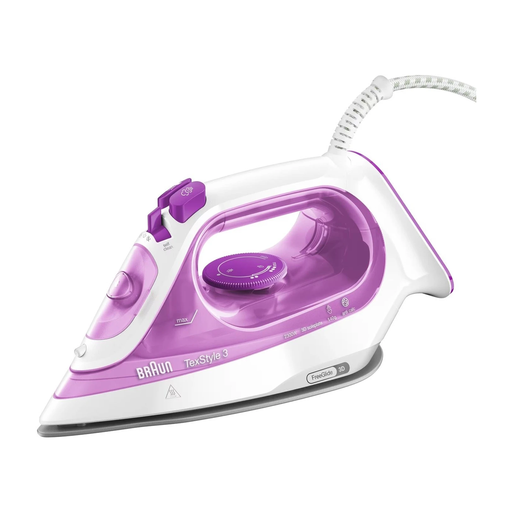 No image available
A compact option for a quick napkin-ironing job; the model is also designed for precise ironing around edges.
Braun lists 2300 W, a 270 ml tank, manual temperature control and 45 g/min in turbo mode.
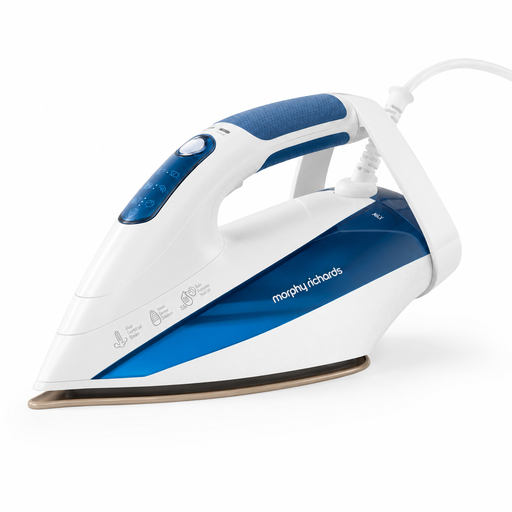 No image available
A compact steam iron for a small ironing job. Before use, check which steam settings and maintenance instructions apply to this version.
The product name lists 2400–2800 W.
 No image available
A handy model to take with you or store away during a move; the product name describes it as compact and lightweight.
The product name lists Dual Voltage. The product description gives a 0,15 l tank; you may need to refill more often when ironing a larger pile.
Start with the care instructions for the specific napkin, rather than using a general temperature for linen. The Consumers’ Association lists ironing symbols with maximum temperatures of 110 °C, 150 °C and 200 °C. Using a higher temperature than the fabric can withstand may cause damage or shine.
Iron slightly damp fabric with an appropriate amount of steam, then finish ironing without steam if necessary. Let the napkins cool and dry before packing them.
For a few napkins, a compact steam iron is usually the more practical option; a steam generator may be worth considering for large or frequent piles. Bear in mind that it takes up extra space, and check that your ironing board is suitable. The Consumers’ Association describes these as differences between appliance types, not as a guarantee about any individual model.
Follow the manual for the model you choose, as maintenance methods vary between appliances. The Consumers’ Association warns against using scented ironing water and other additives; Tefal advises against using vinegar or descaling products when rinsing the steam tank.
EU rules under the Low Voltage Directive apply when electrical equipment within the relevant limits of 50 V to 1000 V nominal AC voltage is placed on the market. These include CE marking. According to Your Europe, this marking is a declaration by the manufacturer, not an independently issued safety certificate. Check the specifications and conformity information for the specific appliance.