
Vandaag of morgen in huis

Kwaliteit gegarandeerd

Welkomstaanbiedingen ontgrendelen: GRATIS bezorging | Tot 80% korting | Gratis 30 dagen JoyPlus-proefperiode
Download de app
A lined A5 notebook may seem like a simple purchase, but the differences between models become noticeable in everyday use. A thin cover can quickly bend in a bag, ink may show through the paper when using a fountain pen, and a loose elastic may not hold loose papers securely in place. Terms such as “luxury writing book” or “premium paper” are also not always backed up by clear specifications.
For students, school pupils, professionals and journalers, three common pitfalls are particularly important:
By checking the paper, binding and practical accessories in advance, you can make a more informed choice and avoid leaving the notebook unused after a short time.
For everyday writing, 100 g/m² offset paper is a useful starting point. This paper is thicker than standard lightweight notebook paper and, according to the product descriptions, is designed to help limit ink show-through. That does not mean every pen will work perfectly: a highly saturated marker or wet fountain pen may still be visible on the other side.
Cream-coloured lined paper is easier on the eye than bright white paper and works well for a classic journaling diary. Do check that the pages are actually lined and that “96 sheets” means 96 sheets, or 192 pages.
A hardcover notebook offers more support when you are writing on the go or frequently carrying the book in a rucksack. A fabric cover with foil or embossed details can create an elegant look, while a printed hardcover tends to have a more decorative character.
Pay attention to the difference between a hardcover and a soft PU cover. Both can be practical, but they do not offer the same level of protection. A hard cover is often suitable for a school and office notebook, which is regularly stored away and taken out again.
A notebook with a bookmark saves time when you switch between different projects or diary pages. A notebook with an elastic closure also stays shut in your bag. Check that the product description explicitly mentions these accessories; a decorative band shown in the photo is not always a functional closure.
An integrated ribbon can be useful for journaling. For study and work, an elastic helps prevent loose sheets or cards from falling out of the book. Bear in mind that ribbons and elastics are small parts. The product information for the models mentioned therefore states that they are not suitable for children under three years of age.
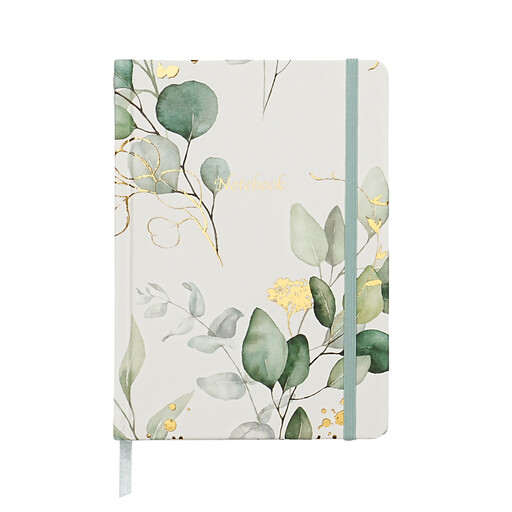
Why it suits this profile: This A5 writing book combines a hard cover with 96 sheets of cream-coloured lined paper. It is suitable for lectures, meetings and everyday writing without unnecessary extras.
The product description specifies the size, 100 g offset paper, a ribbon and an elastic closure. This means you do not have to rely solely on the cover photo.
A5 size, 192 pages, 100 g cream paper, bookmark and elastic.
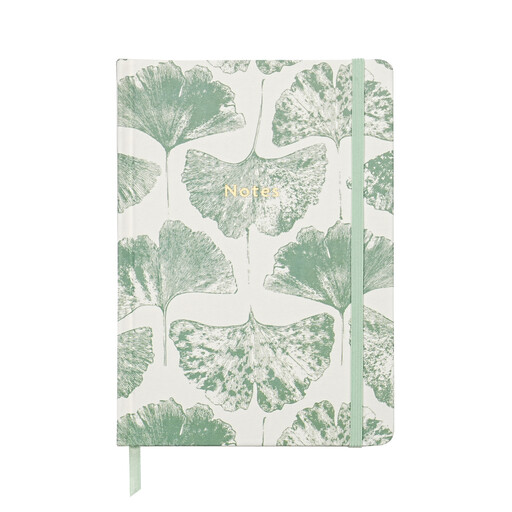
Why it suits this profile: The fabric hardcover with foil or embossed details is aimed at anyone looking for an elegant notebook for personal reflection, work or as a gift notebook.
The specifications cover more than just the appearance. They also mention 100 g ivory-coloured paper, the number of pages and the accessories.
192 pages, fabric hardcover, cream paper, ribbon and elastic closure.
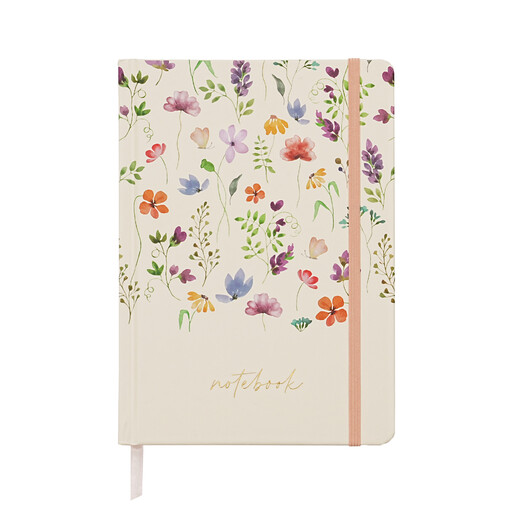
Why it suits this profile: This model is practical for intensive note-taking, creative ideas and journaling. The A5 cover provides a firm writing surface, while the ribbon helps you find your current notes again.
The product information specifies 96 sheets, 192 pages, 100 g paper, a bookmark and an elastic. This means you can check the contents before buying.
A5 size, hard cover, botanical print, 100 g off-white paper and two practical accessories.
We have put together a complete, up-to-date list of products that fully meet these strict selection criteria and the applicable European safety regulations.
Yes. A5 measures approximately 14.8 × 21 cm and provides enough space for meeting notes, summaries and to-do lists. The size will usually fit easily in a rucksack or laptop bag. For large diagrams or detailed drawings, A4 may be more practical.
Look at the paper weight and description. 100 g offset paper is a practical choice for ballpoint pens, rollerballs and many gel pens. With markers and wet fountain pens, it is advisable to test a few pages first. Cream-coloured paper can work well for a journaling diary, but the colour is a matter of personal preference.
Its lifespan depends on how it is used, stored and on the quality of the binding. Keep the book dry, avoid prolonged exposure to moisture and clean the cover with a soft, dry cloth. A hardcover notebook with an elastic can stay looking neat for longer when carried closed and not overfilled with loose papers.
