
Vandaag of morgen in huis

Kwaliteit gegarandeerd

Welkomstaanbiedingen ontgrendelen: GRATIS bezorging | Tot 80% korting | Gratis 30 dagen JoyPlus-proefperiode
Download de app
A lined A5 notebook might seem simple to choose. Yet differences in paper, binding and cover can determine whether you enjoy writing in it every day or it ends up unused after a few weeks. The same goes for a ruled notebook as a gift, diary or journal.
Before you order, pay particular attention to three common pitfalls:
A5 measures approximately 148 × 210 mm. That's a useful middle size for lectures, meetings, to-do lists and everyday writing. There's plenty of room for longer texts, but the book usually remains portable in a work bag or rucksack.
A smaller A7 notebook is mainly intended for quick notes and shopping lists. Also check whether the product information refers to sheets or pages. 96 sheets usually means 192 writable pages, whereas 96 pages could be half that amount.
Paper weight is expressed in grams per square metre, for example 80 g or 100 g. Heavier paper often feels sturdier and can be more suitable for fountain pens, gel pens or markers. However, it doesn't automatically prevent every instance of bleed-through: the type of ink and nib thickness remain important.
An 80 g exercise book is light and practical for school or daily use. An A5 hardcover notebook with 100 g cream offset paper is more interesting when you're writing longer texts or keeping a well-crafted journal. If in doubt, test a pen on a less visible page.
A hardcover notebook protects the pages better in a full bag. A softcover is lighter and often suitable when you want to carry several books at once. A sewn binding can lie flat, while a spiral notebook turns over easily and is often comfortable for one-handed writing.
Also look out for the extras:
For products with small parts, such as a ribbon, elastic band, pen cap or stickers, you must follow the safety information. The PAW Patrol diary below is described as suitable for children aged 5 and over. According to the stated manufacturer details, the product is EN71/EN62115 certified and free from phthalates. Small parts can pose a choking hazard for children under 3 years.
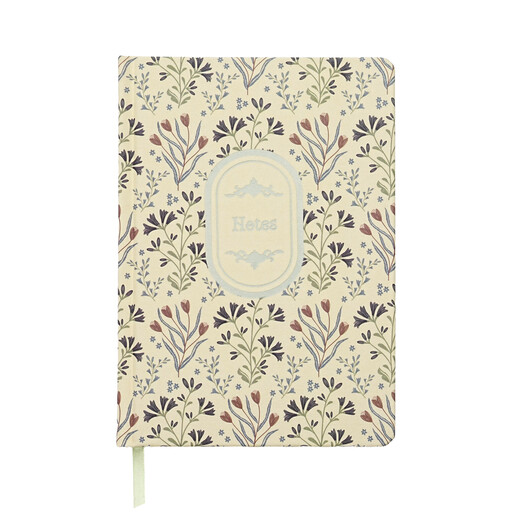
Why this fits the profile: The A5 size, fabric hardcover and cream-coloured ruled pages suit journaling, creative writing and office use. The design also makes this suitable as a gift notebook.
The product description specifically mentions 96 sheets, 192 pages, 100 g paper, a hardcover, ribbon bookmark and elastic closure. So you don't have to rely on appearance alone.
A5 size; 100 g wood-free ivory paper; fabric hardcover; 192 pages; ribbon bookmark and elastic band.
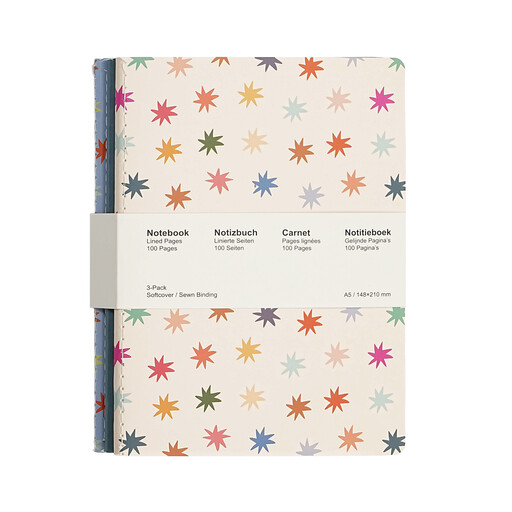
Why this fits the profile: Three separate A5 exercise books are handy for school subjects, work projects or different journals. The softcover keeps the weight down.
You're not buying one book with an unclear number of pages: the set contains three books, each with 50 sheets, 100 pages and 80 g ruled offset paper.
3-pack; A5 size; sewn binding; 80 g cream-coloured ruled paper; suitable for school and office.
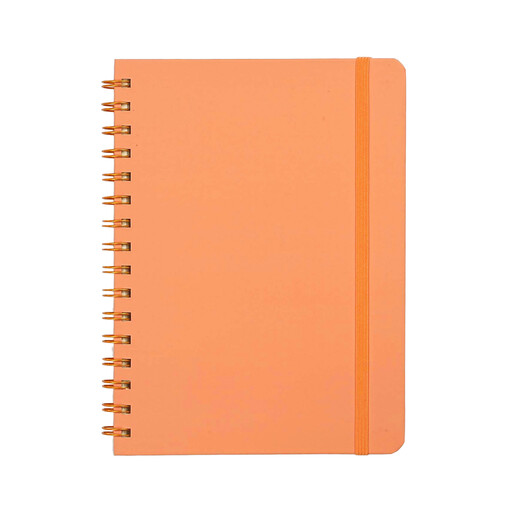
Why this fits the profile: The twin-wire spiral is practical when you regularly need the book to lie flat for lectures, meetings or daily planning. The hardcover is suitable for frequent carrying.
The binding is clearly described as twin-wire spiral and the contents as 96 sheets of 100 g. That makes it easy to tell the difference from a thin softcover book.
A5 hardcover; twin-wire spiral; 96 sheets; 100 g ruled cream-coloured paper; elastic closure.
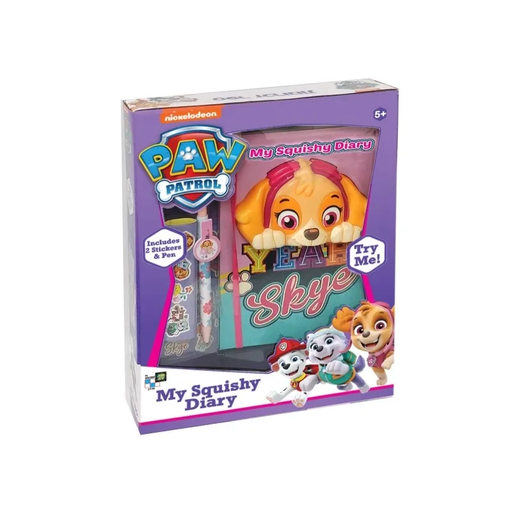
Why this fits the profile: This PAW Patrol diary for children aged 5 and over combines writing and drawing with stickers. The size of 30.5 × 23 cm offers space for personal stories and memories.
The set clearly states what's included: one diary, 36 stickers and a writing instrument. Do check the age warnings and use small parts under supervision.
Plastic cover; 36 stickers; writing instrument included; PAW Patrol theme; intended for children aged 5 and over.
We've put together a full, up-to-date list of products that fully meet these strict selection criteria and comply with current European safety regulations.
Yes. The size offers enough writing space for lessons, meetings and planning, while being more compact than A4. For heavy use, look at a hardcover or spiral binding and check how many sheets the book contains.
100 g paper can be a practical choice, but the result also depends on the ink and the nib. An 80 g notebook is often suitable for ballpoint pens and pencils. For important writing projects, try a sample page first to assess bleed-through.
Store the book in a dry place and avoid prolonged direct sunlight. An elastic closure helps protect loose pages during travel. For a fabric or paper cover, use a dry, soft cloth and avoid excessive moisture. This way, an exercise book or journal will stay usable for longer.
