
Vandaag of morgen in huis

Kwaliteit gegarandeerd

Welkomstaanbiedingen ontgrendelen: GRATIS bezorging | Tot 80% korting | Gratis 30 dagen JoyPlus-proefperiode
Download de app
A lined A5 notebook might seem like a simple purchase, but small differences can make or break your daily experience. A flimsy cover can curl up quickly, paper can show through, and an elastic band that's too tight can damage the cover. What's more, A5 and A6 are frequently mixed up in product descriptions.
This guide helps school pupils, university students, professionals and adults make a well-informed choice. Parents looking for a Paw Patrol diary for children will also find a suitable option below.
A soft cover is lightweight and often cheaper, but it offers less protection in a full rucksack or work bag. If you write every day, you'll usually be better off with a hardcover notebook. Pay attention to the description: "hardcover" tells you about the construction, but not automatically about the thickness or finish.
A fabric cover, PU leather cover or plastic cover also requires different care. A fabric cover is best kept dry, whereas a plastic cover can be wiped clean with a slightly damp cloth.
Words like "premium" or "luxury notebook" tell you very little without the paper weight and number of pages. Instead, look for verifiable details such as 100 gsm offset paper, the number of sheets and the colour of the paper. Cream-coloured paper can be gentler on the eyes than bright white, but the writing experience also varies depending on your pen.
According to the product descriptions of the Jubiluu models mentioned, the paper is designed to minimise show-through. That's a product specification, not a guarantee for every type of ink. We recommend testing your favourite fountain pen, gel pen or fineliner on a back page first.
A standard A5 size is approximately 14.8 × 21 cm. That gives you plenty of room for lecture notes, work notes, lists and journaling. A6 is roughly 10.5 × 14.8 cm and fits more easily into a small bag, but it clearly offers less writing space.
Some product titles and descriptions use different sizes. Always check the dimensions in centimetres, not just the word "A5".
For everyday writing, 100 gsm paper is a practical starting point. It feels sturdier than thin school paper and works well with ballpoint pens, pencils and most gel pens. If you use heavy markers or a wet fountain pen, bleed-through may still occur.
Also note the difference between sheets and pages. 96 sheets means 96 leaves, so usually 192 writable pages when both sides are printed. A lined notebook with 96 sheets therefore offers a generous supply for notes or an A5 journal.
A hard cover protects the pages during travel. A notebook with an elastic closure stays shut in your bag, and a notebook with a bookmark makes it easier to quickly return to your current page. Do check that the elastic and bookmark are actually included.
On decorative models, embossing, foil stamping or texture may be part of the finish. That adds to the appearance, but it doesn't automatically make the product more suitable for heavy use.
Paper notebooks are flammable and should be kept away from naked flames. Small parts, such as an elastic band, ribbon or pen cap, can pose a risk to young children. For toy-like diaries, the age recommendation is especially important.
The PAW Patrol diary below mentions EN71 and EN62115 and, according to the product information, is intended for children aged 5 and over. The manufacturer also states that stickers and parts are not suitable for children under 3 years old and recommends adult supervision during first use.
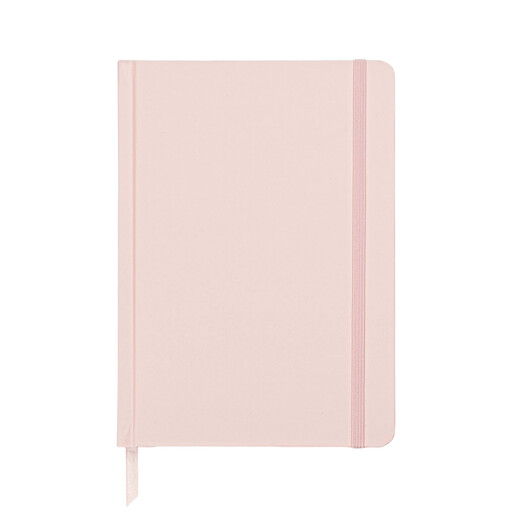
Why it fits this profile: The undated layout is handy if you don't use a planner every week. You can start whenever it suits you and use it for school, work, goals or daily planning.
The product information states A5 dimensions of approximately 14.8 × 21 cm, a hardcover and 112 sheets of paper. That means you don't have to rely on marketing terms alone.
100 gsm offset paper, monthly and weekly overviews, notes pages, elastic closure and an undated layout.
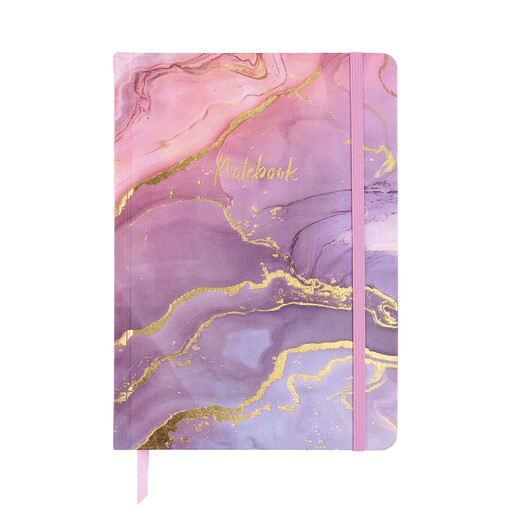
Why it fits this profile: This hardcover notebook is aimed at adults who want to combine notes, reflections or creative writing with a polished look.
The specifications mention an A5 size, 96 sheets and 100 gsm ivory-coloured paper. The cover has a fabric finish with foil stamping or embossing; the cover isn't simply described as "luxury".
192 pages, smooth 100 gsm paper, fabric hardcover, elastic closure and a ribbon bookmark.
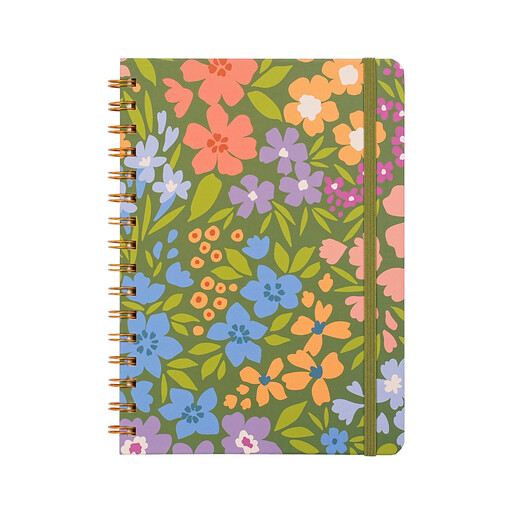
Why it fits this profile: The spiral binding is practical for schoolwork, meeting notes and documents where you want the book to lie flat while you write.
The binding is specifically described as twin-wire spiral and the size as 148 × 210 mm. That makes the difference from a standard glued spine clear.
A5 size, 96 sheets of 100 gsm lined cream offset paper, twin-wire binding and elastic closure.
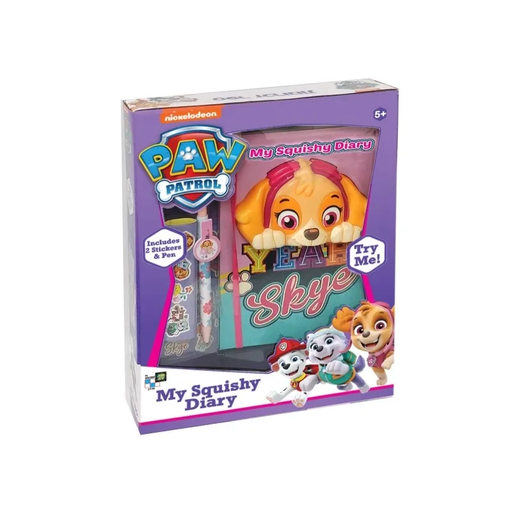
Why it fits this profile: This diary is designed for children aged 5 and over who want to write, draw and decorate pages with their favourite PAW Patrol character.
The product information mentions a plastic cover, age recommendation from 5 years, EN71/EN62115 and warnings about small parts.
36 stickers, a writing instrument, a plastic cover and a recognisable Skye design. Use under adult supervision during first use.
We've put together a full, up-to-date list of products that fully meet these strict selection criteria and comply with current European safety regulations.
Yes. At approximately 14.8 × 21 cm, A5 offers plenty of space for school notes, work, journaling and planning. The size usually fits in a rucksack or laptop bag, but it's less compact than A6.
The lifespan depends on the paper, binding, cover and usage. A hardcover offers better protection against creasing, while an elastic band keeps the book closed. Store the notebook in a dry place, avoid excessive bending and don't use a damp cloth on a fabric cover.
100 gsm offset paper is a useful starting point for gel pens and many fountain pens, but the type of ink remains the deciding factor. Check whether the product description mentions anything about show-through and test a pen on a back page before using both sides heavily.
