
Vandaag of morgen in huis

Kwaliteit gegarandeerd

Welkomstaanbiedingen ontgrendelen: GRATIS bezorging | Tot 80% korting | Gratis 30 dagen JoyPlus-proefperiode
Download de app
As a Joybuy Product Recommendation Officer, I see every day how the right gear can make all the difference. In competitive games, every millisecond and every gram counts. A heavy, slow mouse can limit your reaction time precisely when you need it most. That's why many serious gamers seek a lightweight wireless gaming mouse that delivers speed and precision without the clutter of cables.
This article isn't a hands-on review, but an overview of popular choices based on the specifications that matter to you as a gamer. We'll look at weight, sensor technology, and response time to help you find a model that fits your playstyle.
Before we look at the products, it's helpful to know which specifications truly make a difference in high-level gameplay.
An ultra-lightweight gaming mouse (usually under 70 grams) is designed for speed. Less weight means you can move and stop the mouse faster, which is crucial for quick 'flicks' in FPS games. This also reduces strain on your wrist during long gaming sessions, allowing you to perform at your peak for longer. Of course, the shape must also fit your hand well, but that is a matter of personal preference.
The sensor is the heart of your mouse. A high-DPI mouse (Dots Per Inch) offers high sensitivity, but precision is just as important. Modern sensors provide accurate tracking without acceleration or 'smoothing'. Another key factor is the polling rate, measured in Hertz (Hz). This indicates how often the mouse reports its position to the computer. The standard is 1000Hz (1ms response), but an 8KHz polling rate (0.125ms response) is becoming increasingly popular on the pro scene for a near-instantaneous reaction.
For a pro gaming mouse, a lag-free wireless connection is an absolute must. Modern 2.4GHz technologies offer performance that is indistinguishable from a wired mouse. Also, pay attention to battery life. Nothing is more frustrating than a dead battery in the middle of a crucial match. A long battery life ensures you can focus on the game, not on your gear.
Below is a selection of models known for their performance-oriented specifications.
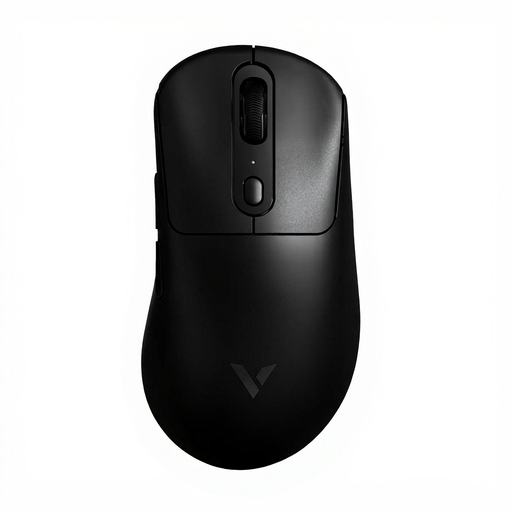
Why it stands out The RAPOO VT3PRO MAX combines a very low weight with specs you would normally expect in a much higher price bracket. With an 8KHz polling rate and the PAW 3950 Ultimate sensor, this model targets gamers seeking maximum responsiveness and precision. A unique feature is the ability to set the X and Y-axis DPI independently, which can be useful for users with ultra-wide monitors.
Pros:
Who is it for? For the tech-savvy gamer looking for the latest technologies like an 8KHz polling rate and advanced DPI settings, without paying a premium price.
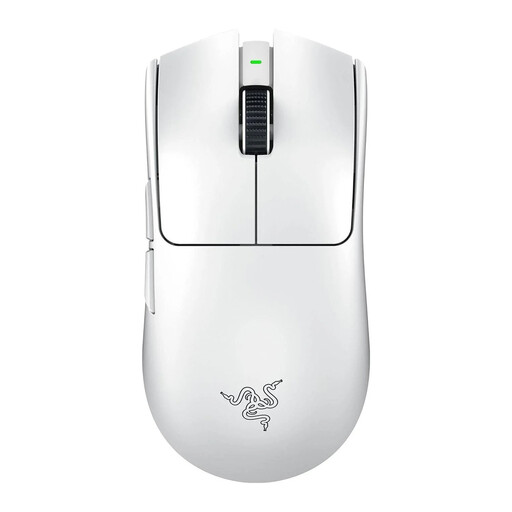
Why it stands out The Razer Viper series is a household name in the esports world. The V3 Pro continues this legacy with an extremely low weight of just 54 grams. According to Razer, this model was developed in collaboration with professional gamers. The focus is on a perfectly balanced, symmetrical design and top-tier tracking performance, thanks to the second-generation Razer Focus Pro Optical Sensor and 8000Hz HyperPolling technology.
Pros:
Who is it for? For the competitive FPS mouse user and esports athlete who prioritises the absolute lowest weight and a shape that has proven its worth on the professional scene.
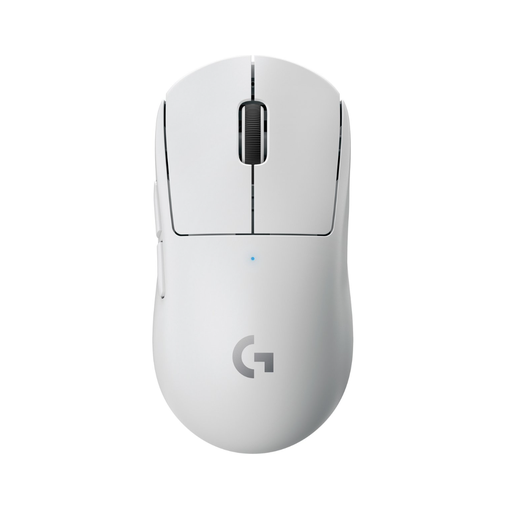
Why it stands out The Logitech G Pro X SUPERLIGHT has been a staple in the loadouts of many professional gamers for years. Weighing in at under 63 grams, it remains one of the lighter options on the market. Instead of chasing the highest specs on paper, Logitech focuses on a proven combination of the reliable HERO 25K sensor and stable LIGHTSPEED wireless technology. It's a no-nonsense pro gaming mouse that simply gets the job done.
Pros:
Who is it for? For gamers who value a proven and reliable design. If you're looking for a mouse trusted by countless esports athletes and want a safe, performance-oriented choice, the SUPERLIGHT is a strong contender.
The perfect mouse is a personal choice. You might be looking for a different shape, a different weight, or have a different budget. Every player has unique preferences.
Check out our full range and find the Gaming Mouse that's perfect for you.
A polling rate of 1000Hz (1ms response time) is more than sufficient for most gamers. An 8KHz polling rate reduces this response time to 0.125ms. While the difference is small, it can offer a noticeable advantage in terms of smoothness and responsiveness for highly competitive players at the top level. It's a 'nice-to-have' feature for those who want to get the absolute most out of their gear.
For fast-paced games like FPS and MOBAs, weight is very important. A lighter mouse allows you to react faster, track your target more accurately, and make quick 'flicks'. Furthermore, an ultra-lightweight gaming mouse can reduce hand and wrist fatigue during long gaming sessions, helping you maintain consistent performance.
Both are important, but they serve different purposes. DPI (Dots Per Inch) determines the mouse's sensitivity: how far the cursor moves on the screen for every inch you physically move the mouse. A higher DPI isn't necessarily better; it's about finding the right setting for your playstyle. The polling rate determines the response speed: how often the mouse reports its position. For competitive gaming, a high polling rate (1000Hz or higher) is crucial for direct input, while the ideal DPI value varies from person to person.
