
Vandaag of morgen in huis

Kwaliteit gegarandeerd

Welkomstaanbiedingen ontgrendelen: GRATIS bezorging | Tot 80% korting | Gratis 30 dagen JoyPlus-proefperiode
Download de app
In competitive games like Valorant, Apex Legends, or League of Legends, every millisecond counts. A heavy or slow mouse can be the difference between a won firefight and a frustrating defeat. It's a familiar scenario: your reaction is fast, but your crosshair lags just a fraction behind. A lightweight gaming mouse is designed to tackle this problem by enabling faster movements and reducing fatigue.
This guide is designed to help you navigate the technical specifications. We'll highlight some popular choices and provide practical tips so you can find a model that matches your playstyle and ambitions.
Before we look at the products, here are a few key points to help you make your choice.
Weight is the core feature of a lightweight gaming mouse. Models under 65 grams are generally considered lightweight. A lighter mouse creates less resistance, allowing you to react faster and reducing strain on your wrist during long gaming sessions. The shape should match your grip style (palm, claw, or fingertip) for optimal comfort and control.
For an esports mouse, the polling rate is a crucial specification. This number, expressed in Hertz (Hz), indicates how often the mouse reports its position to the computer. The standard is 1000Hz (1ms response), but an 8K polling rate mouse (8000Hz) does this eight times more frequently, resulting in a response time of just 0.125ms. This leads to noticeably smoother cursor movements, especially on high-refresh-rate monitors. Additionally, a precise optical sensor with a high DPI (Dots Per Inch) is essential for an FPS gaming mouse, as it provides direct control over sensitivity and precision.
The days when a wireless gaming mouse was synonymous with lag are over. Modern wireless technologies offer a connection that is just as stable and fast as a wired one, but with complete freedom of movement. However, it's important to pay attention to battery life.
The type of switch is also important. Mechanical switches provide a distinct, tactile click. Optical switches use an infrared beam to register a click, which eliminates the risk of unwanted double-clicks and often provides an even faster response.
Based on specifications that are important for competitive gamers, we have highlighted several models from Rapoo.
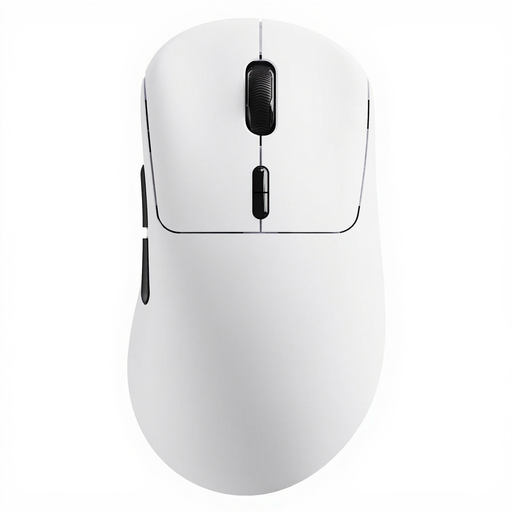
Why it stands out The Rapoo VT3 offers a combination of an ultralight design and the traditional feedback of mechanical switches. This model is a solid entry point into the world of high-performance gaming without immediately switching to optical technology.
Specifications
Who is it for? For the competitive gamer who appreciates the tactile click of mechanical switches but still wants the benefits of an ultralight design and an 8K polling rate mouse.
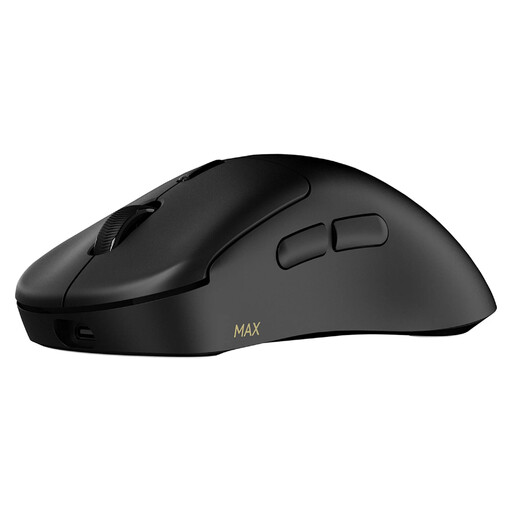
Why it stands out The Rapoo VT3 MAX is technically almost identical to the VT3, but with one key difference: its optical switches. These switches register clicks using light, which eliminates debounce delay and the risk of double-clicks. This makes it a popular choice for serious FPS players.
Specifications
Who is it for? Ideal for the competitive player who demands absolute reliability and the fastest possible click registration. If you want to eliminate any form of input lag or hardware inaccuracy, the optical switches are a clear advantage.
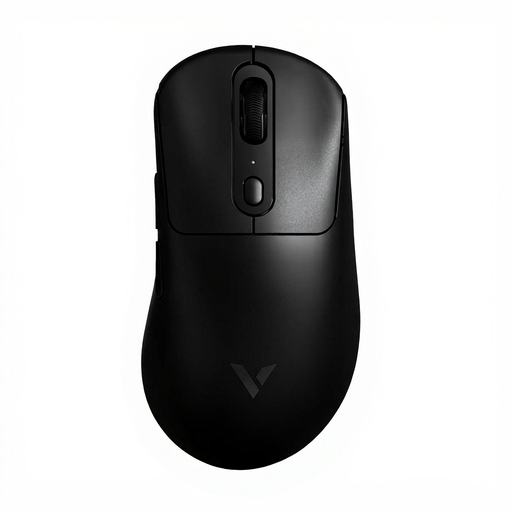
Why it stands out This model is equipped with the PAW 3950 Ultimate optical sensor, a sensor renowned for its high precision. According to the manufacturer, this sensor delivers sub-micron level tracking, resulting in exceptionally accurate movements.
Specifications
Who is it for? For the gamer seeking the most advanced sensor technology for maximum tracking precision. If you prioritize performance above all else and want a sensor that flawlessly registers even the slightest movements, this is a model to consider.
Check out the RAPOO VT3PRO MAX
A mouse is a highly personal choice. If your setup could use other upgrades, personalizing your keyboard is also an option. For unique customizations, take a look at our selection of gaming keycaps.
Is an 8K polling rate really noticeable? For the average user, the difference compared to 1000Hz might be subtle. However, for competitive gamers playing on a high-refresh-rate monitor (144Hz or higher), the 8K polling rate can provide a noticeably smoother and more direct cursor experience. The reduced latency can offer a small but potentially significant advantage in fast-paced games.
What is the main advantage of a lightweight gaming mouse? The main advantages are speed and endurance. A lighter mouse allows you to aim and react faster. Additionally, it reduces the strain on your wrist and hand, allowing you to play more comfortably during long gaming sessions and decreasing the risk of fatigue.
How important is battery life for a wireless gaming mouse? For serious gamers, long battery life is crucial. Nothing is more disruptive than a mouse dying in the middle of a crucial match. Modern wireless mice, like the Rapoo gaming mouse models in this guide, offer a battery life of hundreds of hours. This means you'll rarely need to charge the mouse and can play without interruption.
