
Vandaag of morgen in huis

Kwaliteit gegarandeerd

Welkomstaanbiedingen ontgrendelen: GRATIS bezorging | Tot 80% korting | Gratis 30 dagen JoyPlus-proefperiode
Download de app
Choosing a new light seems straightforward until you need to consider colour temperature, fitting, IP rating, controls and installation. A product photo can also give the wrong impression: a compact wall light may spread less light than expected, while an outdoor light with an attractive finish is not automatically suitable for an exposed exterior wall.
The most common pitfalls when choosing lighting are:
Light output is measured in lumens (lm). A lamp with 800 lumens may be suitable as functional lighting in a hallway or for illuminating an exterior wall, but perceived brightness also depends on the light distribution and the colour of the walls and ceilings.
You should also pay attention to the colour temperature:
With mood lighting, a Star Wars lamp or a smart wall light, maximum light output is usually not the main priority. Instead, check whether the lamp is intended as decorative lighting or as the primary light source.
An LED lamp with an E27 fitting is easy to replace and gives you freedom to choose the colour temperature and brightness. For example, the Philips Nayl outdoor light has an E27 fitting and, according to the product information, is supplied with a 4 W, 2700K, 840-lumen LED lamp.
A light with an integrated LED does not require a separate light source. This creates a streamlined design, but the LED module cannot be replaced separately on some models. You should therefore check the expected lifespan and warranty. The Philips Capricorn is listed as having a lifespan of up to 50,000 operating hours; this is a manufacturer’s product specification and is not a guarantee for every usage situation.
A GU10 lamp is another practical option. The Brilliant Jelani outdoor wall light has a GU10 fitting for a maximum of 1 x 10 W, but according to the product details it is supplied without a light source. You can therefore choose a suitable LED lamp yourself.
The IP rating is important for outdoor lighting. The first digit indicates protection against solid particles, while the second relates to water. IP44 provides protection against splashing water and is suitable for sheltered outdoor locations, such as under a canopy, on a balcony or on a wall not directly exposed to water jets.
Also consider the type of connection:
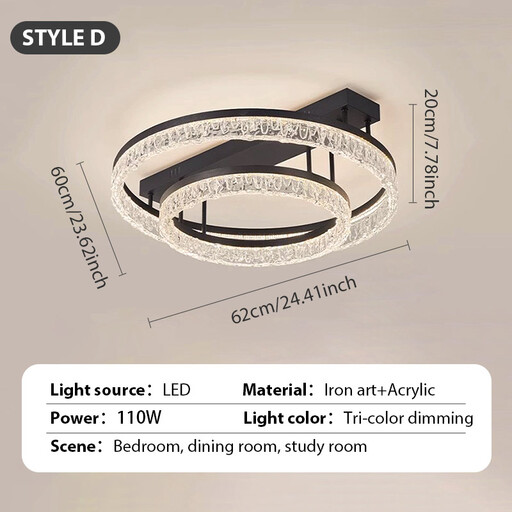
Why it suits this profile: This round ceiling light is designed for bedrooms, living rooms and hallways. The three colour temperatures let you adjust the lighting atmosphere to suit each room.
You are not limited to a single fixed colour temperature. Before ordering, however, check the dimensions, light output and included mounting components on the product page.
Round metal design; three colour temperatures; suitable for several indoor spaces.
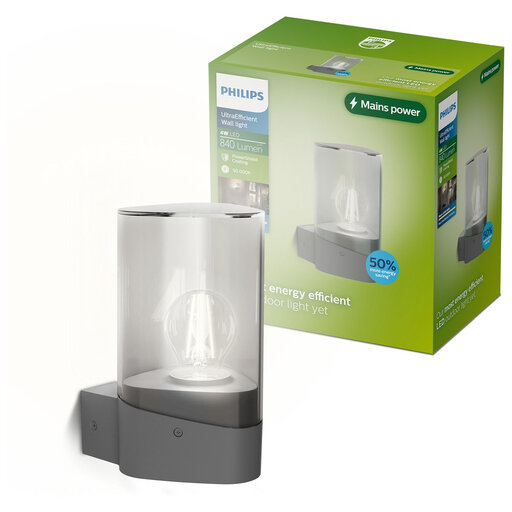
Why it suits this profile: A suitable choice for anyone looking for a fixed outdoor wall light with warm white light and a replaceable E27 light source.
The E27 fitting means you are not tied to a single integrated LED module. The IP44 rating makes the light suitable for splashing water, but not for every exposed location.
E27 fitting; 840 lumens; 2700K; aluminium housing and PowerShield coating according to the product information.
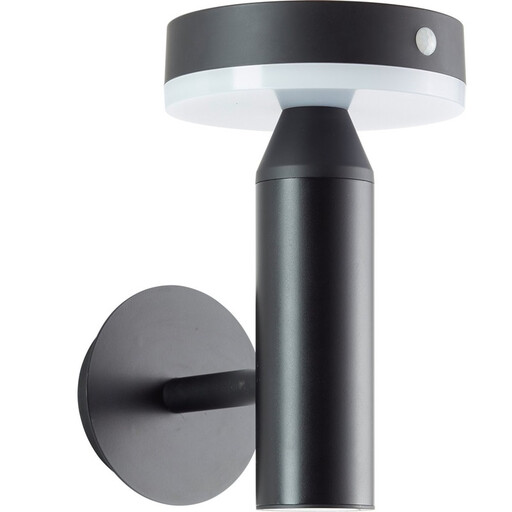
Why it suits this profile: This solar outdoor light is designed for gardens, balconies, terraces or garden paths where no fixed power connection is available.
There is no need to run a cable to the light. Bear in mind that performance depends on daylight, battery charge and the chosen installation location.
Integrated LED; 350 lumens; 4000K; solar power and motion sensor with 120° detection, according to the product specifications.
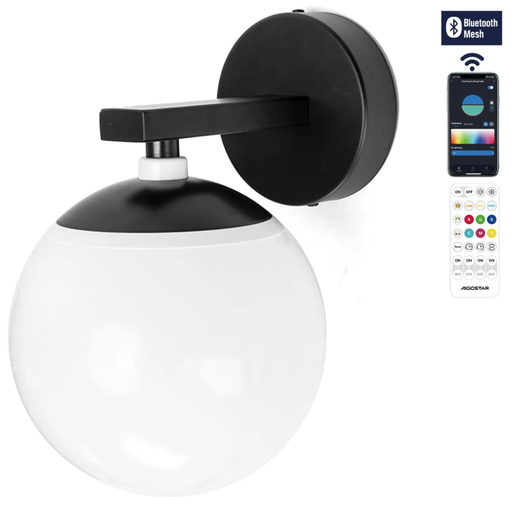
Why it suits this profile: This Bluetooth mesh wall light is ideal for users who want to connect multiple light points and create different layers of lighting.
Check beforehand that Bluetooth mesh is compatible with your existing system. The product information states that more than 200 devices can be connected, but compatibility with other brands may vary.
Bluetooth mesh; upward and downward light distribution; aluminium alloy, ABS and PC; CE and RoHS listed.
We have put together a complete, up-to-date list of products that fully meet these strict selection criteria and the applicable European safety regulations.
Many households choose warm white light of around 2700K to 3000K for the bedroom. This creates a softer feel than 4000K. For a desk or reading corner, more neutral light may be more practical. A ceiling light with multiple colour temperatures offers greater flexibility.
Lifespan varies depending on the product and usage conditions. Some models, for example, state 15,000, 25,000 or up to 50,000 operating hours. These figures come from product specifications or, where they form part of brand communications, from information provided by the manufacturer. Switching frequency, heat dissipation, moisture and continuous use can all affect the actual lifespan.
LED lighting generally uses less electricity than a comparable traditional light source at the same light output, but compare lumens, wattage and usage time. A 4 W lamp that is left on for long periods every day may ultimately use more electricity than a more powerful lamp that is only used for a short time. With outdoor lighting, a motion sensor and solar power can limit the number of hours powered by the mains, but brightness and operating time will then depend on the conditions.
