What should you look for when choosing?
Compare the nutritional values per 100 g first, then calculate them for the same portion size. The European Union requires nutritional values to be given per 100 g or 100 ml. The Netherlands Nutrition Centre gives 164 kcal and 14.9 g of fat per 25 g of unsalted nuts as a general reference; these are not the values for a specific pack.
| What matters |
What to check |
Who is this most important to? |
| Proven fat reduction |
Check the claim, the reference product and fat per 100 g. |
If I want to eat less fat, I want to know what the comparison is based on; around 31% of consumers prioritise a proven reduction in fat. |
| Calories per portion |
Compare kcal per 100 g and calculate the values for the same portion. |
If I mainly want to consume fewer calories, I look at how much I actually serve myself; around 25% of consumers prioritise calories in their portion. |
| Unsalted ingredients |
Check that it’s the unsalted version, and look at salt and fat separately. |
If I deliberately choose unsalted nuts, I want to assess the ingredients separately from any fat claim; around 19% of consumers prioritise this. |
| Flavour and sharing |
Choose the type of product and match the pack size to what you want to serve. |
If the occasion and sharing are most important to me, I look at flavour and texture first; around 13% of consumers do the same. |
| Allergens for guests |
Read the ingredients and warnings on the current pack. |
If I’m serving someone with a known allergy, the product must be suitable for that guest; around 12% of consumers make allergens their first selection criterion. |
Nuts and nut mixes at Joybuy
This selection includes unsalted peanuts and nuts, as well as a nut and fruit mix. Compare the ingredients, portion packaging and current nutrition table when fat or calories are a deciding factor.
 No image available
g’woon unsalted peanuts, 250 g
An unsalted peanut option for anyone looking for a simple snack to serve with drinks.
The product description lists peanuts and sunflower oil, and notes that traces of cashews may be present.
View at Joybuy
 No image available
ChaCha Daily Nuts, 115 g (5 × 23 g)
The individually wrapped portions are handy if you want to measure out how much you eat at each snack break.
The pack contains five 23 g portions and a mix of nuts and dried fruit, including walnuts, raisins, cranberries, cashews, almonds and hazelnuts.
The pack contains a desiccant sachet, which is not for consumption.
View at Joybuy
 No image available
g’woon roasted unsalted cashews, 200 g
An option for anyone looking for roasted, unsalted cashews to serve with drinks.
Contains cashews. Check the current nutrition table if you want to compare fat and calories.
View at Joybuy
 No image available
g’woon unsalted nut mix, 200 g
This mix is ideal if you’re looking for an unsalted combination of nuts to serve with drinks.
The description lists peanuts, almonds, cashews, Brazil nuts and hazelnuts, with no added salt.
View at Joybuy
 No image available
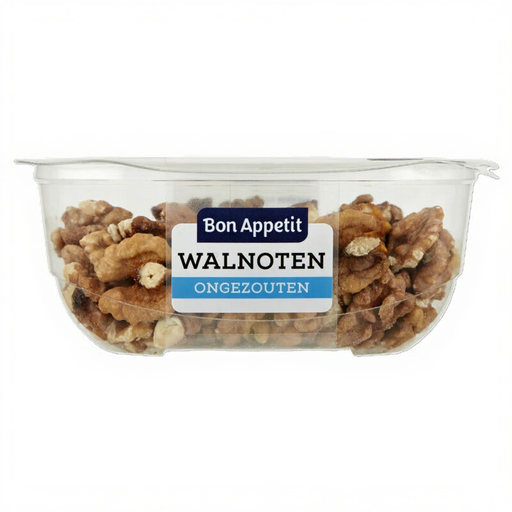
Bon Appétit unsalted walnuts, 110 g
An option for anyone looking for unsalted walnuts to serve with drinks.
The walnuts are in their shells, so you’ll need to crack them before eating.
View at Joybuy
Frequently asked questions
Do ‘low-fat’ and ‘reduced-fat’ mean the same thing?
No. The European Commission defines ‘low fat’ for solid foods as no more than 3 g of fat per 100 g. A reduced-content claim compares the product with reference products, so it doesn’t have the same absolute limit. If you’re looking at a specific pack, check what the claim is based on.
How do I compare nuts with different portion sizes?
First compare the values per 100 g, then calculate them for the same portion weight. Multiply the value per 100 g by your chosen portion weight and divide by 100. Do this separately for calories and fat. The European Union explains that nutritional values are given per 100 g or 100 ml and as average values.
What should I check if a guest has a known allergy?
Read the ingredients and any precautionary warnings on every current pack before serving the snack. The NVWA lists peanuts and tree nuts as separate allergens; a claim about fat says nothing about whether a product is suitable for someone with an allergy.
What should I look out for when serving nuts to young children?
Don’t assume that unroasted or unsalted nuts are suitable. The Jumbo product page for Jumbo Unroasted Nut Mix 200 g warns that young children may choke on nuts.
How should I store opened unsalted cashews?
For opened unsalted cashews, the Netherlands Nutrition Centre recommends storing them for six months in a kitchen cupboard or one year in the freezer. It lists rancidity, a tough texture and mould as signs that they have spoiled. Don’t automatically apply this advice to other types of nuts or coated snack nuts.


