Choose a compact light tent if you mainly want to photograph individual pendants against a plain, consistent background. Opt for a separate softbox with a suitable light if you want to control the position of the light yourself. Measure the space available on your table, and if buying a separate light modifier or light, check that the light, power supply and fittings are included and compatible. Diffused light can soften harsh highlights, but white balance also affects the colour of the resin, as Adobe explains.
Who is this suitable for?
Maker with a small worktable
For anyone who photographs individual pendants in one place and wants to put the setup away after use. Bonjourfoto covers jewellery product photography, and the manufacturer describes the PULUZ PU5021 as suitable for small products, among other things.
Maker of glossy pendants
For anyone who wants to move or minimise distracting reflections on resin without losing the desired glossy effect. Bonjourfoto discusses reflections in jewellery photography, while Adobe explains how diffused light can soften harsh highlights.
Maker with changing product photos
For anyone who sometimes photographs pendants on their own and sometimes as part of a styled scene, and wants to adjust the position of the light accordingly. Adobe explains diffused light, and SmallRig describes the RA-D30 as a light modifier for specific light models.
What should you consider when choosing?
When working with glossy resin, reflections, table space, colour and how much flexibility you want in your setup all need to be considered separately.
Compact light tent
Choose this if: you usually photograph individual pendants in the same way against a fixed background.
Trade-off: the tent takes up space and gives you less freedom to change the lighting and camera angles.
Separate softbox with a suitable light
Choose this if: you want to position the light precisely for different compositions or reflections.
Trade-off: a softbox isn’t necessarily a complete kit, so check whether the light, power supply and fittings are included.
| What to consider |
What should you check? |
Who is this important for? |
| Managing reflections |
Can you move the light, diffuser or pendant? Does the opening help limit unwanted reflections? |
When photographing glossy pendants, I want to be able to move distracting reflections without losing all the shine. Around 31% of consumers prioritise controlling reflections. |
| Space on and around the table |
Compare the assembled size with the space needed for your camera, hands, cables and any light stand. |
When sharing a worktable, I want enough room to take photos and put the setup away afterwards. Around 25% of consumers prioritise table and storage space. |
| Colour and detail |
Check the resin under the same lighting and adjust your camera’s white balance or edit it afterwards if needed. |
If the resin colour and small details need to remain clear, I want to assess them separately from the reflections. Around 25% of consumers prioritise colour and detail. |
| Flexibility and what’s included |
Check the contents list for the light, power supply, diffuser, backgrounds and suitable fittings. |
For different backgrounds or lighting setups, I want to know which components I can actually use. Around 19% of consumers give flexibility and kit contents top priority. |
Common buying mistakes
-
Assuming a separate softbox is a complete lighting kit
A softbox shapes the light from a light, but it doesn’t automatically come with the light itself or the power supply you need. SmallRig describes the RA-D30 as a light modifier for the RC 60/100 COB lights.
Check the contents list and fittings for the version you’ve chosen before combining components.
A separate light modifier may also need a suitable light, power supply or fittings, so check what’s included with your version.
-
Looking only at the size of the pendant
The assembled tent, camera opening and any light stand also need to fit on your available worktable. According to the manufacturer, the PULUZ PU5021 measures 24 × 23 × 23 cm when assembled; the Bresser BR-2820L measures 60 × 60 × 60 cm.
Measure the available workspace and compare it with the assembled dimensions, not just the size of the item you’re photographing.
-
Assuming soft light will automatically give you accurate colours
Diffusion affects how harsh the light is; white balance affects how colours appear in the photo. Adobe describes these as separate adjustments.
Assess reflections and resin colour separately in a test shot, and adjust the white balance if needed.
Brands and models to consider
These models illustrate different setups. Check the dimensions, contents and compatibility of the version you’re considering.
PULUZ
Compact light tents for small products, including a model with built-in lighting and backgrounds.
- The manufacturer gives the assembled dimensions of the PU5021 as 24 × 23 × 23 cm.
- According to PULUZ, the USB cable supplied with this model requires a separate 5 V/2 A power supply; USB outputs above 5 V are not supported.
Godox
Compact table lights and separate light modifiers, including the LC30 series and EazyFlow softboxes.
- According to Godox, the LC30D has a fixed colour temperature of 5600 K, while the LC30Bi is adjustable from 3200–6500 K.
- The mounting rings for EazyFlow softboxes are interchangeable, so check which ring and components are included with your chosen version and whether they’re compatible.
SmallRig
Separate compact light modifiers for compatible studio lights.
- SmallRig lists an opening of approximately 29 cm, a diffuser and a grid for the RA-D30.
- The RA-D30 isn’t a complete lighting kit, so check whether you need to buy a light and power supply separately and whether they’re compatible.
Bresser
Light tents for product photography, including the BR-2820L with lights and backgrounds.
- Bresser lists the dimensions of the BR-2820L as 60 × 60 × 60 cm.
- This size requires more workspace than a compact tent, so measure your table before considering this model.
Joybuy products
These Joybuy products are adjustable photography and ring lights for photo and video setups, not dedicated softboxes or light tents. Check whether their shape and light spread suit the reflections on your resin pendants.
 No image available
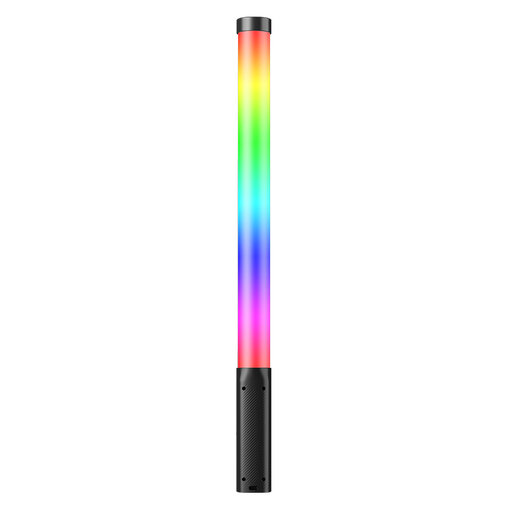
Ulanzi VL119 10W RGB Light Wand
A light wand to consider if you’re looking for adjustable lighting for photo or video setups.
Power: 10 W. Colour temperature: 2500–9000 K. Connection: 1/4-inch tripod thread. The product information lists 20 lighting effects.
Don’t look directly at the LEDs, and keep the device away from water and moisture.
Joybuy
 No image available
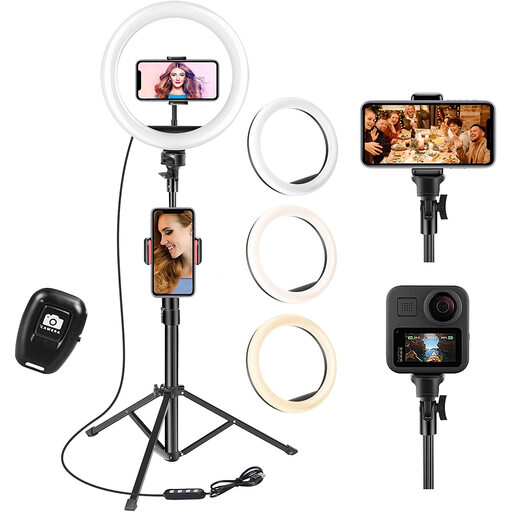
Ring Light with Tripod, 10 inch
A ring light with a tripod to compare if you want to adjust the position of your light source.
The product description lists three colour temperatures and ten brightness levels. It also states that the tripod adjusts from 44 to 156 cm.
Check whether the ring-shaped light source works with the reflections you want to control on your pendant.
Joybuy
 No image available
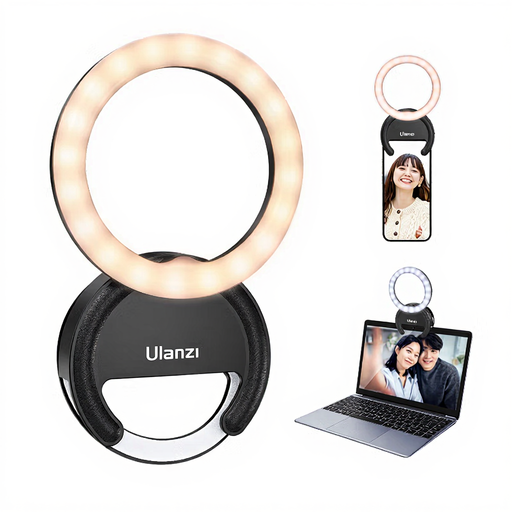
ULANZI 4" Phone Ring Light
A phone ring light to consider if you’re looking for a compact light source for photo or video setups.
Colour temperature: 3000–7000 K. The product title lists five brightness levels.
Check whether attaching it to a phone suits the camera setup you’re using to photograph your pendant.
Joybuy
Frequently asked questions
Is a light tent the same as a separate softbox?
No. A light tent surrounds the subject and may include lights and backgrounds; a separate softbox shapes the light from a compatible light. For both, compare the contents list with the space you’ll need.
How do I get started photographing glossy resin pendants?
Start with diffused light and move the light source or pendant until distracting reflections shift. Check the white balance separately if the resin colour looks wrong; diffusion and white balance affect different aspects of a photo, as Adobe explains.
Can any USB charger power a compact PULUZ light tent?
No. Follow the power requirements for the exact model. PULUZ specifies a 5 V/2 A power supply for the PU5021 and warns against using a USB output above 5 V. This isn’t a general requirement for all light tents.
Does photography lighting need a CE mark in the Netherlands?
The rules that apply depend on the specific device. For low-voltage regulations, the NVWA describes a scope of 50–1000 V AC and 75–1500 V DC; other products may be subject to different safety rules. Check which rules apply to the product in question.
What can I do if a light I bought online is faulty?
For a consumer purchase, the product must be of satisfactory quality, and the retailer is your point of contact if it isn’t. The Dutch government states that there is no fixed statutory guarantee period. Online purchases from a business also often come with a 14-day cooling-off period, although there are exceptions. This cooling-off period is separate from your rights if a product is faulty.


