
Vandaag of morgen in huis

Kwaliteit gegarandeerd

Welkomstaanbiedingen ontgrendelen: GRATIS bezorging | Tot 80% korting | Gratis 30 dagen JoyPlus-proefperiode
Download de app
During heavy deadlifts, rows, shrugs and lat pulldowns, your forearms can tire before the muscle group you’re trying to train. Lifting straps help support your connection to the weight or bar, so grip failure is less likely to limit your set. They’re no substitute for good technique and aren’t suitable for every exercise, but they can be useful for heavy pulling movements.
When buying, look beyond a striking colour or claims such as “extra strong”. The right choice depends on the material, wrist finish, how you use the strap and which exercises you need it for.
According to the product description, a rubber coating can provide more friction against the bar than a standard cotton strap. That doesn’t mean every user will experience the same grip. The bar’s diameter and finish, sweaty hands and how you wrap the strap all make a difference too.
So check:
A narrow cotton strap without padding can dig into your skin during heavy sets. You’ll soon notice if the wrist finish is suitable, especially when doing several reps or tightening the strap firmly.
Lifting straps with neoprene padding spread the pressure over a larger area. This can feel more comfortable, but padding doesn’t automatically make a strap suitable for every wrist. Check the width and adjust the loop carefully before adding weight.
Lifting straps are designed to help with pulling exercises. They’re not safety equipment and won’t prevent injuries caused by poor technique. Follow the product instructions and check the seams, fabric and any rubber coating before every workout.
According to the product information, the Thor Athletics models mentioned are not suitable for Olympic weightlifting, such as the snatch and clean and jerk. Being able to release the bar quickly can be important during these exercises.
Cotton lifting straps are flexible and generally feel familiar. The supplied product specifications state that the strap section of the Thor Athletics models is made from 100% cotton. Models with extra grip also have a rubber layer on the side that sits against the bar.
So if you’re looking for lifting straps with extra grip, anti-slip lifting straps or gym grip straps, check:
According to the product description, the extra-grip models are 50,8 to 55,8 cm long and 3,8 cm wide. These measurements give you a useful guide, but always check that the design suits your wrist and how you plan to use it.
When choosing wrist straps for strength training, comfort and pressure distribution are important considerations. Neoprene padding can feel softer against your skin during heavy sets. Also check the loop design: a strap that’s difficult to position may twist or loosen during your workout.
Check whether you’ll receive one strap or a set of two. According to the product information, the Thor Athletics lifting straps in this selection are supplied as a pair. This matters for deadlifts and other exercises where you use both hands at once.
Keep training without straps too. This helps you maintain focus on your natural grip and technique. Hand-wash the cotton models according to the product information and leave them to air-dry. Machine washing may cause shrinkage or damage the rubber coating.
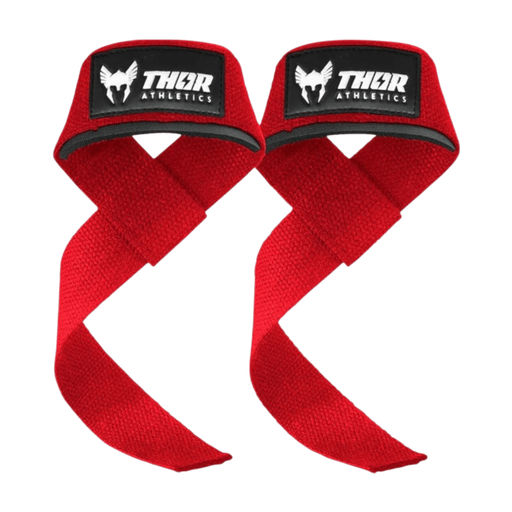
Why it suits this profile: A straightforward starting point for anyone looking for support during deadlifts and rows without choosing an extra-grip style straight away. The set is supplied as a pair.
The product description lists 100% cotton, reinforced stitching and neoprene wrist padding. Be sure to check the seams and fit yourself before use.
Cotton strap, neoprene padding, length of 50,8–55,8 cm and width of 3,8 cm; supplied as a pair.
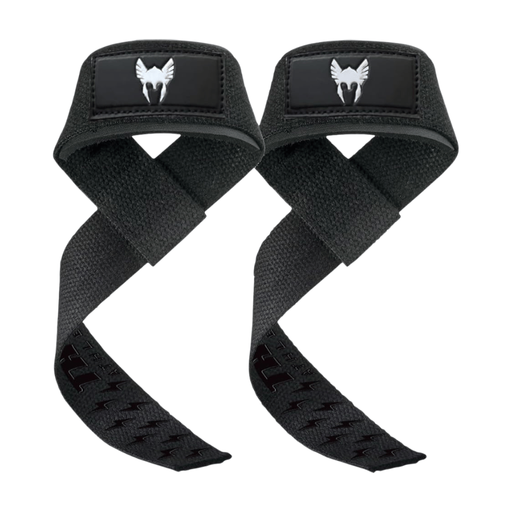
Why it suits this profile: A good choice if you pay extra attention to the surface that contacts the bar and to wrist comfort during heavy pulling exercises.
The product description lists a rubber coating alongside cotton and neoprene. Check the coating regularly for signs of peeling and use the correct wrapping technique.
Extra rubber layer, neoprene wrist padding, 100% cotton base and dimensions of 50,8–55,8 cm by 3,8 cm.
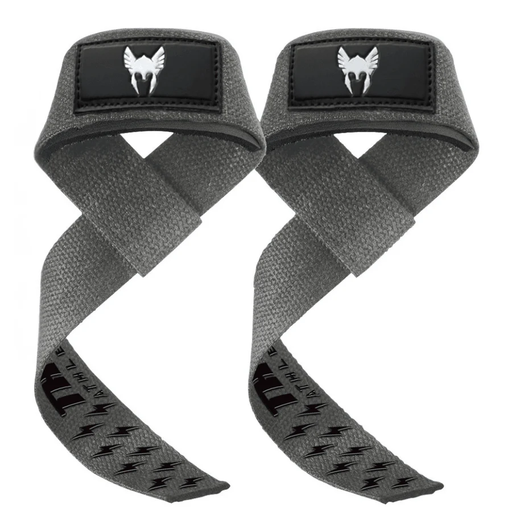
Why it suits this profile: A practical option if you regularly do heavy deadlifts, rows or shrugs and are considering an anti-slip style.
The specifications list an additional rubber contact layer and reinforced stitching. Check the strap for wear before every session.
Cotton, neoprene padding, rubber anti-slip layer, 3,8 cm width and supplied as a set of two.
We’ve put together a complete, up-to-date list of products that meet these strict selection criteria and the applicable European safety regulations.
Yes, beginners can use them for controlled pulling exercises. First, learn the correct wrapping technique with a light weight. Don’t use straps to lift a weight you can’t handle with good technique without assistance.
Their lifespan depends on how often you train, the loads you use, how you care for them and the material. Check the fabric, stitching and rubber layer before every workout. Replace a strap as soon as you notice fraying, loose seams or damage. A specific lifespan can’t be guaranteed based on the product specifications.
Follow the instructions for the specific model. For the Thor Athletics models mentioned, the care instructions specify hand-washing with mild detergent and cold water. Leave the straps to air-dry and avoid using a washing machine, especially if they have a rubber coating.
