
Vandaag of morgen in huis

Kwaliteit gegarandeerd

Welkomstaanbiedingen ontgrendelen: GRATIS bezorging | Tot 80% korting | Gratis 30 dagen JoyPlus-proefperiode
Download de app
A lidded frying pan is handy for frying, stir-frying, braising and simmering. But a pan that looks versatile on paper can disappoint in practice. A base that’s too small, a lid that doesn’t fit properly or a coating that doesn’t suit the way you cook can quickly become frustrating.
As a Joybuy Product Recommendation Officer, I’ve picked out the key product specifications for you. That way, you can compare a lidded frying pan, deep frying pan or sauté pan based on the features that really matter in a UK kitchen.
A product description may say that a pan is suitable for gas, electric and induction hobs, but that doesn’t mean it will work optimally on every cooking zone. Check whether it has a magnetic induction base or a multi-layer base. Also look at the diameter of the base, not just the diameter of the rim.
An induction-compatible lidded frying pan should also fit the cooking zone well. A 28 cm pan on a small induction zone may not heat evenly.
A non-stick frying pan is practical for eggs, pancakes and dishes that need little oil. However, its lifespan depends greatly on how you use it. Metal utensils, heating an empty pan on high and abrasive cleaning products can damage the coating.
Look out for the difference between:
According to the product information from some brands, certain models are, for example, free from intentionally added PFOA, PFAS or PTFE. Treat this as a manufacturer’s product specification, not a general guarantee about all coatings or a health claim.
A glass lid is useful because you can keep an eye on your food without constantly opening the pan. Check whether the lid is included, whether it has a steam vent and what the maximum oven temperature is. A silicone grip, Bakelite handle or glass knob may have different temperature limits from the pan itself.
A stainless steel frying pan usually has a robust, uncoated interior. This is useful for searing and cooking at high temperatures, but you’ll need to preheat the pan properly and use enough fat to reduce sticking. A multi-layer base with an aluminium core can improve heat distribution.
Aluminium pans are often lighter and heat up quickly. With a ceramic frying pan or another coated pan, care is especially important: use soft kitchen utensils and follow the manufacturer’s cleaning instructions.
A 24 cm frying pan is a good fit for smaller households and portions for one or two people. A 26 cm pan is often practical for three to four people. A 28 cm frying pan gives you more room for vegetables, pasta, meat or one-pan meals, but it also needs a larger cooking zone and more storage space.
As well as the diameter, check:
A deep frying pan is less likely to let food splatter than a shallow one, but it may feel heavier when full.
For a pan that’s suitable for all hob types, the product information should explicitly mention gas, electric, ceramic and induction hobs. Check whether halogen is listed too, if that’s the type of hob you use.
Oven-safe doesn’t automatically mean “oven-safe with the lid on”. For example, the WMF Vitalis is listed in the product information as suitable for up to 180 °C with the lid on and 250 °C without it. The Tefal Easy Chef is listed as suitable for up to 175 °C. Always follow the lowest temperature limit for the pan, handle and lid.
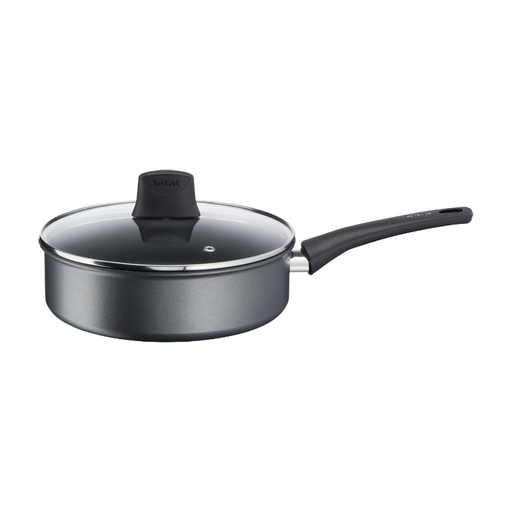
Why it suits this profile: The 24 cm size is easy to handle for smaller portions and everyday cooking. According to the product description, this pan is suitable for induction and other common hob types.
The product details list a glass lid, a non-stick coating and an oven temperature of up to 175 °C. This makes the key usage limits clearer than they would be for a vaguely described pan.
24 cm, approximately 1.3 kg, glass lid, suitable for all hob types listed and dishwasher-safe according to the product information.
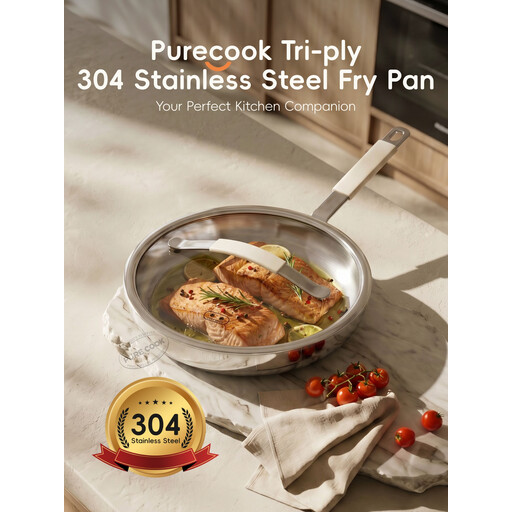
Why it suits this profile: The 26 cm pan is designed for everyday cooking for around three to four people. Its three-layer construction and 304 stainless steel interior make it a good choice for anyone who doesn’t want a traditional non-stick coating.
The product information specifically lists 304 stainless steel, a three-layer base, a glass lid and compatibility with induction and gas hobs. This makes it easy to check the material and hob compatibility.
26 cm, 304 stainless steel, three-layer base, glass lid and an insulated handle according to the product description.
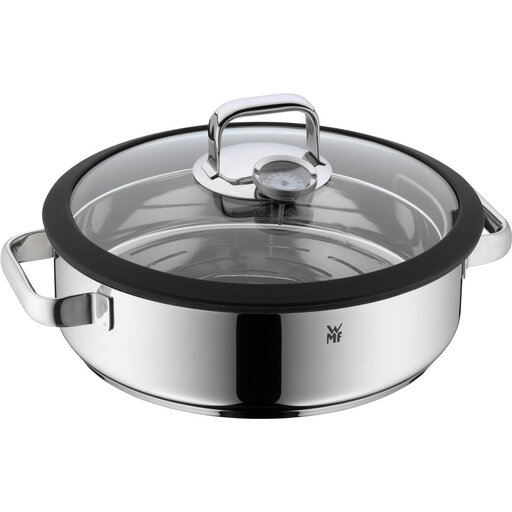
Why it suits this profile: This pan is designed for larger quantities and cooking methods such as steaming, roasting and braising. Its capacity of around 5 litres makes it suitable for families and batch cooking.
The specifications list different oven temperatures for use with and without the lid. They also state that the thermometer isn’t dishwasher-safe, making care requirements clear.
28 cm, approximately 5 litres, suitable for induction and other heat sources, with a glass lid, steamer insert and thermometer according to the product information.
We’ve put together a complete, up-to-date list of products that meet these strict selection criteria and comply with current European safety regulations.
The right cleaning routine can prevent a lot of damage:
The product information may say that a pan is dishwasher-safe, but hand-washing is a gentler option for many pans. Always check the instructions for the specific model.
A 24 cm pan is often big enough for one or two people. A 26 cm pan suits around three to four people. Choose 28 cm if you want to cook larger portions, vegetables or one-pan meals all at once.
It depends on the model. Check the maximum temperature for both the pan and the lid. A pan that’s oven-safe without the lid may not be suitable for the oven with a glass lid or handle.
According to the product description, a ceramic coating can make it easy to release food, but it needs careful handling and often requires hand-washing. Stainless steel has no non-stick coating, but food may stick more easily if the pan isn’t preheated properly or you don’t use enough fat. The best choice depends on your cooking technique and care preferences.
