
Library lending data analyst
You want to read tables and reports at the same time. Screen space and readability are important considerations: Arboportaal lists small symbols and low contrast among the possible causes of poor readability.


To analyse library loans across two screens, choose a monitor that works with your computer’s video outputs and gives you enough room for tables and reports. Then compare resolution, adjustability and connections. A USB-C hub can simplify a laptop setup, but you won’t need one if your computer already has two suitable video outputs. Dell Support recommends checking that your computer and monitor support your preferred screen setup.
You want to read tables and reports at the same time. Screen space and readability are important considerations: Arboportaal lists small symbols and low contrast among the possible causes of poor readability.
You want to check in advance whether your laptop supports two independent displays, and whether a USB-C hub provides the connections and power you need. Dell Support highlights connections and display support as key considerations when setting up multiple monitors.
You want to add a second screen without replacing your existing setup unnecessarily. Compare the size, height and available connections; STL’s health and safety catalogue describes using two screens side by side and at the same height.
Suitable if: your computer has two suitable video outputs and you want to view lending data and source information on separate screens.
Keep in mind: check the ports, cables and supported screen setup. You’ll also need enough desk space for two screens. Dell Support explains how to set up multiple monitors.
Suitable if: you want to connect a compatible laptop to a monitor via USB-C and need hub features.
Keep in mind: a USB-C connection alone doesn’t guarantee that daisy-chaining to a second screen will work. Check the video support, power delivery and any MST requirements for the specific devices.
Suitable if: your existing screen is still useful and you want to display an additional report or data source.
Keep in mind: compare the size, resolution and height with your current screen. Extra hub features may not be necessary.
| Key consideration | What should you check? | Who is this important for? |
|---|---|---|
| Readability and resolution | Compare the resolution and dimensions of the new screen with your existing one and the reports you use. Also check which resolution your computer supports. | If you want to read large tables and report rows at the same time, focus on readability; around 33% of consumers prioritise this. |
| Connecting two screens | Check your computer’s video outputs, the monitors’ inputs and the cables you’ll need. If you plan to daisy-chain, also check the manuals for the required video function and MST support. | If you want two independent displays without choosing an unsuitable cable or hub setup, focus on connection compatibility; around 27% of consumers put this first. |
| Working posture and desk space | Measure the available space and check the height adjustment and footprint of both screens. | If you use two screens side by side for long periods, you’ll want to adjust their position and viewing height; around 27% of consumers give this their highest priority. |
| Adding to an existing screen | Note the model, dimensions and inputs of your current monitor, then compare them with the second one. | If you want to keep your existing monitor and add only a missing screen feature, focus on finding a suitable match; around 13% of consumers choose this as their main priority. |
Daisy-chaining has specific requirements for both the computer and monitor. According to Dell Support, it won’t work via HDMI or via USB-C without the required video mode.
Check the manuals for the specific devices and the available ports before relying on daisy-chaining.
Depending on the connections, you may need a suitable adapter or a separate video cable.
A screen’s diagonal measurement doesn’t tell you how many pixels it has. The QHD models mentioned have a resolution of 2560 × 1440, while Philips lists Full HD at 1920 × 1080 for the 24B2G5301/00. Resolution alone doesn’t determine whether text in your reports will be comfortable to read.
Compare both the size and resolution with your existing screen, and see which display scaling works best for your documents.
When two screens sit side by side, their position and height help shape your workspace. STL’s health and safety catalogue describes using two screens at the same height.
Measure your desk and check how adjustable both screens are before choosing a setup.
A suitable monitor arm or stand may be needed to position the screens where you want them.
According to Dell’s product specifications, the Pro Plus models described here include a 23.8-inch QHD monitor and a version with a USB-C hub.
Philips describes the 24B2G5301/00 as a 23.8-inch Full HD business monitor with built-in USB-C docking.
The E Series includes the E24mv G4, a 23.8-inch Full HD monitor with conferencing features, according to HP.
The ThinkVision E24-40 is described in the Dutch product information as a 23.8-inch Full HD monitor.
These Joybuy picks are designed for using two screens with tables and reports, with options for a laptop connected via USB-C or as an addition to an existing screen. Before buying, check that the connections on your chosen monitor are compatible with your computer.
 No image available
A wide screen for viewing reports and lending data side by side; check that it fits your desk.
34.1-inch curved WQHD IPS; USB-C hub; webcam; 100 Hz; 90 W Power Delivery.
 No image available
An option to compare if you’re looking for a QHD screen with hub features for a laptop setup; check your laptop’s USB-C support.
23.8 inches; 2560 × 1440 pixels; USB-C hub; 90 W Power Delivery; RJ45.
 No image available
A second screen to consider alongside an existing monitor; compare its resolution, height and connections with your current screen.
23.8 inches; 2560 × 1440 pixels; HDMI and DisplayPort; height, tilt, swivel and pivot adjustment.
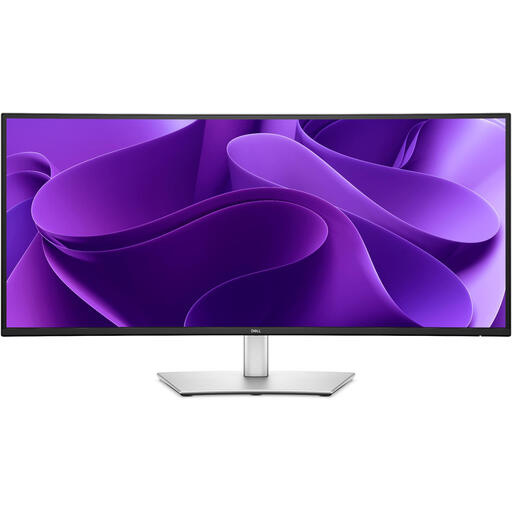 No image available
The wide resolution is worth considering if you want to view several report windows side by side; check how much desk space you have.
34.1 inches; 3440 × 1440 pixels; USB-C hub; 90 W Power Delivery; RJ45; KVM switch.
 No image available
An option for a workspace with several applications open side by side; check that the width and adjustability suit your desk.
34 inches; 3440 × 1440 pixels; USB-C dock; up to 95 W Power Delivery; RJ45; KVM switch; 15 cm height adjustment.
No, you can use different monitors together. However, their size and resolution can affect how you move between screens. Most importantly, check that your computer supports the extended display arrangement you want. Dell Support explains how to use different types of monitors in a multi-screen setup.
In Windows, choose an extended display rather than mirroring, then arrange the screens in the display settings to match their positions on your desk. Microsoft Support explains these settings for multiple monitors.
No, a USB-C connection alone doesn’t confirm that daisy-chaining is possible. Dell Support notes that it won’t work via HDMI or via USB-C without the required video mode. Check the connections and MST support of your specific computer and monitor.
A second screen doesn’t in itself change your GDPR obligations. If lending data can be linked to individuals, your organisation must determine appropriate security measures for the data and the working environment. The Dutch Data Protection Authority explains this responsibility for organisations that process personal data.