
Parents comparing sugars on the label
You’re looking for a crispy after-school snack and want to know how much total and added sugar a product contains. These two label values don’t mean the same thing.


For an after-school snack, compare more than just a claim about added sugars. Check total sugars per 100 g, the ingredients and the portion size too. Plain Melba toast may state 0 g of added sugars and still contain sugars and salt; a cracker is a different type of product, so you’ll need to weigh up its nutritional values and allergens separately.
You’re looking for a crispy after-school snack and want to know how much total and added sugar a product contains. These two label values don’t mean the same thing.
You’re packing something for a child or group where allergens or school or after-school club rules need to be considered. Both the current packaging and the local rules matter.
A crispy cracker can be an alternative if it doesn’t have to be toast. As well as sugars, compare fibre, protein, energy, fat, salt and allergens, using the same quantity each time.
Decide what matters most for this snack, then compare the other information on the label. Toast and crackers are different types of product, so when comparing them, also consider the portion you’ll actually pack.
| What to consider | What to check when buying | Who it matters to |
|---|---|---|
| Comparing sugars | Check ‘of which sugars’, ‘of which added sugars’ and the ingredients per 100 g. | I want to avoid mistaking ‘no added sugars’ for ‘no sugar’. For around 36% of consumers, comparing sugars would be the main priority. |
| Allergens and rules | Check the current allergen information and, if necessary, ask about the school or after-school club rules. | If I’m packing something for school, it needs to be suitable for the allergens relevant to the child or group. This would be the top priority for around 29% of consumers. |
| Nutritional value and portion size | Compare fibre, protein, energy and fat per 100 g, then consider the portion you’ve chosen. | My child wants something crispy after school, but I also want to know how the nutritional value of a cracker differs from toast. Roughly 21% of consumers would weigh this up first. |
| Packing and storage | Check the portion sizes and the storage instructions after opening. | I want to be able to pack the snack and store an opened pack according to the label. For around 14% of consumers, this would be the main consideration. |
Albert Heijn states that AH Melba toast naturel contains 0 g of added sugars, but also 3.2 g of total sugars per 100 g. These are two different values on the label.
Read both values on the same 100 g basis before comparing products.
Albert Heijn states that Bolletje Proteïn & Low carb Crackers contain 17 g of fibre and 35 g of protein per 100 g, alongside 484 kcal and 28 g of fat per 100 g. A cracker is also not the same as toast.
If you’re considering a cracker instead of toast, compare energy, fat and portion size too.
The toast and cracker examples mentioned contain gluten-containing cereals and other allergens. The information that’s relevant varies from product to product.
Check the current packaging and the school or after-school club rules before packing a snack.
According to the Netherlands Nutrition Centre, using baker’s salt when baking is not compulsory. The type of product alone doesn’t tell you whether baker’s salt has been used.
If baker’s salt matters to your choice, check the ingredients on the pack you’ve chosen.
The label information below applies to the products mentioned, not to a brand’s or shop’s entire range.
AH Melba toast naturel is an option for anyone who mainly wants to check the added sugars information.
Haust Krokant Toast is made to be eaten with toppings. Assess its sugar content and ingredients separately from the description of its crispness.
Bolletje Proteïn & Low carb Crackers are only an alternative if a cracker works for you instead of toast.
These are crispbreads and crackers to consider as crispy alternatives to toast. For an after-school snack, check the current packaging for total and added sugars, portion size and allergens.
 No image available
These rye crackers make a crispy alternative when you don’t need toast. Check the sugar information and allergens on the pack, paying particular attention to rye and barley.
 No image available
This wholemeal crispbread is an option if you’re looking for a toast-like snack. Before packing it, check the current sugar and allergen information, especially if sesame or gluten is a concern.
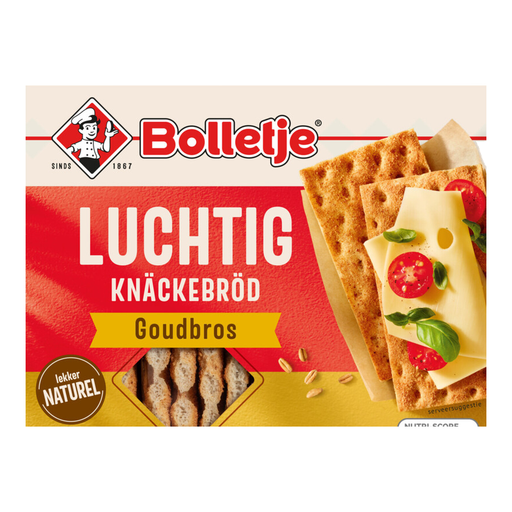 No image available
This crispbread can be a base for a snack with toppings. Compare sugars per 100 g and portion size with other options; check the packaging if wheat, gluten or sesame is relevant to you.
 No image available
These crackers are an alternative if you want to take fibre into account as well as sugars. Compare the nutritional information per 100 g and check the gluten and sesame information before packing.
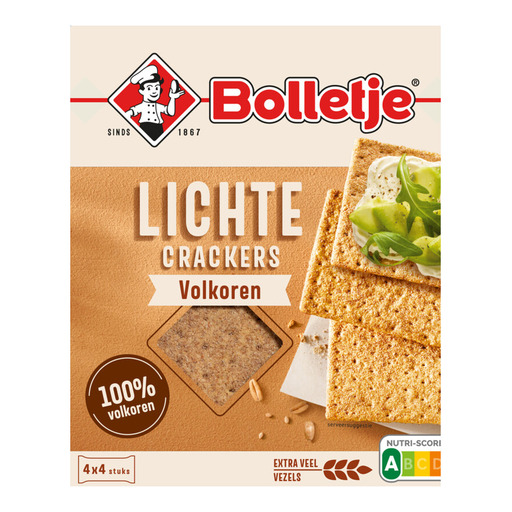 No image available
These wholegrain crackers are suitable if a cracker works for you instead of toast. Check the total and added sugars on the packaging, along with the allergens, including wheat and sesame.
No. Albert Heijn states that AH Melba toast naturel contains 0 g of added sugars, but 3.2 g of total sugars per 100 g. Check both values when comparing toast products.
Check the current packaging for allergens relevant to the child or group, and ask about any school or after-school club rules. According to the Netherlands Food and Consumer Product Safety Authority, prepacked products must display allergen information on the label; the toast and cracker examples mentioned include gluten-containing cereals.
No, you can’t tell from the type of product alone. According to the Netherlands Nutrition Centre, using baker’s salt when baking is not compulsory. Check the ingredients of the toast you’ve chosen if you want to know whether baker’s salt has been used.
Follow the storage instructions on the packaging of your chosen product. Albert Heijn advises storing AH Melba toast naturel in a sealed tin after opening; for Haust Krokant Toast, Jumbo recommends protecting it from moisture and heat.