
Cooking for a large group
You want to make one pot of soup for several guests. The usable capacity matters more to you than the number of programmes. Instant Pot and Philips list the capacity and cooking functions for their respective models.


Choose a multicooker based on the amount of soup that fits below the fill limit for that exact model, rather than relying on its stated capacity in litres alone. Pressure cooking gives you another way to cook dried pulses; if you prefer gentle cooking and adjusting as you go, a model without a pressure-cooking function may be sufficient. Before buying, check the appliance’s manual, model variant and required product marking.
You want to make one pot of soup for several guests. The usable capacity matters more to you than the number of programmes. Instant Pot and Philips list the capacity and cooking functions for their respective models.
You want to cook dried ingredients, so you’re comparing pressure cooking with cooking or simmering without pressure. The Netherlands Nutrition Centre distinguishes between dried pulses, which need to be cooked, and pulses from a tin, jar or pouch, which only need heating through.
You want to make the soup in advance and are considering keep-warm functions, cooling and storage. Manufacturers such as Russell Hobbs and GreenPan list functions that may suit cooking or serving; the Netherlands Nutrition Centre advises not leaving leftovers out of the fridge for more than two hours.
First compare the usable pot capacity with the amount you need for your group. Then choose the cooking method and functions that suit your preparation and serving plans.
| What to consider | What should you check? | Who is this important for? |
|---|---|---|
| Usable capacity | Check the fill markings and manual for the exact model; the stated capacity in litres does not automatically tell you how much soup you can make. | If I’m cooking for several guests, I want to know whether one batch will be enough. Around 36% of consumers say usable capacity is their main concern. |
| Pressure cooking or simmering | Check whether pressure cooking is explicitly listed for the model code and follow the model-specific filling instructions. The Netherlands Nutrition Centre advises cooking dried pulses; pulses from a tin, jar or pouch only need heating through. | If I want to choose the cooking method to suit the ingredients, I weigh up pressure cooking against cooking or simmering without pressure. Around 29% of consumers prioritise the cooking method. |
| Preparation and storage | Check whether the appliance has a keep-warm function, and plan separately how to cool leftovers quickly and store them in a sealed container. The Netherlands Nutrition Centre advises not leaving leftovers out of the fridge for more than two hours. | If I make the soup in advance or serve it later, I want to plan the serving time and handle leftovers properly. Around 21% of consumers say preparation and storage are their main concern. |
| Cleaning and future use | Check which parts are removable, what cleaning instructions apply and which programmes you’ll use after the festive meal, too. | If I want to use the appliance regularly, I look at maintenance and suitable cooking programmes. Around 14% of consumers give these points top priority. |
When pressure cooking, the permitted fill level may be lower than the stated pot capacity. The exact limit depends on the model and ingredients.
First work out how much soup you want to make, then check the fill markings and manual for the exact model variant.
If the usable capacity is too small, you may need to cook another batch or use a second pot.
The listed functions for models such as the Tefal RK8121 and Russell Hobbs Good to Go include cooking or slow cooking, but not pressure cooking.
If you want to use this cooking method, check that pressure cooking is explicitly listed as a function for the full model code.
A keep-warm programme describes an appliance function, but it doesn’t determine how long cooled soup can be stored safely.
Plan serving separately from quickly cooling leftovers and storing them in a sealed container in the fridge or freezer. The Netherlands Nutrition Centre advises not leaving leftovers out of the fridge for more than two hours.
If leftovers aren’t handled properly, you may have to throw the soup away.
The Pro 7.6L is a pressure-cooking model that the manufacturer also says can sauté and slow cook.
Philips describes the HD2823/80 multicooker as an 8-litre model with pressure cooking and a soup programme.
The RK8121 is described as offering cooking and stewing; according to Tefal, the separate Turbo Cuisine CY7548 has a pressure-cooking mode.
According to Russell Hobbs, the Good to Go is designed for cooking, slow cooking, keeping food warm and serving from the same pot.
The Omnicooker Stainless Steel 5.6L is an electric cooking pot with a ceramic non-stick coating.
These product choices are aimed at making soup for a group, with options for both gentle cooking and pressure cooking.
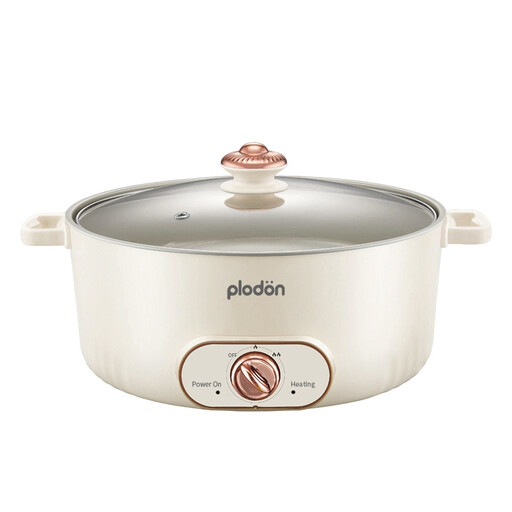 No image available
The description mentions a wide pot for cooking together, soups and stews; the cooking options listed include fast cooking and slow cooking.
The title states 7 L. Pressure cooking isn’t mentioned, so don’t choose this model if you need that function.
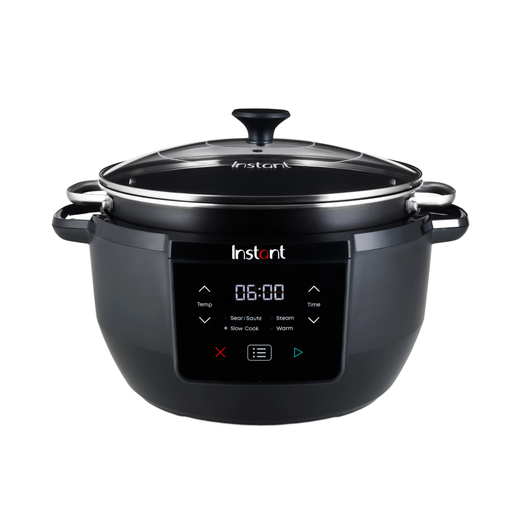 No image available
It’s suited to gentle cooking and serving from the removable inner pot; the description lists stewing, steaming and searing.
The description states 7.1 L and up to 10 portions, as well as a keep-warm function. According to the product information, the inner pot isn’t suitable for use on a hob, induction hob or in an oven.
 No image available
The listed functions include pressure cooking, steaming, stewing and slow cooking; the description says it serves 6–8 people.
The title states 6 L and 1000 W. The instructions refer to the MAX mark and a lower 1/2 mark for ingredients that expand, such as beans or grains.
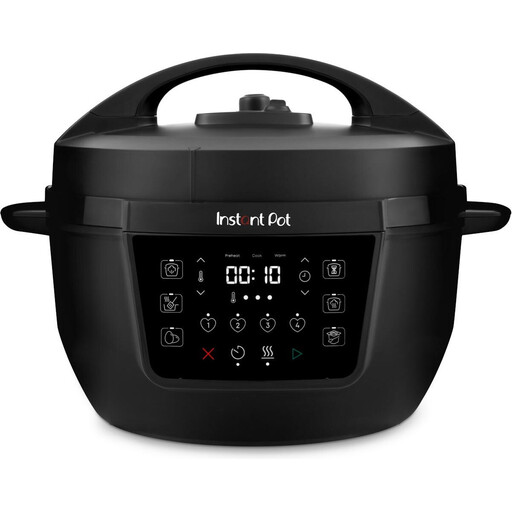 No image available
The product description lists soup, beans, pressure cooking, slow cooking, sautéing and keeping food warm, giving you several cooking steps to consider.
The title states 7.1 L and the inner pot is made of stainless steel. The instructions say not to exceed the MAX fill line.
 No image available
The description lists a soup and stock programme, pressure cooking and a delay timer with automatic keep-warm function.
The title states 7.6 L; the description lists 12 preset programmes. The instructions refer to the MAX mark and a lower 1/2 mark for ingredients that expand, such as beans or grains.
Not for every recipe. According to the Netherlands Nutrition Centre, dried pulses need to be cooked; pulses from a tin, jar or pouch only need heating through. Choose pressure cooking if you want to use this method, and follow the manual for the exact model.
Don’t assume so without checking. The Instant Pot Duo manual consulted states a maximum fill level of two-thirds, or half full for ingredients that expand during cooking. Don’t automatically apply that instruction to another appliance: follow the fill markings and manual for your model.
Cool leftovers quickly and store them in a sealed container in the fridge or freezer. The Netherlands Nutrition Centre advises not leaving leftovers out of the fridge for more than two hours; how long they keep also depends on the ingredients and how the soup has been handled.
For an electric multicooker offered for sale in the EU, check the applicable product documentation and the required CE marking for the specific model; a retailer’s listing alone doesn’t prove this. According to the Dutch government, online purchases from a business generally come with a 14-day cooling-off period; this doesn’t apply to purchases from a private seller.
You don’t need to pay for additional cover to have statutory consumer rights. The Dutch government explains that, subject to the relevant conditions, you have the right to a repair or replacement if a product is faulty. Check separately what extra cover an additional offer provides.