
Workshop cook preparing a batch for a group
You want to make enough lentil ragout in one pot for everyone, and compare the capacity with the amount your recipe makes.


Match the capacity of the pot to the amount of ragout your recipe makes, and choose a timer and keep-warm function if you need the cooking to fit a set serving time. If dried lentils need to cook during a short workshop session, also compare cooking them on the hob or using a multi-cooker with a pressure-cooking function. If you’re serving food as part of a business, check the actual food temperature in line with the relevant food safety procedures.
You want to make enough lentil ragout in one pot for everyone, and compare the capacity with the amount your recipe makes.
You’re preparing the ragout in advance and want to fit the cooking around your workshop schedule, taking the timer, keep-warm function and temperature checks into account.
You want participants to be able to follow the cooking process, and are comparing slow cooking with cooking on the hob or using a pressure-cooking function.
Start with the amount your recipe makes and your serving time. If dried lentils need to cook during a short workshop session, also compare a saucepan on the hob or a multi-cooker with a pressure-cooking function.
| What to consider | What should you check? | Who is this most relevant for? |
|---|---|---|
| Amount per batch | Calculate the amount your recipe makes and compare it with the stated and usable capacity, as well as the filling instructions. Tefal lists the CY505E as having a 6-litre bowl and a usable capacity of 3.8 litres. | If you want to cook for the group in one go, prioritise enough room for the batch your recipe makes. Around 36% of consumers put the right batch size first. |
| Planning and cooking time | Compare your start time, recipe and serving time with the features of the exact model. Inventum lists a timer for the SC601B, as does Tristar for the VS-3920; Tomado says the TSC6001B has no timer. Tefal also lists a pressure-cooking function for the CY505E. | If the ragout needs to be ready at a set time, you’ll want to fit the cooking around your workshop schedule. Around 29% of consumers prioritise having an appliance that suits their schedule. |
| Keeping food warm and serving | Check how you’ll manage the food temperature; a keep-warm setting doesn’t measure the temperature of the ragout. The Netherlands Food and Consumer Product Safety Authority (NVWA) refers to temperature checks when preparing food for a business. | If participants will be serving themselves at different times, you’ll want to know how to keep the ragout safely warm and serve it. Around 21% of consumers prioritise safe serving. |
| Cleaning after use | Check for each model whether the inner pot is removable and which parts the manual says are dishwasher-safe. | After several workshop sessions, you’ll want to be able to clean the pot easily. Around 14% of consumers say cleaning is their most important consideration. |
The stated capacity doesn’t always match the usable capacity. Tefal lists the CY505E as having a 6-litre bowl with 3.8 litres of usable capacity; the number of portions also depends on your recipe.
Work out how much ragout you want to make, then check the usable capacity and filling instructions for the exact appliance.
A keep-warm function doesn’t tell you the temperature of the ragout itself. When preparing food for a business, you must follow the relevant temperature-control procedures.
Check which rules apply to your activity and follow the relevant hygiene code or food safety plan. Where necessary, use a suitable thermometer to check the food temperature.
Inventum lists a delayed start for the SC601B, but this doesn’t mean perishable ingredients can be left unrefrigerated while you wait.
Use the function in line with the manual and your food safety procedure. Otherwise, set aside a separate time to prepare the ingredients.
The 3.5-litre SC350B and 6-litre SC601B offer different capacities for smaller or larger batches.
The TSC6001B is a larger slow cooker with dial controls.
According to Tristar, the VS-3920 combines a 4.5-litre pot with digital time settings.
As well as slow cooking, the CY505E has a pressure-cooking function, giving you another cooking method to compare.
This selection includes slow cookers and multi-cookers with a slow-cooking function, for smaller and larger batches and different cooking schedules.
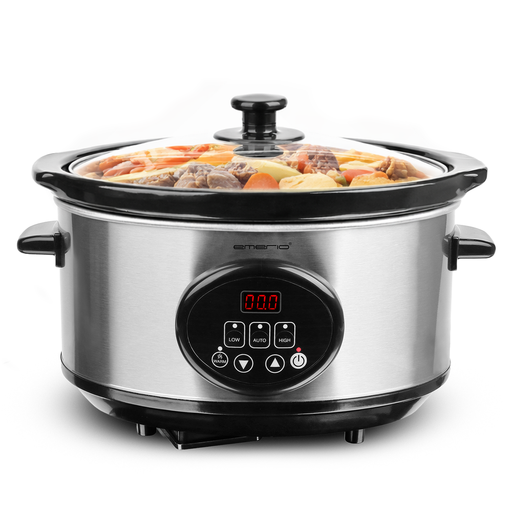 No image available
A compact option if you want a timer and keep-warm function for a smaller workshop batch.
The product description lists a removable ceramic pot, glass lid, digital timer and automatic switch to keep-warm mode.
The keep-warm function doesn’t measure the temperature of the ragout. If you’re serving food as part of a business, follow the relevant temperature-checking procedures.
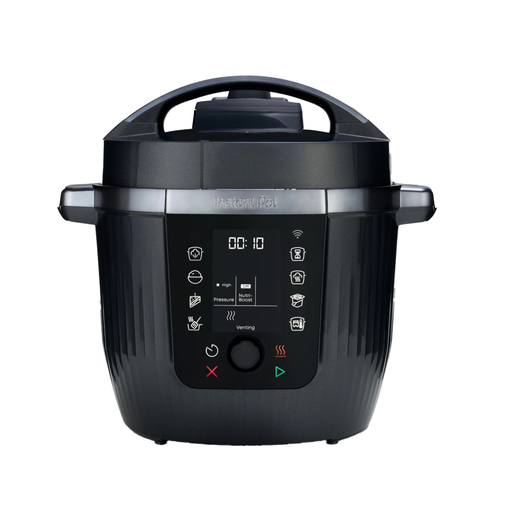 No image available
An option for comparing slow cooking with pressure cooking if your workshop schedule calls for another way to prepare the dish.
The product description lists a 5.7 L capacity, slow cooking, pressure cooking and automatic keep-warm mode when a programme ends. For ingredients that expand, such as beans or grains, follow the 1/2 fill mark. Also follow the instructions for releasing pressure and opening the lid.
Keep-warm mode doesn’t measure the food temperature. If you’re serving food as part of a business, follow the relevant temperature-checking procedures.
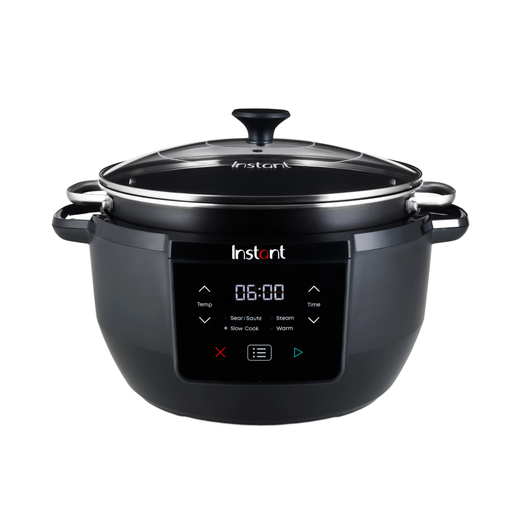 No image available
The larger stated capacity may be useful if you want to prepare a batch for a group. Compare it with your recipe and the filling instructions.
The product description lists up to 10 portions and slow cooking, sautéing, steaming and keep-warm functions. According to the description, the inner pot isn’t suitable for use on a hob or in an oven.
Keep-warm mode doesn’t measure the food temperature. If you’re serving food as part of a business, follow the relevant temperature-checking procedures.
 No image available
A multi-cooker for comparing slow cooking with pressure cooking, based on the size of your workshop batch and your schedule.
The product description lists a 6 L pot, slow cooking, stewing, steaming and automatic keep-warm mode. For ingredients that expand, such as beans or grains, stick to the lower fill limit indicated.
Keep-warm mode doesn’t measure the food temperature. If you’re serving food as part of a business, follow the relevant temperature-checking procedures.
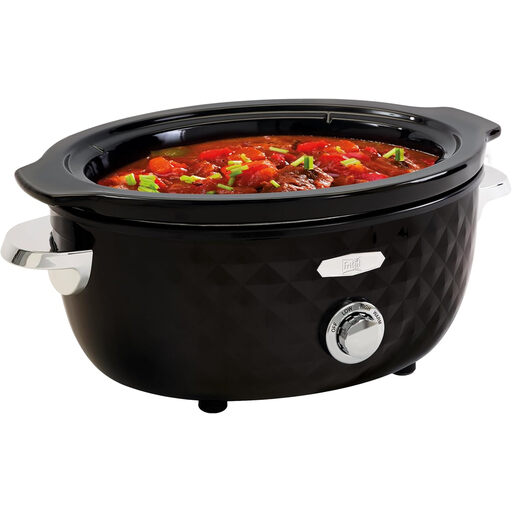 No image available
An option for a planned batch for a group, if the stated capacity and cooking settings suit your recipe and serving time.
The product name lists a 5.5 L capacity and 4 to 8 portions; the description mentions high and low settings and keep-warm mode. The pot and exterior get hot, so use oven gloves and don’t cool the hot ceramic pot too quickly.
Keep-warm mode doesn’t measure the food temperature. If you’re serving food as part of a business, follow the relevant temperature-checking procedures.
Not necessarily. The Netherlands Nutrition Centre gives a cooking time of 15–20 minutes for the lentils in one specific lentil soup recipe; this isn’t a guaranteed cooking time for every ragout or batch. Follow your recipe and the instructions on the packaging, or use lentils that are already cooked if the workshop session is short.
No, a keep-warm setting doesn’t measure the temperature of the food. For food prepared as part of a business, the NVWA recommends checking the temperature with a digital probe thermometer. For unpackaged, perishable food kept warm in a hot cupboard or bain-marie, the NVWA specifies a temperature of 60 °C or above. Follow the relevant hygiene code or food safety plan for your workshop.
The Netherlands Nutrition Centre advises cooling leftovers quickly, storing them in a sealed container and not leaving them out of the fridge for more than 2 hours. It recommends keeping leftovers in the fridge for no longer than 2 days. If you’re operating as a business, you must also follow the relevant food safety procedures.
That depends on what you’re organising; calling it a workshop doesn’t determine the answer. The NVWA says a business must register if it sells food several times a year, and also refers to a food safety plan or hygiene code. Assess what you’ll actually be doing before deciding which requirements apply.
The NVWA says CE marking is compulsory for electrical consumer products. According to the Dutch government, there’s no fixed statutory guarantee period in the Netherlands; if there’s a problem, contact the seller. If you’re buying for business use, also check the terms that apply to that purchase.