
Workshop cook feeding a group
You want to serve everyone at the same time. Compare your recipe quantity with the usable pot capacity, which may differ from the stated capacity.


Start by checking that the amount of ragout will fit in the usable inner pot, then consider how much time you have for cooking. Pressure cooking may suit a short cooking slot, while stewing or manual settings can give you more scope to check and adjust the dish together. If you choose a pressure cooker, allow extra time for the pressure to build and release.
You want to serve everyone at the same time. Compare your recipe quantity with the usable pot capacity, which may differ from the stated capacity.
You want to make the ragout within a set cooking slot, so you’re considering the difference between pressure cooking and a stewing stage that you can check later. Instant Pot and Tefal describe models with pressure-cooking functions.
You want participants to brown ingredients, stir or adjust the texture. In that case, manual settings and stewing functions may matter more than the number of automatic programmes.
First compare the recipe quantity with the usable capacity, then choose a cooking method that suits the workshop schedule and the times when participants want to watch or make adjustments.
| What to consider | What to look for | Who is this important for? |
|---|---|---|
| Quantity of ragout | Compare the full recipe with the usable pot capacity and the filling instructions for the specific model. | If I want to cook for the whole group at once, I need to know whether the ragout will fit in a single batch. Around 36% of consumers put group portions first. |
| Cooking time | Check whether the model combines pressure cooking with a suitable finishing step, and allow for the time needed for pressure build-up and release. | With a fixed workshop schedule, I need to know how much time is needed in addition to the cooking stage. Around 29% of consumers give cooking speed top priority. |
| Adjusting the texture | Look for functions such as sautéing, stewing or reducing, and check when the lid can be opened. | If participants want to taste and adjust the ragout together, I need room to check on it as it cooks. Around 21% of consumers mainly choose a model for this flexibility. |
| Controls and cleaning | Check the controls, steam outlet and which parts the manufacturer says can be cleaned. | When several participants are using the appliance, I want to keep the controls and clean-up straightforward. Around 14% of consumers make this their top priority. |
The usable capacity may be lower than the stated pot capacity, so the full recipe might not fit in a single batch.
Compare the recipe quantity with the usable capacity, and follow the fill markings and instructions for the exact model.
A pot that’s too small may mean you need to cook an extra batch or use a second pot.
The name multicooker alone doesn’t tell you which cooking functions a model has. Tefal describes the RK8121 as having functions including stewing and manual settings, while the CY7548 has a pressure-cooking function.
Check the functions of the exact model rather than relying on the product category or the number of programmes.
With pressure cooking, the time needed for pressure build-up and release is in addition to the cooking stage; the stated effective cooking time doesn’t automatically include these steps.
Include pressure build-up, pressure release, checking and any reduction as separate steps in your workshop schedule.
A keep-warm programme doesn’t prove that every dish can be served safely for the entire set period.
Plan serving, cooling and storage in line with the relevant food safety practices; don’t rely on a programme name alone.
Instant Pot describes the Duo 5,7 L as a model with functions including pressure cooking, sautéing, slow cooking and keeping food warm. This may suit a recipe with several cooking stages in one pot.
Tefal describes the Turbo Cuisine CY7548 as a model with a pressure-cooking option. The RK8121 offers a different approach, with functions including stewing, baking and manual settings.
Sage describes the Fast Slow GO, model SPR680BSS2EEU1, as having settings for pulses, sautéing and reducing, as well as three ways to release steam.
Philips describes the HD2633/80 as having a 6 L pot capacity and functions such as pressure cooking, stewing and sautéing.
This selection includes multicookers for making ragout in one pot, with pressure-cooking or stewing options and a range of stated pot capacities.
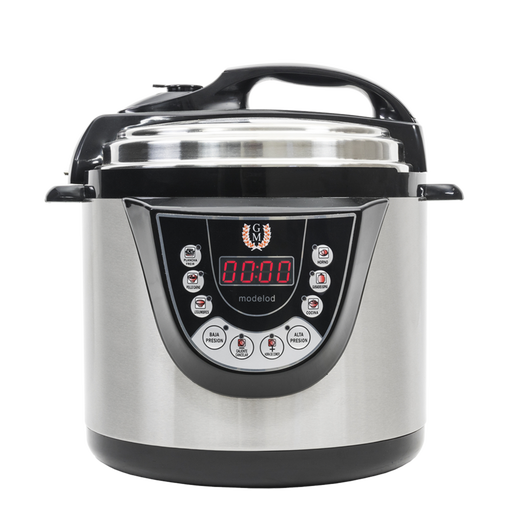 No image available
The described pressure-cooking and stewing options may suit a workshop dish with a sealed cooking stage; only open the lid once the pressure has been released.
The product name gives a stated capacity of 6 L; the product information lists a usable capacity of 5 L. For foods that expand, follow the stated half-full limit.
 No image available
The described combination of sautéing and slow cooking suits a recipe where participants can brown ingredients before leaving them to stew.
The product name gives a capacity of 7,1 L and 10 servings. According to the product information, the inner pot isn’t suitable for use on a hob, induction hob or in an oven.
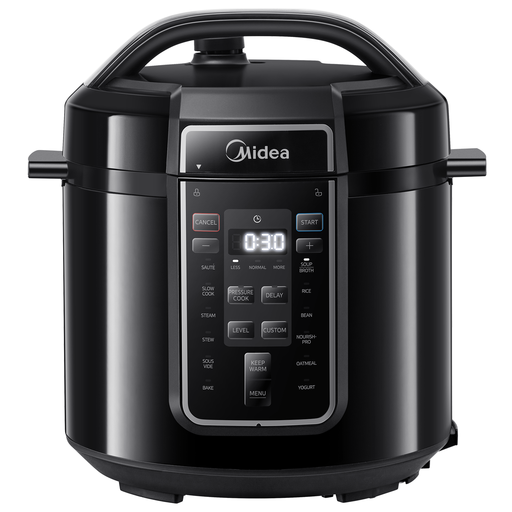 No image available
The described pressure-cooking, stewing and slow-cooking functions offer different ways to prepare a dish for your workshop.
The product name gives a capacity of 6 L, 1000 W and 14 cooking functions. For foods that expand, follow the stated half-full limit, and don’t force the lid open while the pot is under pressure.
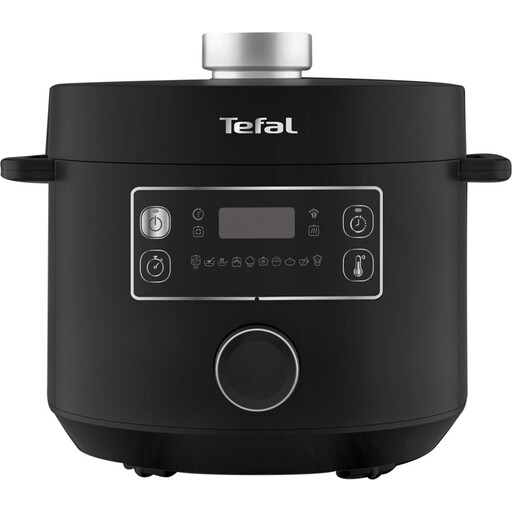 No image available
Tefal describes this model as offering pressure cooking, slow cooking and stir-frying. This may suit a recipe that involves browning ingredients followed by a pressure-cooking stage.
The product name gives a capacity of 5 L. Allow time for pressure build-up and release, and don’t force the lid open while the pot is under pressure.
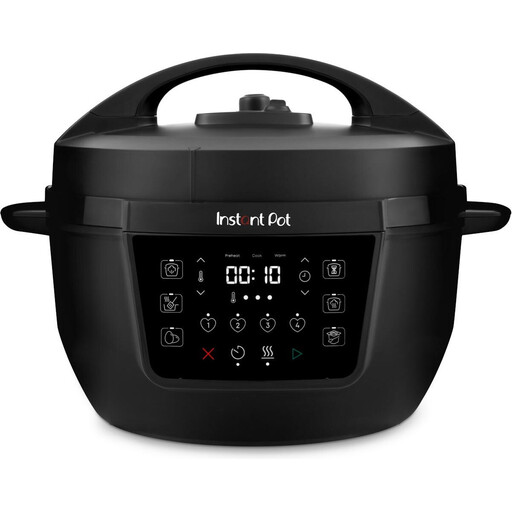 No image available
The described functions include sautéing, pressure cooking and slow cooking, as well as programmes for beans and stews. This may suit ragout that needs both a browning stage and a sealed cooking stage.
The product name gives a capacity of 7,1 L and a stainless steel inner pot. Follow the pressure-release procedure before opening the lid.
Compare the quantity for the full recipe with the usable capacity and filling instructions for your chosen model. The stated pot capacity may be greater than the usable volume: Tefal lists 3,8 L usable capacity for the CY505E, which has a 6 L bowl, while Sage gives a usable capacity of 4 L for the 6 L pot in the Fast Slow GO. Without knowing the recipe volume and group size, there’s no single size that’s right for every workshop.
Set up the appliance according to the instructions for the exact model. The Instant Pot manual says to place it on a stable, level, non-combustible surface, and warns that the removable inner pot can be hot and heavy when full. Have a designated person handle hot parts and steam release.
No. The presence or duration of a keep-warm programme doesn’t prove that a particular dish can be kept safely for that entire period. Plan serving and storage in line with the relevant food safety practices. The Voedingscentrum advises not leaving perishable leftovers out of the fridge for more than two hours. If you’re selling food, the food safety rules explained by the NVWA also apply.
According to the Dutch government, you’re entitled to a product that works properly and, if there’s a fault, you should in principle contact the seller. There’s no fixed statutory warranty period in the Netherlands; a manufacturer’s warranty or an extra warranty you purchase is separate from your legal rights.
If you’re a business selling food or drink to consumers, the NVWA says that food safety rules apply. These include following a food safety plan or hygiene code based on HACCP. Check the details of your activity to establish whether this requirement applies to your workshop.