Who is this choice relevant to?

Developer with a local development environment

You keep your code, a browser and possibly local services open at the same time. So compare the memory and storage of the exact configuration with your software’s requirements. The Consumentenbond recommends 16 GB for running several programmes simultaneously; this isn’t a universal minimum requirement for this project.

Tester working with slow connections

You want to see how the portal responds to delays or when there’s no network connection. Chrome for Developers explains how to simulate network profiles and offline conditions in the developer tools. According to MDN Web Docs, a service worker can make cached content available, but this needs to be implemented in the portal.

Developer working in several locations

You take your laptop to different workplaces and weigh portability against screen space and connectivity. For the 13-inch MacBook Air with M5 in the base configuration shown, Apple lists two Thunderbolt 4 ports; check that your devices can connect to them.

What should you consider when choosing?

Windows business laptop

Choose this option: if you use Windows development software or are setting up a fixed workstation with peripherals. HP Store Netherlands lists a version of the HP ProBook 4 G2i 14 with 16 GB RAM and a 512 GB SSD; Lenovo Netherlands shows a base configuration of the ThinkPad E14 Gen 7 (AMD) with 8 GB and 256 GB.

Bear in mind: using Windows alone doesn’t guarantee that your container stack will work. Check the applicable Windows edition, version and backend for Docker Desktop.

Portable macOS laptop

Choose this option: if your development tools work on macOS and you code in different locations. For the 13-inch MacBook Air with M5 in the base configuration shown, Apple lists 16 GB of memory, a 512 GB SSD and two Thunderbolt 4 ports.

Bear in mind: check that your tools are compatible and whether your monitor or other peripherals need adapters. These specifications apply to the version mentioned.

What to consider What should you check? Who does this matter more to?
Local development capacity Compare the memory and SSD in the exact configuration with your software and project files. On 14 August 2026, the Consumentenbond recommended 16 GB for running several programmes simultaneously; use this as a point of comparison, not a strict minimum requirement. If I keep an editor, browser and possibly local services open at the same time, I want enough memory and storage without choosing extra capacity to compensate for slow internet. Around 36% of consumers prioritise capacity for local development work.
Network and offline testing Check whether your browser’s developer tools can simulate delays and offline conditions. Also assess offline functionality as part of the portal’s design. If I want to see what users experience when a connection is slow or drops out, I want to be able to test that behaviour separately. Around 29% of consumers give connection testing top priority.
Portability and workspace Compare the screen size, weight and ports of the exact configuration with your workspace and peripherals. If you use an external monitor, check whether you need an adapter. If I work in different locations, I want to be able to take my laptop with me without unnecessarily compromising on usable screen space. Around 21% of consumers prioritise working in multiple locations.
Configuration and aftercare Check what’s included with the version you choose and compare the warranty terms. The legal guarantee and an additional warranty aren’t the same thing; the Government of the Netherlands states that there is no fixed statutory warranty period in the Netherlands. If I want to know exactly what I’m buying and what support comes with it, I compare the configuration and any additional terms. Around 14% of consumers prioritise costs and aftercare.

Common purchasing mistakes

  • Assuming a faster laptop will solve slow internet

    Your laptop runs your development environment, but it doesn’t determine how fast a visitor’s connection is. You can test network delays and offline behaviour separately.

    Choose a laptop based on your development software, then use developer tools to test network delays and offline conditions.

  • Confusing a product range’s specifications with those of the version you’re choosing

    A product range can include versions with different amounts of memory and storage. The Lenovo ThinkPad E14 Gen 7 (AMD) base configuration mentioned has 8 GB RAM and a 256 GB SSD; the HP ProBook 4 G2i 14 version mentioned has 16 GB RAM and a 512 GB SSD.

    Make a note of the full model or item number and compare the details of the version you’re actually considering.

  • Leaving ports and accessories until after you’ve bought the laptop

    A compact laptop may have fewer built-in ports than your workspace needs. Apple lists two Thunderbolt 4 ports for the 13-inch MacBook Air with M5 mentioned; check separately that your display and other devices can connect.

    Compare the ports on your monitor and peripherals with those on the version you’ve chosen, and check what’s included.

    Depending on the available ports, you may need an adapter for an external monitor.

  • Confusing an additional warranty with the legal guarantee

    An additional warranty doesn’t replace your legal right to a product that meets reasonable expectations. According to the Government of the Netherlands, there is no fixed statutory warranty period in the Netherlands.

    Before choosing additional cover, read what it offers and what extra rights it provides.

Brands to consider

HP

The HP ProBook 4 G2i is a Windows option for anyone looking for a business laptop. HP Store Netherlands lists, among other options, a 14-inch version with Windows 11 Pro, 16 GB RAM and a 512 GB SSD.

  • The configuration mentioned gives you specific memory and storage details to compare with your development environment.
  • These specifications apply to the version shown, not automatically to every ProBook. Check software compatibility and the ports on the exact model.

Lenovo

The ThinkPad E14 range offers compact Windows laptops. Lenovo Netherlands lists, among other options, a base configuration of the ThinkPad E14 Gen 7 (AMD).

  • The base configuration listed is easy to compare: 8 GB RAM and a 256 GB SSD.
  • If you want to run more local development software at the same time, compare the configuration you’re considering. The fact that a model can be configured doesn’t in itself tell you which specific upgrades are available.

Apple

The 13-inch MacBook Air with M5 is a macOS option for a compact development workspace. Apple lists 16 GB of memory and a 512 GB SSD for the base configuration shown.

  • Apple lists two Thunderbolt 4 ports for this version.
  • Check that your development tools are compatible, whether you need adapters and what’s included with the specific version. The specifications listed aren’t an independent measure of development performance.

Laptops for local development and testing

These Joybuy laptops are suitable for local development work, with configurations you can compare for memory, storage, portability and connectivity.

HP OmniBook 7 AeroNGAI 13-bg1051nd laptop

HP OmniBook 7 AeroNGAI 13-bg1051nd

A version to consider if you develop locally and want to take your laptop with you.

13.3-inch screen; Windows 11 Home; 16 GB RAM; 512 GB SSD; weight 1.46 kg.

View at Joybuy

ASUS ROG Zephyrus G16 GU605CM-QR026W laptop

ASUS ROG Zephyrus G16 GU605CM-QR026W

A 16-inch version to consider if you want to use local project files and peripherals.

Intel Core Ultra 9 285H; RTX 5060; 16 GB RAM; 1 TB SSD; Thunderbolt 4 and HDMI 2.1. According to the product description, the charger must be purchased separately.

View at Joybuy
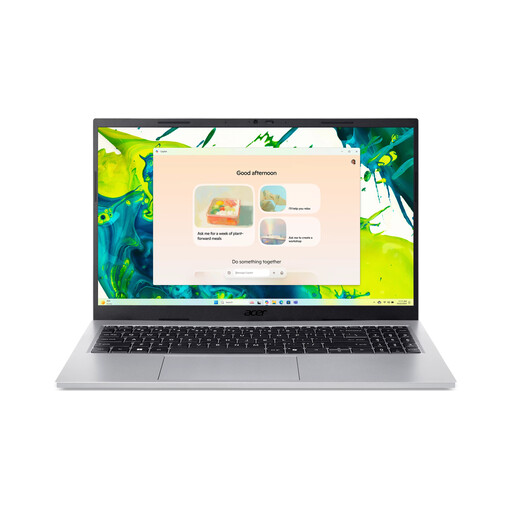
Acer Aspire Go 15 AG15-72P-56BJ laptop with AZERTY keyboard

Acer Aspire Go 15 AG15-72P-56BJ

A 15.6-inch version to consider if you develop locally and want a larger built-in screen.

FHD screen; Intel Core 5 120U; 16 GB RAM; 512 GB SSD; Windows 11 Home; AZERTY keyboard. The listed weight is approximately 1.53 kg.

View at Joybuy

Auusda T156A laptop

Auusda T156A

A version to consider if you want a built-in numeric keypad for local work.

AMD 3050e processor; 16 GB DDR4 RAM; 512 GB SSD; FHD IPS screen; backlit keyboard with numeric keypad.

View at Joybuy

Lenovo V15 G5 IRL laptop

Lenovo V15 G5 IRL

A version to consider if you want to connect an external monitor or a wired network.

15.6-inch screen; Intel Core i5-13420H; 16 GB DDR5 RAM; 512 GB SSD; Windows 11 Pro; USB-C with DisplayPort and Gigabit Ethernet. The listed weight starts at 1.61 kg.

View at Joybuy

Frequently asked questions

Do I need special internet or a special laptop to test slow connections?

Not just for that: according to Chrome for Developers, Chrome DevTools can simulate custom network delays and offline conditions. This tests how the portal behaves; you should also assess how it works in situations that are relevant to your users.

Will the lending portal work offline as soon as I buy a laptop with lots of storage?

No. Offline availability needs to be designed and tested in the portal. According to MDN Web Docs, a service worker can provide cached content, but extra laptop storage won’t enable this functionality on its own.

What should I consider if I want to use Docker Desktop on a Windows laptop?

Check Docker’s current system requirements for your version of Windows and chosen backend, such as WSL 2. Docker Docs describes several backends; the right configuration depends on your software choices. Docker isn’t necessary for every lending portal.

What are my rights when I buy a laptop online?

For eligible distance purchases by consumers in the Netherlands, the Government of the Netherlands states that you generally have a 14-day cooling-off period; this doesn’t apply to online purchases from private individuals. The legal guarantee entitles you to a product that meets reasonable expectations, and there is no fixed statutory warranty period in the Netherlands. If you’re buying for a business, check the applicable terms separately.

Do I need to consider the GDPR when testing lending data?

Yes, if you process personal data during a pilot or test. According to the Dutch Data Protection Authority, the GDPR also applies to pilots and trial projects. So check whether your test data contains personal data.
