
Cooking successive batches
If you’re making several portions one after another, one suitable cooking zone may be enough. Keep the heat manageable as you stir; an American Egg Board recipe uses low heat and constant stirring.


For consecutive batches, a portable single-zone hob may be enough. If you really want to use two pans at once, two zones are more practical, provided the pans fit and the connection can support them. Induction requires a suitable, flat-based pan, while a conventional electric hob does not. An American Egg Board recipe calls for low heat and constant stirring; the hob’s set temperature does not measure the temperature of the lemon curd itself.
If you’re making several portions one after another, one suitable cooking zone may be enough. Keep the heat manageable as you stir; an American Egg Board recipe uses low heat and constant stirring.
If you want to heat another pan alongside the curd, look for two cooking zones. The Consumers’ Association notes that freestanding hobs can be limited by their power output and the space available.
If you want to keep using your current pan, first check that its base is suitable for induction. The Consumers’ Association explains that induction requires a flat, magnetic and conductive pan base.
Best for: successive batches, limited worktop space and a suitable induction pan.
Bear in mind: you can’t use a second pan on the hob at the same time.
Best for: two pans you genuinely want to use at the same time and that fit on the hob.
Bear in mind: the total power output may limit simultaneous use on high settings; check there’s room for both pans, too.
Best for: keeping a pan that isn’t suitable for induction.
Bear in mind: Inventum says the cast-iron plates on the KP602B are harder to clean than induction hobs.
An American Egg Board recipe uses low heat and constant stirring, so don’t rely on a temperature setting alone: it doesn’t measure the temperature of the curd.
| Concern | What to look for | Who it matters to |
|---|---|---|
| Gentle heat | Compare the low power settings and controls; a timer doesn’t replace stirring or supervision. | If I’m making several portions one after another, I want to be able to control the heat and stay by the pan. Around 40% of consumers say heat control is their main buying concern. |
| Two cooking zones | Check the total connection power, the distance between the zones and whether there’s room for both pans. | If I want to use a second pan at the same time, both pans need to fit and be easy to reach. For around 23% of consumers, using two pans at once is their main concern. |
| Pan compatibility | For induction, check that the pan base is flat, magnetic and suitable for the cooking zone. | If I want to keep using my current pan, I want to know in advance whether it works on induction. Around 23% of consumers prioritise keeping their existing pan. |
| Connection and space | Compare the plug and connection power with the instruction manual, and check that the hob can stand securely with direct access to a socket. | If I have limited worktop space or the socket is awkward to reach, I want to know where the hob can be positioned safely. Around 14% of consumers cite connection and placement as their main buying concern. |
A temperature setting on the hob doesn’t tell you how hot the lemon curd is in the pan. Recipes may call for gentle heating and constant stirring.
Choose controls that suit the way you cook, and stay by the pan. Follow your recipe’s method and stir as instructed.
On freestanding hobs, two pans may sit close together or make the controls harder to reach. The Consumers’ Association highlights these space limitations on some models.
Compare the pan bases and the hob’s external dimensions with the worktop space available.
An induction hob needs a suitable, flat, magnetic pan base. A pan that doesn’t meet these requirements won’t necessarily be suitable.
Check the pan base and compare its diameter with the zone. If you want to keep your pan, you could also consider a conventional electric hob.
The Netherlands Fire Service recommends connecting high-power appliances directly to a socket and warns that a coiled cable reel can build up heat.
Check the instruction manual and connection power, and place the hob somewhere suitable with a socket directly within reach.
The IK-6178 is an example of a portable single-zone induction hob for making successive batches.
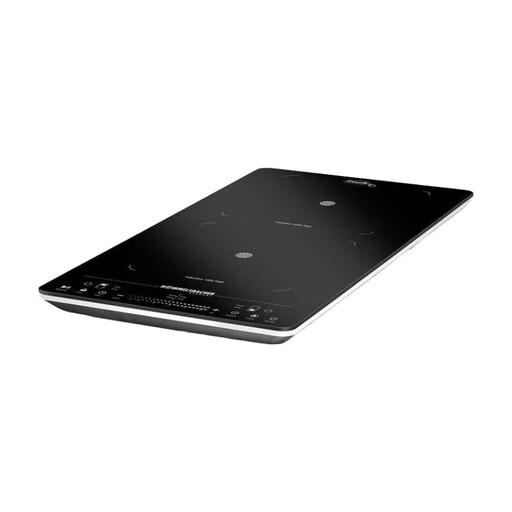
The DK 1031 is an example of a portable two-zone induction hob for cooking with two pans at once.
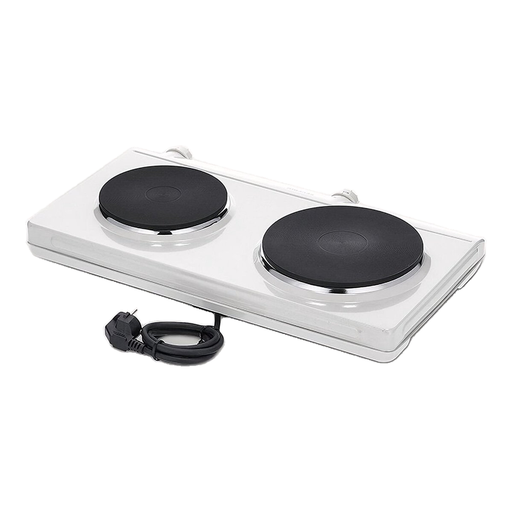
The KP602B is a portable alternative with two cast-iron electric plates.
The PRO Menu 2100 shows the settings and pan sizes you can compare when choosing a single-zone induction hob.
The CT 2020/IN is an example of a single-zone induction hob with specifications for pan size and controls.
This selection includes portable one- and two-zone induction hobs, as well as electric hobs for making batches.
 No image available
Could suit successive batches if your pan is induction-compatible and within the specified size range.
The product description lists 8 power settings from 100 W, a temperature setting from 60 °C and a timer of up to 3 hours.
According to the description, suitable cookware has a flat base measuring 12–26 cm. The temperature setting doesn’t measure the lemon curd itself.
 No image available
A single zone could suit portions you make one after another, as long as your induction pan fits the zone.
The product description lists 10 power settings, adjustable power from 200–2000 W and a timer of up to 3 hours.
The specified suitable pan size is 12–26 cm; the cooking zone is listed as 26 cm.
 No image available
The two zones could suit you if you genuinely use two induction pans at the same time while cooking.
The product description lists 10 power settings, 10 temperature settings and a 180-minute timer.
The specified pan sizes are 120–260 mm. Allow for space for both pans and the flat, magnetic base required for induction.
 No image available
The two zones could suit you if you want to use two pans at once and the product description doesn’t specify induction.
The product title lists a total power output of 2500 W and continuous temperature control; the description mentions independent zones with separate temperature controls.
The plates get hot during use. The product description warns against leaving the hob unattended.
 No image available
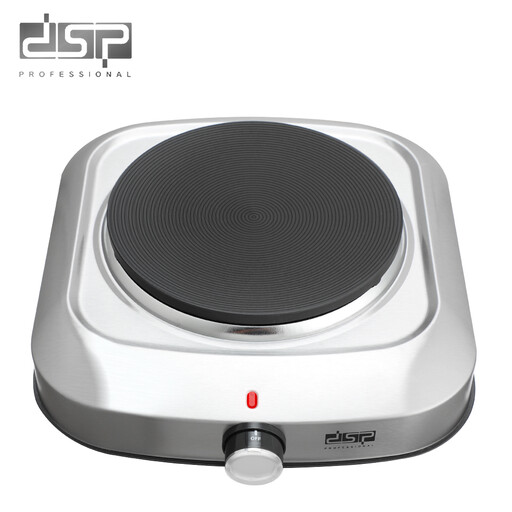
A single electric zone could suit successive batches and a pan that fits the fixed 185 mm cooking plate.
The product description lists an adjustable temperature dial and a power output of 1500 W.
According to the product description, a brief smell or light smoke may occur the first time you use it; if so, run the plate for 3–5 minutes in a well-ventilated room.
Both methods are used: the American Egg Board describes heating it directly over low heat with constant stirring, while Utah State University Extension describes using a bain-marie with gently boiling water for a method intended for preserving curd. Follow the method in the recipe you’ve chosen; the preserving method isn’t automatically a general Dutch storage recommendation.
Check that the pan has a flat, magnetic base, then compare its diameter with the cooking zone and the specifications for your chosen model. The Consumers’ Association lists a suitable, flat base as a requirement for induction.
Cool prepared portions promptly and cover them before putting them in the fridge or freezer within two hours. The Netherlands Nutrition Centre recommends a fridge temperature of 4 °C. Jars or a hob don’t in themselves tell you how long the curd will keep outside the fridge.
As well as any manufacturer’s warranty, you have statutory rights when you buy as a consumer. ACM ConsuWijzer explains that the seller is responsible for providing an appropriate remedy free of charge if a product used normally breaks sooner than you could reasonably expect; there is no fixed, general statutory warranty period of two years.
The Dutch government states that electrical appliances sold in the EU must have a CE marking. For a specific product, also check the instructions and connection requirements; a CE marking doesn’t tell you whether the hob suits your pan or the way you cook.