
Vandaag of morgen in huis

Kwaliteit gegarandeerd

Welkomstaanbiedingen ontgrendelen: GRATIS bezorging | Tot 80% korting | Gratis 30 dagen JoyPlus-proefperiode
Download de app
Buying a LEGO set sounds simple, until you have to choose between LEGO Friends, LEGO Disney, LEGO DUPLO, animals, a doll’s house or an extensive building set for children. A colourful box also does not always tell you enough about play value, skill level or how much space you will need at home.
As a Joybuy Product Recommendation Officer, I therefore focus mainly on verifiable details: the recommended age, number of pieces, characters, accessories, dimensions and type of play. This helps prevent a birthday present from losing its appeal after just one building session.
A set with lots of bricks may automatically seem like the better purchase, but that is not always practical. A 6-year-old may get more enjoyment from a compact LEGO Friends set with a doll’s house and accessories than from a large model with lots of repetitive building steps.
As well as the number of pieces, look at the play features. A rotating Ferris wheel, boat, slide, shop or animal enclosure creates new opportunities for role play after the building is complete.
The age shown on the packaging is an important starting point. LEGO DUPLO is designed for young children, whereas standard LEGO pieces are small. Products in this selection carry a warning about small parts. Never choose based on the theme alone: always check that the set is suitable for the child’s age and building experience.
For LEGO from age 2, larger DUPLO elements and simple play features are the more logical choice. For LEGO from age 6, sets with mini-dolls, rooms and accessories may be particularly appealing. From ages 7, 8 or 9, the building complexity often increases.
A princess castle, unicorn or Disney character can quickly attract attention, but the child needs to like the subject too. Ask yourself: does the child enjoy playing with animals, stories, vehicles, shops or fantasy characters?
A LEGO Friends set, for example, suits children who enjoy acting out different situations. LEGO Disney and LEGO princess sets connect with familiar films and characters. LEGO animals or a Creator model may be better suited to children who mainly want to build and display models.
First check the recommended age and the number of pieces. The ratio says a lot about the type of experience:
These are practical guidelines, not a guarantee of a particular building time. Building speed and experience vary from child to child.
Pay attention to the number of figures and accessories. A set with several characters, animals, pieces of furniture and food elements supports a range of stories. With a LEGO doll’s house, rooms, movable furniture and accessories matter more than the height of the building alone.
Moving parts can also make a difference. Think of a rotating Ferris wheel, a boat, a slide or a spinning ride. Also check the model’s dimensions, especially if it needs to fit on a shelf or in a child’s bedroom.
Check whether the packaging and product page display a CE marking and an age warning. The European standard series EN 71 sets out safety requirements for toys; the manufacturer or seller must make the relevant product information available. Pay particular attention to warnings about small parts.
Keep the instructions and sorting boxes after building. This makes rebuilding easier and helps keep all the pieces together. With sets containing very small elements, supervision is advisable when younger children are playing in the same room.
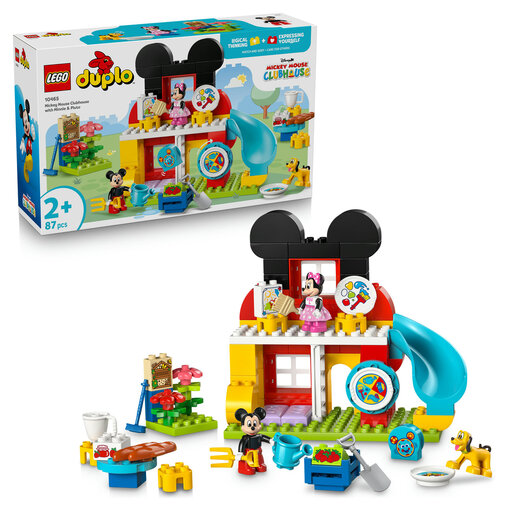
Why it suits this profile: For children aged 2 and over, this set offers a recognisable Disney theme, 87 pieces and a clubhouse with a garden, slide and painting area.
This set is not just about building: the figures and play features also encourage role play once the model has been assembled.
Suitable from age 2; three Disney figures, a two-storey house and no batteries required.
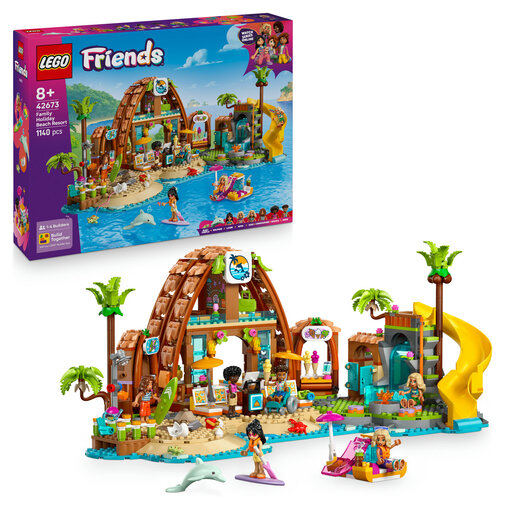
Why it suits this profile: This extensive LEGO Friends playset is designed for children aged 8 and over who enjoy combining longer building projects with storytelling.
The 1,140 pieces are complemented by six Friends figures, two sea animals and lots of beach accessories, creating more to do than simply building one model.
Boat, resort, beach wheelchair, shop and six figures; suitable for building together.
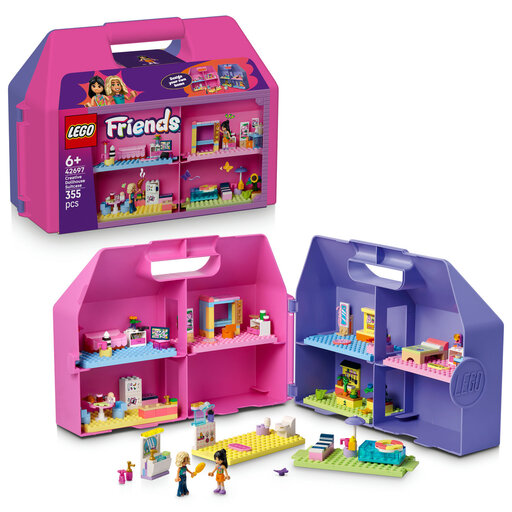
Why it suits this profile: A practical choice for children aged 6 and over who enjoy playing with a LEGO doll’s house and want to take their toy with them.
The eight rooms can be customised and the set closes like a suitcase. This means the model is more than just a decorative piece.
355 pieces, two Friends mini-dolls and closed dimensions of approximately 23 × 30 × 13 cm.
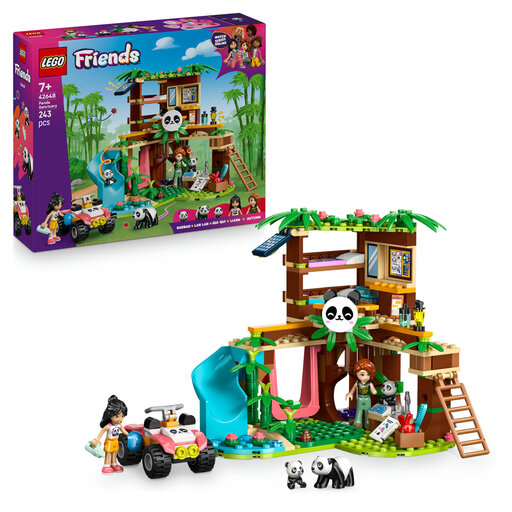
Why it suits this profile: Children aged 7 and over who particularly enjoy LEGO animals, animal-care stories and nature themes will find a clear play concept here.
As well as building a tree house, children get three panda figures, a quad bike and animal-care accessories for a range of play scenarios.
243 pieces, two Friends dolls, three pandas and a compact model measuring approximately 15 × 17 × 16 cm.
We have put together a complete, up-to-date list of products that fully meet these strict selection criteria and the applicable European safety regulations.
For children aged 9 and over, buildable Disney characters such as Angel, Kakamora or Heihei may be appealing. According to the product information, these sets are mainly designed for building, posing and displaying.
For LEGO from age 2, LEGO DUPLO is a logical category to explore. The Mickey Mouse Clubhouse set contains larger building and play elements and, according to the product information, is suitable from age 2. Always check the age recommendation and warnings for the specific product.
The physical lifespan mainly depends on how the set is used, stored and kept complete. LEGO pieces can be reused for a long time when they are stored somewhere dry and kept sorted. A set’s play value also depends on its variety: figures, animals, rooms and moving features generally provide more ways to play again than a model without accessories.
The price is influenced by factors including the number of pieces, the number of figures, the licensed theme and the building functions. So do not compare only the size of the box or the number of bricks. A compact LEGO doll’s house set with lots of furniture may offer more play value to a child than a larger box with few characters. Also check whether the accessories and figures are actually included.
