Who is this relevant for?

A family with plenty of leftover soup

You want to fit several covered portions alongside your usual shopping. Measure your containers and check whether they’ll fit on the fridge shelves. The Consumers’ Association points out that a fridge’s stated capacity doesn’t always reflect its usable space.

A batch-cooking freezer user

You want to eat some portions soon and keep others for longer. The Netherlands Nutrition Centre advises freezing leftovers you plan to keep for more than two days, so consider both fridge and freezer space.

An occasional host with limited space

You mainly need extra storage around gatherings and don’t want a second appliance permanently taking up space and using electricity. Milieu Centraal notes that two cooling appliances use more energy combined than one appliance that meets your needs.

What should you look for?

Use your existing fridge

A good fit if: the portions fit once cooled and covered, alongside your usual shopping, and you can check the temperature.

Bear in mind: the stated capacity in litres doesn’t tell you how many soup containers will actually fit on the shelves.

A larger fridge without a freezer compartment

A good fit if: you regularly have extra chilled food beyond gatherings, or already have a suitable separate freezer.

Bear in mind: this option doesn’t provide freezer space for portions you want to keep for longer.

A fridge-freezer

A good fit if: you regularly want to chill some portions for the next few days and freeze others.

Bear in mind: the fridge and freezer share the total capacity, so compare each compartment separately.

A second fridge

A good fit if: your existing fridge isn’t big enough and you’ll need the extra space regularly.

Bear in mind: a second appliance takes up space permanently and uses electricity while it’s switched on.

What to consider What to look for when buying Who is this important for?
Usable fridge space Measure your containers and the available shelf height. Compare fridge capacity and, where available, measured usable capacity. If I need to fit several covered soup containers alongside my usual shopping, I’ll check the actual shelf space. Around 36% of consumers put usable fridge space first.
Temperature and layout Check how to set the temperature and, once the fridge is in place, use a fridge thermometer to see whether it reaches 4 °C. I want to be able to keep soup at 4 °C once it has cooled and check the temperature. Around 29% of consumers give controllable cooling top priority.
Freezer space Compare fridge and freezer capacities separately and check whether the freezer compartment is suitable for the portions you want to freeze. If we won’t eat everything within two days, I want to be able to freeze portions for later. Around 21% of consumers put freezer space for later use first.
Space for the appliance and energy use Measure the height, width, depth and door opening. Compare the stated annual energy consumption of appliances that offer enough space. If an appliance will stay switched on beyond gatherings, I’ll consider both the space available and its annual energy consumption. Around 14% of consumers put these factors first.

Common buying mistakes

  • Assuming litres tell you how many soup containers will fit

    The stated capacity doesn’t tell you exactly how much usable shelf space there is. The Consumers’ Association has found differences between stated and actual usable fridge capacity.

    Measure your containers and compare the shelf layout and, if available, the measured usable fridge capacity.

  • Putting a large pan of hot soup straight into a full fridge

    The Netherlands Nutrition Centre says hot food can raise the temperature inside the fridge.

    Divide the soup into smaller portions and cool them quickly. Cover and refrigerate or freeze them within two hours of cooking.

  • Buying a second fridge for one gathering without considering how else you’ll use it

    Milieu Centraal points out that two cooling appliances use more energy combined than one appliance that meets your needs.

    First check the space and temperature in your existing fridge. If you’re buying an appliance for the long term, compare the annual energy consumption of models that meet your space requirements.

Brands to compare

Bosch

The Bosch KSV36VWEP is a freestanding fridge without a freezer compartment, for anyone mainly looking for fridge space.

  • Bosch lists a 346 l fridge capacity, adjustable shelves and stated energy consumption of 116 kWh per year for this model.
  • The model has 0 l freezer capacity. The stated fridge capacity doesn’t show how many soup containers will actually fit.

Inventum

The Inventum KK1430W is a narrower freestanding fridge for spaces where width is limited.

  • Inventum lists a capacity of 242 l, five shelves, a width of 54,5 cm and energy class D.
  • This model doesn’t have a freezer compartment. Inventum says climate class N/ST requires an installation space of at least 16 °C.

Liebherr

The Liebherr Rd 4600 Pure is a freestanding fridge with a total capacity of 298 l and external dimensions of 145,5 × 59,7 × 67,5 cm.

  • The stated external dimensions and total capacity give you a starting point for comparing the space available and fridge capacity.
  • The EasyFresh claim relates to the storage drawer for fruit and vegetables; it doesn’t show that soup will keep for longer.

Samsung

The Samsung RB38C7B6AB1/EF is a fridge-freezer for anyone who wants freezer space as well as room for chilled portions.

  • Samsung lists energy class A and external dimensions of 595 × 2030 × 658 mm for this version.
  • The product listing gives both 387 l and 390 l. Check the compartment capacities for this version on the product information sheet.

Product picks at Joybuy

This selection includes fridge-freezers and a built-in fridge. Compare the separate fridge and freezer capacities, the space available and the installation requirements with your own needs.
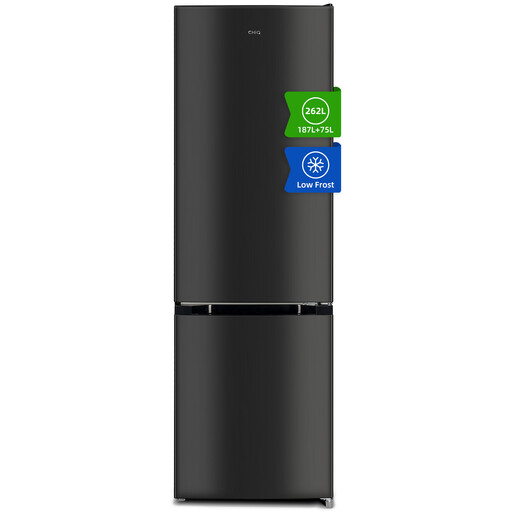
CHiQ JR263LGE Low Frost fridge-freezer

CHiQ JR263LGE Low Frost fridge-freezer

An option if you want to keep chilled portions and food for later in one appliance.

The product information lists 197 l of fridge space and 85 l of freezer space, adjustable shelves and external dimensions of 540 × 576 × 1810 mm. Check the compartment capacities for this version before buying.

View at Joybuy
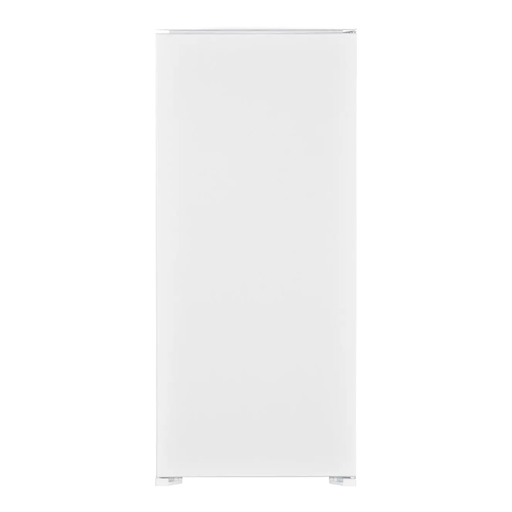
Wiggo WFR-BUR123E(W) built-in fridge, white, energy class E

Wiggo WFR-BUR123E(W) built-in fridge, white, energy class E

This built-in fridge suits anyone looking for extra chilled storage who has a suitable space for an integrated appliance.

The product information lists a capacity of 181 l and three adjustable glass shelves. The stated niche is 54 cm wide and 122 cm high; check that these dimensions suit your kitchen.

View at Joybuy
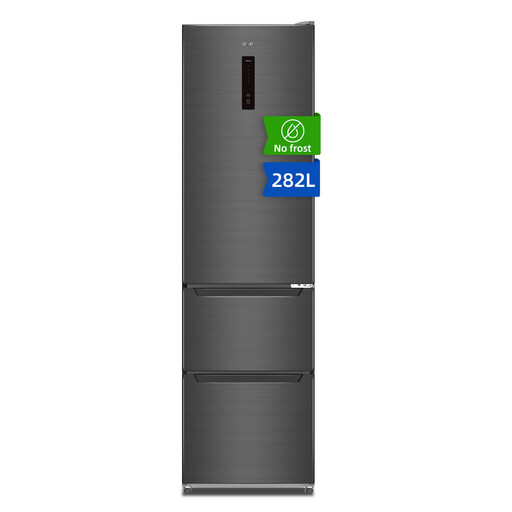
CHiQ CID282NEIBE NoFrost fridge-freezer, energy class E

CHiQ CID282NEIBE NoFrost fridge-freezer, energy class E

A fridge-freezer with separate compartments for chilled portions and food to keep for later.

The product information lists 197 l of fridge space, 85 l of freezer space, three shelves and external dimensions of 540 × 576 × 1810 mm.

View at Joybuy
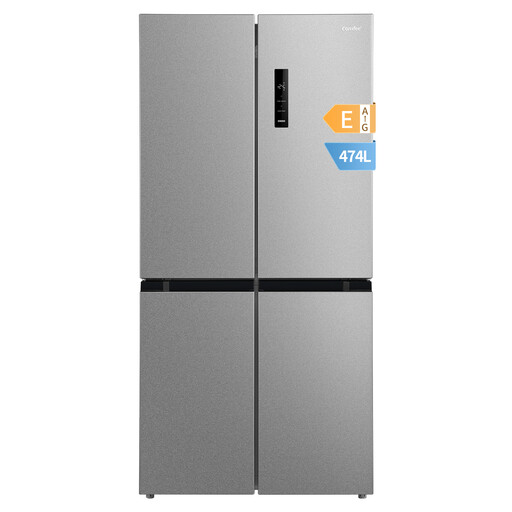
COMFEE’ RCF470LS2EU(E) four-door fridge, 474 l, energy class E

COMFEE’ RCF470LS2EU(E) four-door fridge, 474 l, energy class E

A model with multiple compartments for anyone wanting to organise chilled food and frozen storage together.

The product information lists a total capacity of 474 l, freezer drawers and external dimensions of 838 × 653 × 1775 mm. Compare the separate fridge and freezer capacities with your needs; total capacity doesn’t tell you how much will fit on a shelf.

View at Joybuy
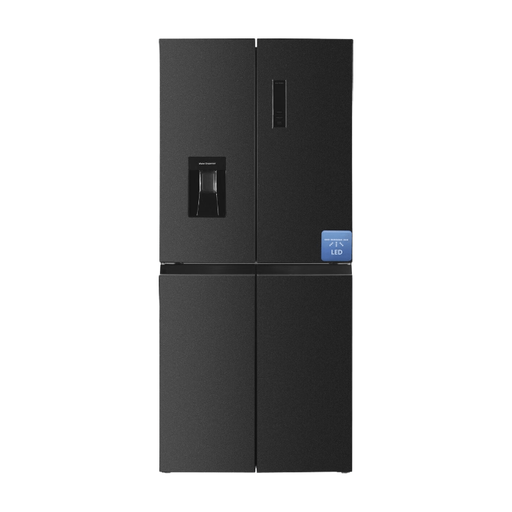
Frilec BONN-MD458-WS-040DDI fridge-freezer

Frilec BONN-MD458-WS-040DDI fridge-freezer

This freestanding fridge-freezer is an option if you want freezer space as well as room in the fridge.

The product information lists 269 l of fridge space, 150 l of freezer space, two adjustable shelves and external dimensions of 180 × 79 × 70 cm. Allow for the required ventilation space when positioning it.

View at Joybuy

Frequently asked questions

How long can you keep soup in the fridge after a gathering?

The Netherlands Nutrition Centre says for up to two days, covered and chilled at 4 °C. Divide the soup into smaller portions and cool them quickly, then refrigerate or freeze them within two hours of cooking. Freeze portions if you want to keep them for longer.

How can you check whether your fridge is cold enough?

Use a fridge thermometer to check whether the fridge is at 4 °C. The Netherlands Nutrition Centre advises placing the thermometer in the middle of the bottom shelf and leaving it there for half a day or overnight. Adjust the fridge if the reading is above 4 °C.

Do you need a fridge with a freezer compartment for leftover soup?

Only if you want to keep portions for more than two days and freeze them. If you’ll eat the soup within that time, another option is a fridge with enough usable shelf space. If you’re considering a fridge-freezer, compare the capacity of each compartment separately.

Is a second fridge a good idea for a family gathering?

Not necessarily. First check whether the portions will fit in your existing fridge once they’ve cooled and been covered. Milieu Centraal points out that two cooling appliances use more energy combined than one appliance that meets your needs, so weigh the extra space against how often you’ll need it.

Does a new fridge need an energy label, and what happens to the old one?

For cooling appliances covered by EU energy labelling rules, the energy label must also be displayed when they’re sold online. If you’re a private customer buying a new appliance of a similar type in the Netherlands, the old-for-new scheme applies: the retailer will take your old appliance away free of charge, including when you buy online.
