
Cook with a small kitchen
You have limited width and want to find out which freestanding appliance will fit, with enough room for the door to open and for ventilation.


Start by checking the space available, including room for ventilation and opening the door. Then consider how much pasta you want to chill or freeze. A tall fridge-freezer has a separate freezer compartment; a table-top model needs less height, but has a smaller freezer compartment. Neither extends how long pasta will keep in the fridge: chill leftovers promptly and store them in a sealed container.
You have limited width and want to find out which freestanding appliance will fit, with enough room for the door to open and for ventilation.
You keep portions for longer than the recommended time in the fridge, so useful freezer space and easy-access drawers are important.
You don’t have room for a tall fridge-freezer and are weighing up the smaller freezer compartment of a table-top model against its lower height.
First, measure the space and check the installation requirements for the exact model. Then decide how many sealed portions you want to chill or freeze, and only then compare energy consumption and maintenance.
| What to consider | What should you check? | Who is this important for? |
|---|---|---|
| Size and positioning | Measure the width, height and depth. Check the installation manual for the required ventilation space and room for the door to open. | If your kitchen is short on space, you’ll want to know first whether the appliance will fit and whether its door can open. Around 36% of consumers making this choice put size and positioning first. |
| Storing food in the fridge | Check that sealed containers will fit comfortably. The Voedingscentrum recommends a fridge temperature of 4 °C; check the temperature once the appliance is installed. | If you want to store cooked pasta safely, look for space for sealed containers and a temperature you can check. Around 29% of consumers prioritise safe storage. |
| Usable freezer space | Compare the capacity and layout of the freezer compartment or drawers with the containers you plan to use. | If you won’t use portions within the recommended fridge storage time, you’ll want to freeze them in a space that fits your containers. Around 21% of consumers choose mainly on the basis of usable freezer space. |
| Energy consumption and maintenance | Compare the annual consumption in kWh on the labels of the exact models, and check which freezer compartment is covered by any no-frost function. | Once you’ve found a suitable size, you’ll want to compare energy consumption and find out how much defrosting is required. Around 14% of consumers prioritise these running costs and maintenance tasks. |
The external dimensions alone don’t tell you how much space is needed for installation, ventilation and opening the door.
Measure the entire space available and follow the installation instructions for the exact model. For a built-in appliance, check that the niche and door system are also suitable.
The Inventum KV550 table-top model reviewed has a 16-litre freezer compartment; the ETNA KCV282NRVS model reviewed has a separate 85-litre freezer compartment. This difference can determine how many portions you can store at once.
Work out how many sealed portions you want to freeze at once and compare the usable layout, not just the appliance’s total capacity.
An energy label doesn’t change the storage advice for cooked pasta. A fridge can’t make leftovers safe again if they’ve been left out of the fridge for too long.
Chill leftovers promptly, store them in a sealed container and follow the Voedingscentrum’s storage advice. Freeze portions you won’t use within the recommended time in the fridge.
Beko offers freestanding fridge-freezers with a freezer at the bottom in the slim models mentioned here.
The ETNA KCV282NRVS is a tall, freestanding fridge-freezer with a separate freezer compartment.
The Inventum KV550 is a table-top model for anyone with limited height and modest freezer needs.
This selection includes freestanding fridge-freezers with a separate freezer compartment, as well as a table-top model with a freezer compartment. Choose based on the available height, the space you need for pasta portions, and the dimensions and installation requirements of the exact model.
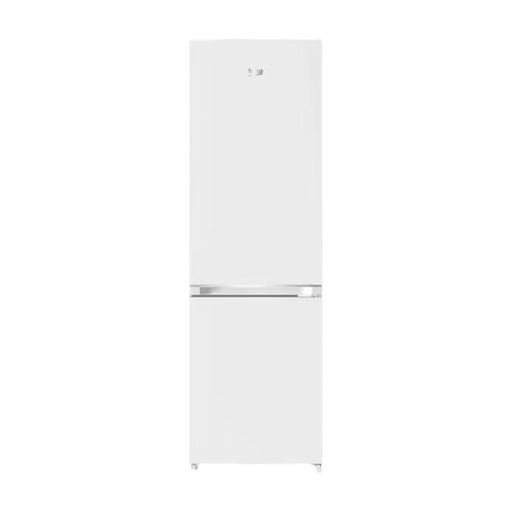 No image available
An option if you want to store chilled pasta and extra portions separately in a freezer compartment with drawers.
Fridge space: 187 L; freezer space: 75 L with three drawers. The product name lists NoFrost, energy class E and white.
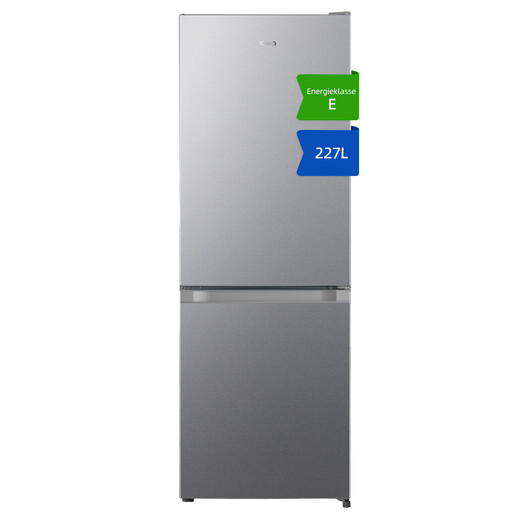 No image available
An option if you’re looking for a freestanding fridge-freezer with a separate compartment for frozen portions.
The product information lists a width of 54 cm, 153 L of fridge space and 74 L of freezer space. It also lists Low Frost, a reversible door, four-star freezing and energy class E.
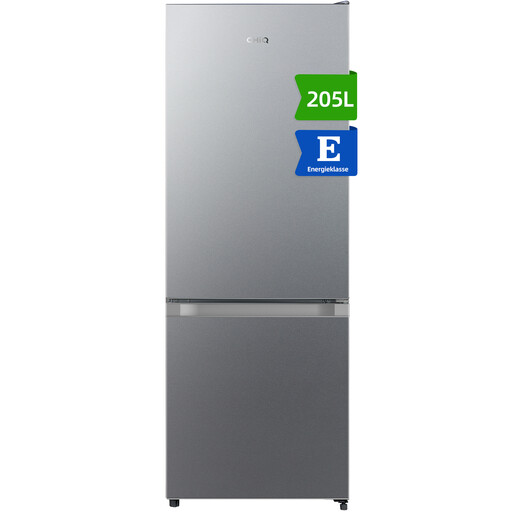 No image available
An option if you want a separate freezer compartment and the stated dimensions suit your kitchen.
The product information lists a width of 540 mm, 153 L of fridge space and 52 L of freezer space. It also lists Low Frost, a reversible door and energy class E.
 No image available
An option if you want a separate freezer compartment with drawers for pasta portions.
The product information lists a width of 55 cm, 187 L of fridge space and 73 L of freezer space with three drawers. It also lists a reversible door and energy class E. Manual defrosting is required.
 No image available
An option if you have limited height and only want to freeze small quantities.
The product information lists a height of 85 cm, a width of 55 cm and a 14 L freezer compartment. It also lists a reversible door, energy class C and manual defrosting.
According to the Voedingscentrum, cooked pasta will keep for 2 days in the fridge and 3 months in the freezer; its quality may deteriorate after that. Cool leftovers quickly, store them in a sealed container and don’t leave them out of the fridge for more than 2 hours.
The Voedingscentrum recommends 4 °C. Check the actual temperature inside the fridge after installation; a model name or energy label won’t tell you what temperature your appliance reaches.
No. First check the dimensions and installation requirements of the exact model. Measure the height, width and depth, and allow for ventilation and the door to open. For a built-in appliance, the niche and door system must also be suitable.
Compare the annual consumption in kWh on the energy label for each exact model. To estimate your own costs, multiply the number of kWh per year by your price per kWh; the label’s letter alone isn’t enough.
The Rijksoverheid lists fridges among the appliances that must have an energy label. Consumer purchases are also covered by a statutory guarantee: if a product breaks down sooner than you could reasonably expect under normal use, the seller must offer a solution. According to the ACM, there isn’t one fixed statutory two-year guarantee period that applies to every fridge.