
Cook with a full kitchen cupboard
Wants to know whether a soup maker will fit in the available cupboard space and compares its external dimensions with the items already stored there.


A compact soup maker is worth considering if you want to heat and blend ingredients in one appliance and its dimensions will fit in your cupboard. If you already have a suitable saucepan and hand blender, using those means you won’t have an extra appliance to store. Compare the portions you make with the fill markers and programmes on the exact model. Measure the space available in your cupboard, too, and check the safety information and required CE marking for the specific appliance before buying, as advised by the Dutch government for electrical appliances placed on the EU market.
Wants to know whether a soup maker will fit in the available cupboard space and compares its external dimensions with the items already stored there.
Wants to make enough leek and potato soup for each meal without having to store a jug that’s larger than necessary. Capacity and fill markers are important here.
Is looking for a programme suited to smooth leek and potato soup and wants to know in advance how to clean the jug and other parts.
When cupboard space is limited, external dimensions matter just as much as capacity. Choose a model to suit the portions you make and the preparation method you prefer.
| What to consider | What should you look for? | Who is this important for? |
|---|---|---|
| Storage space | Measure the available height, width and depth, then compare them with the external dimensions of the exact model. | As a consumer, I want to know first whether the appliance will fit in my cupboard, not just how many litres the jug holds. That’s why around 36% of consumers prioritise storage space. |
| Portions and fill limits | Compare your recipe with the minimum and maximum markers; adjust the quantities if needed. | I want to make enough soup for my portions without cramming ingredients above the fill line. Around 29% of consumers prioritise portions and fill limits. |
| Desired texture | Check whether the exact model has a suitable smooth soup programme and follow the recipe and instruction manual. | As a consumer, I want the preparation method to suit my preference for smooth leek and potato soup. Around 21% of consumers prioritise their desired texture. |
| Cleaning | Read the model-specific instructions for the jug, lid and electrical components. | I want to know in advance how much cleaning by hand my routine will involve and how to handle the electrical components. Around 14% of consumers put maintenance first. |
Using a saucepan and hand blender means you won’t have an extra appliance to store if you already own both. Check the instructions for your hand blender to make sure it’s suitable for use with hot soup.
For example, DOMO Elektro lists external dimensions of 15,00 × 20,50 × 27,50 cm and a capacity of 1,2 litres for the DO727BL. These measurements apply to that model; measure your cupboard and allow room to take the appliance out.
The capacity of the jug doesn’t tell you whether the appliance will fit in your cupboard. A model that won’t fit may end up taking up worktop space instead.
Measure the space available and compare it with the external dimensions of the exact model. Allow room to get the appliance out, too.
The leek, potato and liquid must all stay within the permitted fill markers. A soup maker recipe also advises against exceeding the maximum line on the appliance you’re using.
Scale the recipe to suit the minimum and maximum markers on your model, and don’t add more than the instruction manual allows.
A cleaning programme doesn’t automatically mean the jug, lid and other parts won’t need cleaning by hand. Care instructions vary by model.
Read the manual for the exact model before buying. Philips warns that the motor unit of the HR2204/80R1 must not be immersed in water.
These brands offer examples to compare by capacity, dimensions, programmes and care requirements. A mention here doesn’t in itself confirm availability or whether a model will fit in your cupboard.
The DO727BL is worth considering if you’re looking for a compact soup maker with published external dimensions.
The HR2204/80R1 is a 1,2-litre option with smooth and chunky soup programmes; the Dutch version mentioned is refurbished.
According to Princess, the 212040 is a 1,3-litre soup maker that heats and blends.
The Easy Soup models are examples of soup makers with automatic programmes; the models reviewed were LM841810 and LM841B10.
Here’s a soup maker for anyone who wants to prepare soup in one appliance. A saucepan and hand blender remain an alternative if you don’t want another appliance to store.
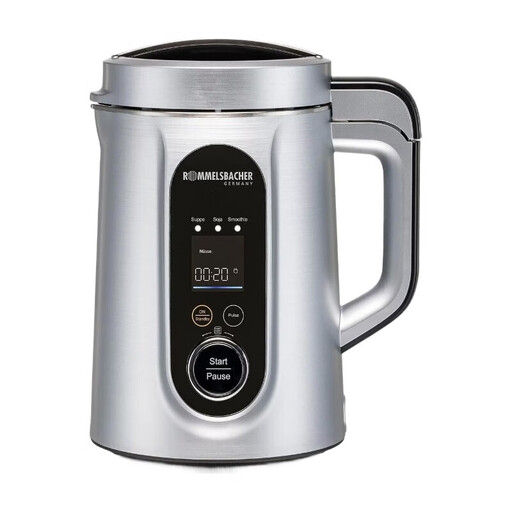 No image available
A good fit if you want to prepare soup in one appliance; compare your portion with the fill markers on this model.
Don’t fill the inner jug above the maximum line. The inner jug and its contents get hot during and after use; don’t immerse the main unit in water.
Check the safety information and required CE marking for the specific item before buying. The Dutch government outlines the applicable requirements for electrical appliances placed on the EU market.
Yes. A soup maker recipe uses leek and potato directly in the appliance. Clean the leek, cut the potato into small pieces and keep all the ingredients below the maximum line. Check the suitable programme and the instructions for your model, too.
No, but don’t go below the minimum fill level for the specific appliance either. Use the minimum and maximum fill markers; the stated jug capacity doesn’t tell you the smallest amount you can prepare.
Check that the specific electrical appliance carries the required CE marking and has the applicable safety information. The Dutch government outlines the requirements for electrical appliances placed on the EU market; a brand name or product listing alone doesn’t confirm that the item you’re buying carries the marking.
Follow the instructions for the exact model. Philips says that the motor unit of the HR2204/80R1 must not be immersed in water; this instruction doesn’t automatically apply to other brands or models.
According to the Dutch government, the seller must provide a solution if a product is faulty. In the Netherlands, there’s no fixed statutory guarantee period that applies to all products; a manufacturer’s guarantee is in addition to your statutory rights.