
Cooking a large pan of soup
You cook the soup in a large pan and want to blend it without pouring hot soup into another container. The Dutch Consumers’ Association says blending soup directly in the pan is convenient.


If you’ve already cooked a large pan of leek and potato soup, a hand blender is handy because you can blend the soup straight in the pan. The Dutch Consumers’ Association says this is practical, although the texture may be less even than with a jug blender. A blender jug is a better choice if a smooth finish is your priority and you can blend the soup in batches. A soup maker or heated cooking blender is worth considering if you also want to heat the soup in the appliance. When blending hot soup, check the instructions and suitability of the exact model. For jug appliances, compare the usable capacity with the amount you want to make.
You cook the soup in a large pan and want to blend it without pouring hot soup into another container. The Dutch Consumers’ Association says blending soup directly in the pan is convenient.
You prefer an even finish and can blend the soup in batches if needed. According to the Dutch Consumers’ Association, a jug blender can blend soup until very smooth.
You want to combine heating and blending, so check that the usable capacity suits the amount of soup you need. Philips gives a capacity of 1.2 litres for the HR2204/80R1 model reviewed; Tefal lists a usable capacity of 1.75 litres for the BL83SD30.
Choose this option if: you’ve already cooked the soup in a pan and want to blend it without transferring it.
Bear in mind: a hand blender is used in an open pan, so work carefully to minimise splashes.
Choose this option if: you can blend the soup in batches and a smooth texture is important to you.
Bear in mind: you’ll need to transfer the soup, and the jug must be suitable for hot soup. Follow the instructions for your model.
Choose this option if: you want to heat and blend the ingredients in the appliance.
Bear in mind: the usable capacity may mean you need to make several batches for a neighbourhood meal.
The table sets out the main buying considerations for anyone looking for a blender to make leek and potato soup for a neighbourhood meal.
| Buying consideration | What to look for | Who is this important for? |
|---|---|---|
| Blending a large pan | Check that the blender foot can reach the bottom of the pan and blend the soup effectively. For a jug appliance, compare the usable capacity with the total quantity. | If you want to blend the whole pan without repeatedly transferring soup, handling a large pan is a priority. Around 42% of consumers rank this as their main buying consideration. |
| Handling hot soup safely | Check the instructions and, for a blender jug, make sure it is suitable for hot soup. | If you want to handle hot soup carefully, you’ll need to know which method and instructions apply to the appliance. Around 25% of consumers rank this as their main buying consideration. |
| A smooth finish | According to the Dutch Consumers’ Association, a jug blender can blend soup until very smooth. Bear in mind that you may need to work in batches and use a heat-resistant jug. | If an even texture matters more to you than blending straight in the pan, you can blend the soup in batches. Around 17% of consumers say a smooth finish is their main buying consideration. |
| Combining heating and blending | Check whether the exact model heats the soup itself and how many litres it can process per batch. | If you want the appliance to heat and blend the soup, this combination will determine your choice. Around 16% of consumers rank automatic preparation as their main buying consideration. |
The stated total capacity isn’t always the amount you can process at once. Tefal lists a total jug capacity of 2 litres and a usable capacity of 1.75 litres for the BL83SD30.
Compare the usable capacity of the exact model with the amount of soup you want to serve.
A smaller usable capacity may mean more batches and extra cleaning.
A jug that’s suitable for hot soup and an appliance that heats the soup itself are two different things.
Check separately whether the jug can handle hot soup and whether the model has a heating function. Always follow the instructions, too.
If your blender has no heating function, you may need a separate pan or an extra preparation step.
Braun lists both 1000 W and 750 W in the technical specifications on the MQ55254M product page. The Dutch Consumers’ Association assesses hand blenders on factors including blending performance, durability and ease of use.
Don’t base your choice on wattage alone. Check conflicting model specifications in the manual and consider whether the appliance suits how you plan to use it.
The ErgoMaster range includes hand blenders for soup you’ve already cooked in a pan. The MSM4B654 model reviewed has a removable metal blending foot.
The MultiQuick range includes hand blenders for blending directly in the pan. The MQ55254M model reviewed comes with a chopper and whisk.
The SoupMaker HR2204/80R1 combines heating and blending for anyone who wants to make soup in the appliance.
The Perfectmix Cook BL83SD30 is a cooking blender for hot and cold preparations. Tefal also makes Quickchef hand blenders.
These product options include hand blenders for blending soup in the pan and blender jugs for processing it in batches.
 No image available
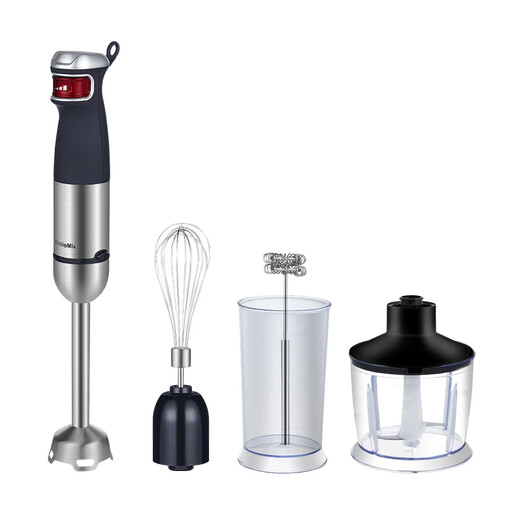
A hand blender is a good choice if you want to blend soup straight in the pan.
1200 W; variable speed control; stainless steel blade; splash guard.
 No image available
A hand blender lets you blend soup in the pan without having to transfer it to a jug first.
800 W; 20 speeds and a turbo setting; splash guard; parts are dishwasher-safe, according to the product description.
 No image available
This hand blender is suited to blending in the pan. According to the product instructions, don’t use it with boiling liquids.
25 speed settings; the product description also lists a chopper.
 No image available
A blender jug is a good choice if you can transfer the soup and blend it in batches.
1.5-litre usable capacity; glass jug, described as suitable for hot and cold preparations.
 No image available
A jug blender may suit you if you’re processing soup in batches; this version has a temperature limit for ingredients.
1.5-litre working capacity; according to the product instructions, don’t process ingredients hotter than 80 °C. Removable parts are dishwasher-safe, according to the product description.
No, the jug must be suitable for hot soup. The Dutch Consumers’ Association recommends using a heat-resistant jug. If needed, let the ingredients cool first and follow the instructions for the exact model.
It depends on how much soup you need and the usable capacity per batch. Philips lists a capacity of 1.2 litres for the HR2204/80R1; Tefal lists a usable capacity of 1.75 litres for the BL83SD30. You can work out how many batches you’ll need by comparing the amount you want to make with the capacity per batch.
According to the Netherlands Nutrition Centre, put cooled leftovers in a covered container in the fridge within two hours of cooking, ideally at 4 °C. When reheating, heat them thoroughly until steaming hot, stirring as they warm through.
In the Netherlands, the retailer is your point of contact for your statutory guarantee. ACM ConsuWijzer says that if a product is faulty, you may be entitled to a free repair, replacement or refund. A shorter manufacturer’s warranty doesn’t remove your statutory rights.
According to the Dutch government, applicable European safety requirements include CE marking and an EU declaration of conformity. EU rules for food-contact materials also apply to materials that come into contact with food, as explained by the European Commission. These general requirements don’t confirm that a specific appliance on sale complies with them.