
Blending small portions
You cook the soup in a pan and want to blend one or a few portions without transferring them. A hand blender could suit the way you cook; check that the blending foot and pan are suitable for the temperature.


For small portions of already-cooked leek and potato soup, a hand blender is usually a practical choice. According to the Consumers’ Association, it can blend small quantities, and blending directly in the pan means less transferring. A jug blender is a better fit if you regularly make larger quantities of liquid soup and want a smooth result. A soup maker is worth considering if you also want to combine cooking and blending, and your portion fits within the fill markers. Always check the instructions for the exact model when handling hot soup.
You cook the soup in a pan and want to blend one or a few portions without transferring them. A hand blender could suit the way you cook; check that the blending foot and pan are suitable for the temperature.
You want to know how to blend soup without using an unsuitable jug or causing unnecessary splashes. Temperature guidance varies by model, so check the full model number.
You’re weighing up easy cleaning against the smoothest possible texture or extra cooking functions. Hand blenders, jug blenders and soup makers all work differently and have their own usage requirements.
Choose this if: you want to blend cooked soup directly in a suitable pan or beaker.
The trade-off: there’s less transferring to do, but the result may not be as smooth as with a jug blender.
Choose this if: you also make larger quantities of liquid mixtures and want a smooth result.
The trade-off: a jug takes up space and you’ll need to transfer the soup; check the temperature guidance for the specific model.
Choose this if: you want to combine cooking and blending, and your recipe fits within the fill markers of your chosen model.
The trade-off: a minimum fill requirement may be inconvenient for a very small portion.
| Consideration | What to check before buying | Who is this important for? |
|---|---|---|
| Blending a small portion | Will the blending foot fit in your pan or beaker, and is a beaker included? | If I’m making one or a few portions, I’d rather not transfer them. Around 36% of consumers give top priority to making small portions without transferring them. |
| Handling hot soup | Read the temperature and filling instructions for the exact model. | When making hot soup, I want to know what the manual allows before I start. Around 29% of consumers put safe handling of hot soup first. |
| Cleaning and controls | Check whether the blending foot detaches and what the cleaning instructions are. | After making a small pan of soup, I don’t want to be left with lots of unnecessary parts to wash. Around 21% of consumers prioritise less washing up and straightforward controls. |
| Texture or extra functions | Decide whether you need a smooth result, attachments or automatic cooking. | If I want to make other things too, I look at the functions I’ll actually use. Around 14% of consumers give top priority to smoothness or extra functions. |
According to the Consumers’ Association, a jug blender is less suitable for small portions. For a small pan of soup, the extra transferring and washing up may make it less convenient.
First think about how much you usually make, then choose the type of appliance.
Temperature limits vary by model. Philips says not to use hot ingredients in the HR3756/00, HR3752/00 and HR3868/00 blenders; this guidance does not automatically apply to other models.
Before use, check the instructions for the full model number.
Philips says the quantity used in the SoupMaker HR2203/80 must be between the minimum and maximum markers.
Compare the markers on your chosen model with the quantity you usually prepare.
If your usual portion is below the minimum marker, you may need to make more soup than you intended.
ErgoMixx hand blenders are a useful point of reference for blending in a pan or small quantities in a beaker.
The MultiQuick MQ10.201MWH is a hand blender with a limited number of speed settings and included accessories.
The Quickchef+ HB67MB is designed for those who want to use different attachments as well as blend.
Philips offers both SoupMaker models and standalone blenders; usage instructions vary by model.
These hand blenders are suited to soup and small quantities; check which parts are included and what usage instructions apply to each model.
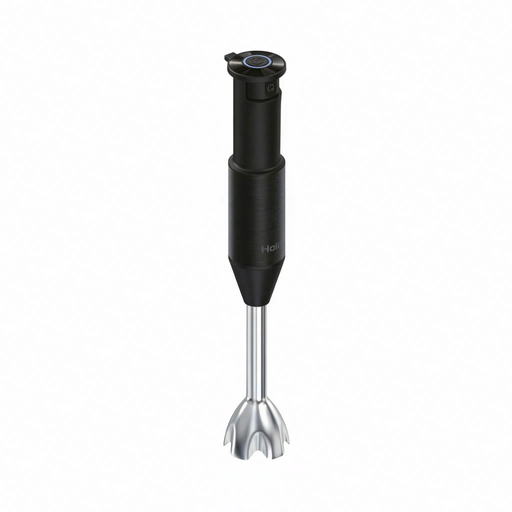 Image unavailable
An option for blending soup with a hand blender and the included beaker.
The product name specifies a three-blade system and a 0.9 L beaker; the product information mentions detachable parts.
 Image unavailable
A hand blender whose product information mentions blending soup and using a beaker.
The title specifies two speeds. The set includes a 500 ml chopper bowl and an 800 ml measuring beaker, plus a whisk.
 Image unavailable
A hand blender for blending soup in the pan; the product name mentions pan protection.
The title specifies standard and turbo settings, a 500 ml chopper bowl, a 500 ml beaker and a 1.5 m cord.
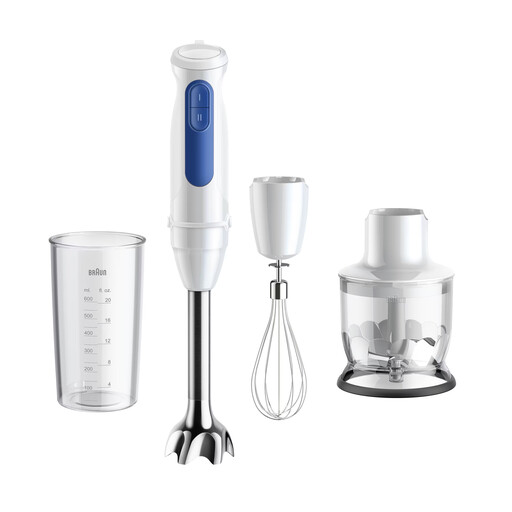 Image unavailable
The product information lists blending soup as one of the uses for this hand blender.
The product information specifies two speeds and detachable parts.
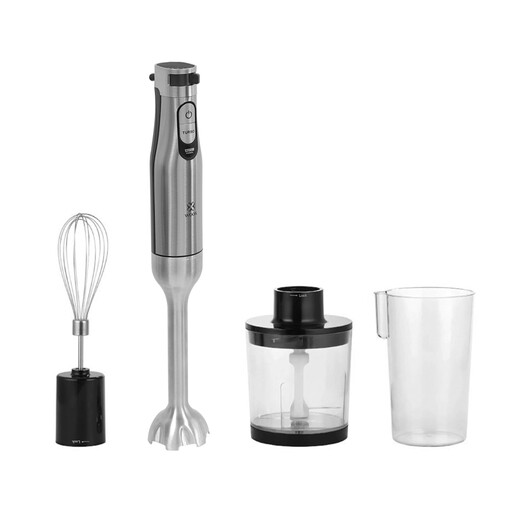 Image unavailable
A hand blender whose product information lists blending soup as one of its uses.
The title specifies variable speed with trigger control, a measuring beaker and detachable accessories.
No. Check the manual for the exact model and let the ingredients cool first if necessary. Philips says to use only cold or room-temperature ingredients with the HR3756/00, HR3752/00 and HR3868/00 models; this guidance does not automatically apply to other blenders.
Only detach the blending foot as directed in the manual, and check the cleaning instructions for each part. A detachable foot can make cleaning easier; Bosch lists this feature for the MSM66110.
Follow the minimum and maximum markers for your chosen model. Philips says the quantity used in the SoupMaker HR2203/80 must stay within these markers, so compare them with your usual portion size.
When you buy from a business online, you’ll often have 14 days to change your mind, although there are exceptions, according to the Dutch government. If a product does not meet the terms of the agreement, the seller must offer a solution, according to the Dutch government.