
Vandaag of morgen in huis

Kwaliteit gegarandeerd

Welkomstaanbiedingen ontgrendelen: GRATIS bezorging | Tot 80% korting | Gratis 30 dagen JoyPlus-proefperiode
Download de app
An LED strip seems like a simple purchase, right until you get one home. The colours are washed-out, the adhesive strip peels off after a week, or the app is completely useless. Personalising your room, gaming setup, or entertainment corner can quickly become a source of frustration. As a Product Recommendation Officer at Joybuy, I see where things often go wrong. Before you spend your money, it's wise to know how to avoid the common pitfalls.
The market is flooded with options, but many of them fail to meet basic expectations. Pay close attention to these three points:
To avoid a bad purchase, it helps to understand a few technical specifications. These determine the quality and capabilities of the ambient lighting for your room.
Most people are familiar with the standard RGB LED strip, where the entire strip lights up in one colour at a time. This is limited for creating dynamic effects. A more modern technology is RGBIC (Red, Green, Blue - Independent Chip). With this, each segment of the strip has its own chip, allowing you to display multiple colours simultaneously. This enables smooth, rainbow-like effects, which is ideal for gaming lighting or as an LED strip for TV that reacts to the on-screen content.
The LED density, expressed in LEDs per metre, determines how evenly the light is distributed. A low density (e.g., 30 LEDs/metre) results in visible hotspots, which can create a jarring look. A higher density (60 LEDs/metre or more) creates a more uniform, unbroken line of light. This is especially important for PC lighting, where the strip is often directly visible.
Good smart lighting integrates seamlessly with your existing devices. Check if the LED strip works with platforms like Google Assistant or Amazon Alexa for voice control. For gamers, compatibility with software like Corsair iCUE or Razer Chroma is a major plus, as it allows the lighting to synchronise with the action in your game. Other options include modular LED wall panels or a striking neon light that can be controlled via an app or remote.
To get you started, we have selected a few products that suit different users and applications.

Why This Fits Their Persona: This strip is designed for seamless integration into a gaming PC. It operates within the Corsair iCUE ecosystem, allowing you to synchronise the lighting with your keyboard, mouse, and other components for a fully immersive gaming experience.
The iCUE software is robust and continuously updated, avoiding the pitfall of poor software. The light quality and colour accuracy are high-grade, meeting the standards of serious gamers.
Full ecosystem integration via iCUE LINK for easy installation and synchronisation. Built-in magnets and a reliable adhesive strip for mounting in a PC case.
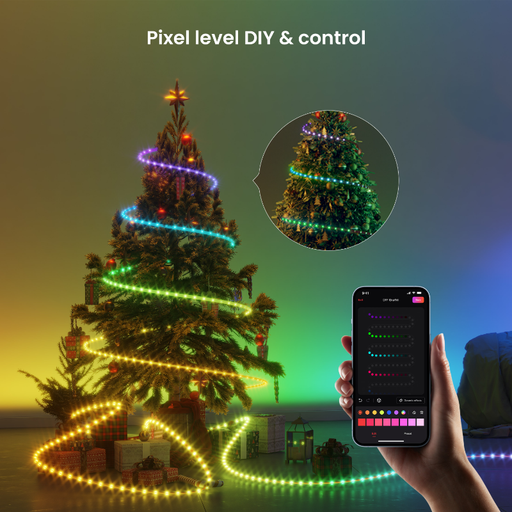
Why This Fits Their Persona: Ideal for anyone who wants to create ambience in the living room or bedroom, hassle-free. This strip is easy to install behind a TV or along furniture and provides access to countless ambient scenes and smart features via the app.
Thanks to RGBIC technology, you get vibrant, fluid colour effects instead of a single static colour. Yeelight is a well-known brand in smart lighting, with a reliable app and excellent colour quality.
RGBIC for dynamic scenes and music synchronisation. Works with voice assistants and is expandable with extensions for larger surfaces.
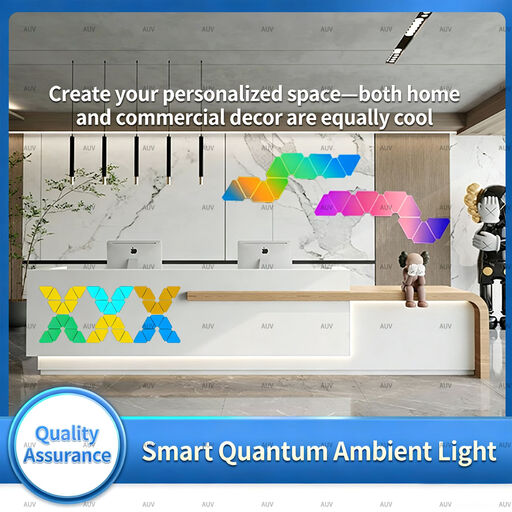
Why This Fits Their Persona: For those who want to go beyond a simple strip. With these modular, triangular wall panels, you can create your own luminous work of art. Perfect as unique wall decor in a game room, living room, or as a creative gift.
This product completely bypasses the weak adhesive pitfall by using a sturdy wall-mounting system. The app and remote offer extensive creative control that far surpasses a standard strip.
Complete modular and creative freedom to make your own patterns. Synchronises with music for a dynamic light show and offers over 200 scene modes.
We have compiled a complete, up-to-date list of products that meet these selection criteria and safety regulations.
Yes, most LED strips can be cut to size. However, this can only be done at the designated cutting marks, which are usually indicated with a scissor icon or a copper line. If you cut anywhere else, a section of the strip will no longer work. After cutting, you typically cannot extend the strip again without special connectors.
A standard RGB strip can only display one colour at a time across its entire length. An RGBIC strip has special chips that allow different sections of the strip to show different colours simultaneously. This creates dynamic effects like a flowing rainbow or chasing lights, which is not possible with a regular RGB strip.
The power consumption of an LED strip is generally low, especially compared to traditional lighting. The exact consumption depends on the length, brightness, and density of the LEDs. A 5-metre strip at full brightness typically consumes between 15 and 30 watts. In practice, with normal use and dimmed colours, the consumption is often significantly lower.
