
Vandaag of morgen in huis

Kwaliteit gegarandeerd

Welkomstaanbiedingen ontgrendelen: GRATIS bezorging | Tot 80% korting | Gratis 30 dagen JoyPlus-proefperiode
Download de app
A light that only comes on when needed can be useful in a hallway, bedroom, cupboard, garden or by the front door. However, not every LED sensor light is suitable for every location. A short product title tells you little about what it’s really like to use. So pay particular attention to the sensor, power supply, brightness and protection against moisture.
Many disappointing purchases come down to three common pitfalls:
A motion-sensor night light usually uses a PIR sensor. PIR stands for passive infrared detection: the sensor responds to movement and changes in heat in the surrounding area. Check:
The rechargeable models in this selection are listed as having a range of 3 to 5 metres and a light threshold of up to 20 lux. That’s practical for a hallway, bedroom or bathroom. If you want to avoid the light switching on unnecessarily, don’t place it directly opposite a heat source or somewhere pets regularly pass by.
For indoors, wireless LED lights and rechargeable cupboard lights are useful if you don’t want to drill holes or conceal cables. Check the battery capacity, charging time and type of connector.
A compact rechargeable LED night light with a built-in 500 mAh battery is listed in the product description as providing up to 10 hours of use in sensor mode. The actual runtime depends on how often the sensor is activated.
For outdoors, solar outdoor lights with motion sensors can be a simple solution. The light doesn’t need a mains connection, but the solar panel does need enough direct daylight. In a shady garden or on a north-facing wall, the light may therefore stay on for less time.
Lumens indicate how much light a lamp produces. A low lumen output is suitable for lighting your way, while a higher output is better for a driveway or large patio. Colour temperature is measured in kelvin:
A dimmable LED lamp gives you more control in rooms where you sometimes want soft mood lighting and at other times need brighter light. For outdoor use, also check the IP rating. IP44 means protection against splashing water. An outdoor waterproof light is often described this way in practice, but always check the official IP rating in the product specifications.

Why it suits this profile: Two compact lights for a bedroom, nursery, hallway or toilet. They charge via USB and don’t need a mains socket.
The product description lists three colour temperatures, five dimming settings, a sensor range of 3–5 metres and operation at up to 20 lux.
500mAh battery, USB charging, 30 lumens and five brightness levels.
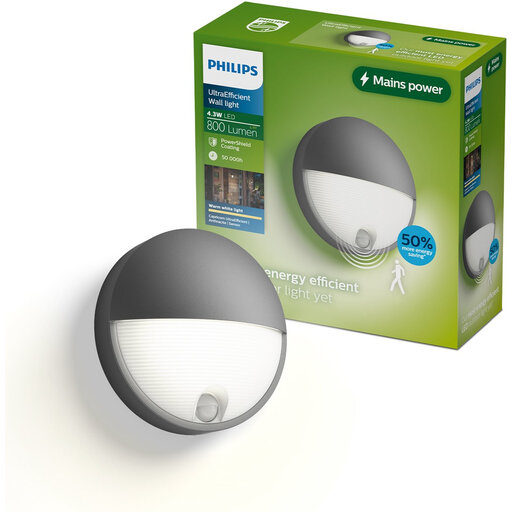
Why it suits this profile: A fixed outdoor LED wall light for an entrance, balcony or garden wall, when you want a neat finish and a permanent connection.
The specifications list an integrated motion and dusk sensor, so the light doesn’t respond to movement alone.
800 lumens, 2700 K warm white light, integrated LED and IP44 protection.

Why it suits this profile: Designed for kitchen cupboards, wardrobes, shelves and work areas, where a longer light bar provides more even illumination.
The light is 10 mm thick and, according to the description, attaches with tape without the need for drilling. Make sure the surface is clean, flat and suitable.
61 LEDs, 1100mAh battery, three colour temperatures and a sensor range of 3–5 metres.

Why it suits this profile: For a garage, driveway, patio or large garden where you want broad light coverage without a mains connection.
The product specifications list an IP65 rating, three lighting modes and a solar panel. Make sure you place the panel somewhere that gets enough direct sunlight.
302 LEDs, 3000 lumens, three adjustable heads and a stated detection angle of 180 degrees.
We’ve put together a complete, up-to-date list of products that meet these strict selection criteria and the applicable European safety regulations.
Place an indoor light somewhere the sensor has a clear view of the route people take. Attach outdoor lighting to a stable surface and point the solar panel towards a spot that gets as much direct daylight as possible. Switch off the power before connecting a fixed 230V light. If you’re unsure, have a wired outdoor LED wall light installed by a qualified electrician.
Runtime depends on the type of power supply, how often the light switches on and the ambient temperature. In practice, rechargeable models have shorter battery life as the battery gets older. An integrated LED light source often can’t be replaced by the user. So check in advance that information about parts, the warranty and maintenance is clearly provided.
LED lights generally use little power, but exact consumption depends on the wattage and how long the light stays on. A light that only comes on when it detects movement stays on for less time than one that’s always on. With solar lighting, the energy comes from the solar panel, but performance still depends on sunlight, placement and the condition of the battery.
