
Vandaag of morgen in huis

Kwaliteit gegarandeerd

Welkomstaanbiedingen ontgrendelen: GRATIS bezorging | Tot 80% korting | Gratis 30 dagen JoyPlus-proefperiode
Download de app
A light that switches on automatically sounds simple, but the wrong LED sensor light can quickly disappoint. The sensor might react too late, the light could be too bright for a bedroom, or an outdoor light may not be suitable for rain. Terms such as “waterproof”, “energy-efficient” and “long battery life” are not always used to mean the same thing, either.
Use these practical checks to compare a LED motion sensor light, indoor sensor lights, LED cabinet lights and solar-powered outdoor lights, without relying on marketing claims alone.
A motion sensor switches the light on when it detects movement. A light sensor responds to the ambient light level and can, for example, switch a light on as soon as it gets dark. Some models combine both functions, but you shouldn’t assume they do.
A sensor night light is often a practical choice for a hallway, staircase or toilet. For a driveway, you’ll usually want a motion sensor light that only comes on when it detects movement. Check whether the product description mentions PIR detection, a day/night sensor or both.
An IP44 outdoor light is protected against splashes of water and solid objects of a certain size. This rating makes it suitable for many sheltered spots, such as a balcony, covered entrance or patio. IP44 doesn’t mean the light can withstand direct water jets or immersion.
An IP65 solar light offers a higher level of protection against dust and water jets under the IP rating system. Placement still matters: install the light as instructed and avoid spots where water can collect for long periods. Also, bear in mind the difference between being “suitable for outdoor use” and being fully exposed to wind and rain.
A high lumen output means more light, but it isn’t automatically the best choice. A 3000-lumen light might suit a large driveway, while 20 to 40 lumens could be more comfortable beside a bed or in a dark hallway. You should also consider the colour temperature:
Check the range in metres and the detection angle. A hallway needs a different range from a wide driveway. According to the product specifications, the Aigostar PIR-360 has an adjustable light sensitivity of 10 to 2000 lux and a delay of 10 seconds to 7 minutes. This gives you more control than a light with just one fixed setting.
For wireless LED lighting, check the sensor’s position, too. A cabinet light may not respond as well if the sensor is tucked deep under a shelf or obscured by clothing.
A plug-in indoor sensor light doesn’t need charging, but it does need a socket. A rechargeable cabinet light is more flexible and can be charged via USB. Check the battery capacity and charging method, and whether a USB cable is included.
Solar outdoor lighting with a motion sensor works without fixed wiring. However, performance depends on the amount of direct sunlight, the panel’s position and the season. An outdoor solar light installed beneath a canopy or in permanent shade will charge less efficiently.
Check the dimensions, fixings and surface before you order. Magnetic mounting is handy in a rented home, while adhesive strips are best suited to lightweight cabinet lighting on a clean, smooth surface. For outdoor installation, a secure screw fixing is usually preferable.
For lights with a lithium battery, follow the safety instructions: don’t dismantle the light, use an appropriate charger and protect the product from extreme heat or moisture if the manual advises you to do so.
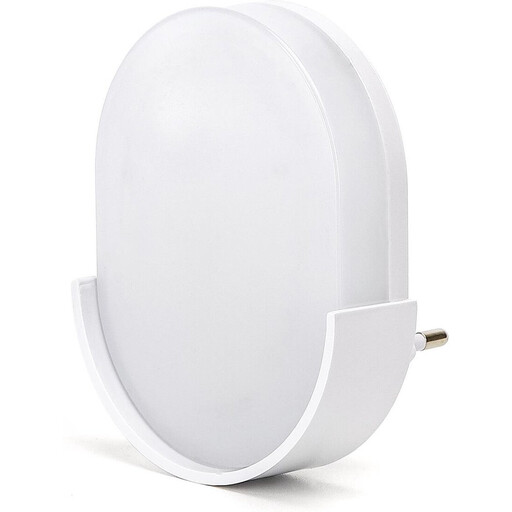
Why it suits this profile: This plug-in model is designed for indoor spaces where you want automatic lighting without batteries or charging, such as a hallway or child’s bedroom.
The product specifications clearly state that it has a light sensor, a 230 V power supply and is for indoor use. This makes it easy to see where it’s suitable.
1 W power, 40 lumens, a 120° beam angle and a plug-and-play design, according to the product information.

Why it suits this profile: Ideal if you want a smart-looking solar wall light for an entrance, patio or garden, without having to install new power cables.
The product information lists the automatic mode, motion sensor and IP44 rating separately. So, use the light in a suitable spot that isn’t fully exposed to the elements.
1000 lumens, 3000 K warm white light, two lighting modes and integrated solar power, according to the product details.

Why it suits this profile: This set is designed for cupboards, shelves and kitchen areas where fixed wiring isn’t wanted and automatic lighting is needed regularly.
The set is designed for indoor use, so you won’t mistakenly use it as outdoor lighting. The PIR sensor and dimensions are specified.
Two 40 cm lights, 61 LEDs per light, three colour temperatures and a rechargeable 1100 mAh battery.

Why it suits this profile: The three light heads and wide coverage make this a good fit for a driveway, garage or larger garden where a small LED wall light wouldn’t provide enough reach.
The specifications list IP65, three lighting modes and a sensor range of up to 60 feet. Check in advance that the solar panel will get enough direct sunlight.
302 LEDs, a stated light output of 3000 lumens, a 180° detection angle and three adjustable light heads, according to the product description.
We’ve put together a complete, up-to-date list of products that meet these strict selection criteria and the applicable European safety regulations.
Place the light where the sensor has a clear view of the route you’ll walk along. Avoid direct obstructions such as doors, tall shelves or curtains. After installation, test the detection angle and how long the light stays on. On a staircase or in a hallway, even spacing is often more practical than having a single light at one end.
Lifespan depends on the LED module, how often the light switches on, its power supply and how it’s used. For rechargeable models, battery capacity and charging habits also play a part. A stated lifespan is a product specification, not a guarantee that every component will last just as long. So, check whether the light source is integrated and whether the battery can be replaced.
A motion sensor light is usually on for less time than one that stays on continuously. Actual energy use depends on the power rating, how long it stays on and how many times it’s activated each day. Solar lighting doesn’t use mains electricity during normal operation, but charging performance depends on sunlight. For indoor use, choose a suitable lumen and wattage range rather than simply going for the lowest power rating.
