
Vandaag of morgen in huis

Kwaliteit gegarandeerd

Welkomstaanbiedingen ontgrendelen: GRATIS bezorging | Tot 80% korting | Gratis 30 dagen JoyPlus-proefperiode
Download de app
A lamp that switches on automatically sounds simple. Yet there are several factors shoppers can overlook when choosing LED sensor lighting. For example, a high light output means little if the sensor responds too slowly, the battery runs out quickly or an outdoor light needs to be installed in a sheltered spot.
The right checks beforehand can help you avoid a poor purchase. Pay particular attention to the intended use, power supply, sensor and ingress protection rating. Below, you’ll find what to look for and which popular options suit different situations in a Dutch home.
Lumens (lm) indicate how much light a lamp produces. For a cupboard or hallway, 40 to 400 lumens is often sufficient, while a driveway or large garden may require more light. A very bright lamp can actually be uncomfortable in a small bedroom and use more energy than necessary.
Also consider the colour temperature:
IP44 outdoor lighting is protected against solid objects from 1 millimetre in size and splashing water from various directions. This does not mean that the lamp can withstand immersion, a high-pressure jet or prolonged exposure to heavy rain.
IP44 may be suitable for a covered entrance or balcony. For an exposed location, choose the installation position carefully. A product with IP65 offers greater protection against dust and water according to the product specifications, but correct installation remains important.
A wireless LED lamp can run on batteries, a built-in rechargeable battery or solar power. Each system has its own considerations:
Before ordering, check the battery capacity, charging method and how accessible the lamp will be.
A PIR sensor responds to moving heat sources. The stated range, for example 3 to 5 metres, depends on the installation height, direction of movement and surroundings. Someone walking directly towards the sensor may sometimes be detected later than someone moving sideways past the lamp.
For a cupboard light, a short range is usually practical. For a driveway or garden, a greater detection distance and wider angle are more useful. Also check whether the sensor can be activated or switched off.
For rechargeable cupboard lighting, a USB connection is useful if you want to recharge regularly via a laptop, power bank or USB adapter. A 1100 mAh battery sounds specific, but the actual operating time depends on the number of activations, brightness and duration of each detection.
Solar lighting mainly requires careful positioning. The panel must receive enough direct sunlight during the day. Shade from a roof edge, tree or balcony can limit charging performance.
Magnetic mounting and adhesive strips make installation easy, but always check the weight and surface. A magnetically mounted lamp should be placed on a flat, clean and suitable surface. For outdoor lamps fitted to a wall, the wall must be strong enough for the supplied mounting materials.
According to the product information, a wired outdoor lamp with a motion sensor connected to 230 volts should be installed by a qualified electrician. Battery-powered and solar products do not require a fixed electrical connection, but the lamp must still be mounted securely and safely.

Why it suits this profile: Two slim lamps for cupboards, shelves or a dark hallway, with no drilling required. The built-in battery can be recharged via USB.
The specifications state a PIR range of 3–5 metres, three colour temperatures and a 1100 mAh battery. This allows you to match the light colour to the room.
30 cm long, 41 LEDs per lamp, two lamps per pack and adhesive-strip installation.

Why it suits this profile: A solar wall light for an entrance, patio or garden when you do not want to run a cable and need a higher light output.
The product details list a dusk sensor, motion sensor, two lighting modes, 1000 lm and IP44. However, position the panel somewhere it will receive direct sunlight.
3000 K warm white, integrated LED, solar power and IP44 protection.

Why it suits this profile: Designed for large outdoor areas such as a driveway, garage, garden or patio where broad light coverage is desirable.
The stated IP65 rating is higher than IP44. The three adjustable heads and 180-degree detection angle help illuminate a larger area.
302 LEDs, stated light output of 3000 lm, three lighting modes and an integrated 1800 mAh battery.
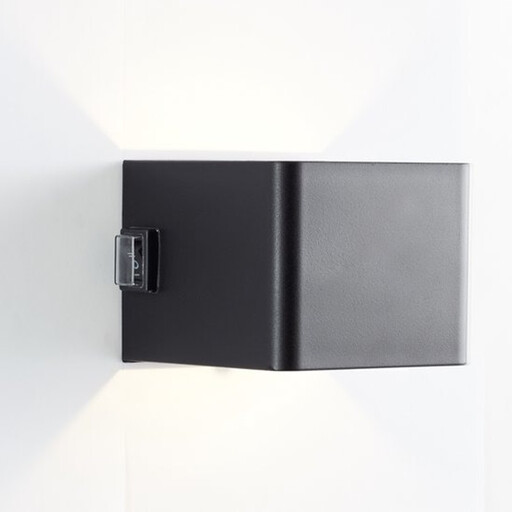
Why it suits this profile: A portable motion sensor lamp for a balcony, hallway, shed or entrance, with no fixed wiring required.
The lamp runs on a rechargeable battery and has a magnetic mounting system. IP44 means protection against splashing water, not waterproofing.
300 lm, 3000 K, USB-C charging, integrated sensor and magnetic mounting.
We’ve put together a complete, up-to-date list of products that fully meet these strict selection criteria and the applicable European safety regulations.
A sensor detects movement or, with some models, the difference between day and night. A PIR sensor responds to moving heat. The lamp then switches on automatically according to the product’s settings. Position the sensor away from obstructions and point it towards the route people take.
Operating time varies by type. For a battery-powered or solar product, the time the lamp stays lit depends on the charge level, number of activations and light intensity. The lifespan of the integrated LED is sometimes stated separately, but this does not mean that the battery or sensor will last just as long. Therefore, check both figures whenever they are available.
An LED lamp generally uses little energy, but consumption depends on its wattage and operating time. A sensor lamp that only switches on when movement is detected stays lit for less time than a lamp that remains on continuously. Solar lighting does not use mains electricity, but it does depend on sufficient sunlight to charge the battery.
