
Vandaag of morgen in huis

Kwaliteit gegarandeerd

Welkomstaanbiedingen ontgrendelen: GRATIS bezorging | Tot 80% korting | Gratis 30 dagen JoyPlus-proefperiode
Download de app
An LED sensor light switches on automatically when it gets dark or when movement is detected. This is useful by the front door, in the hallway, inside a wardrobe, on the balcony or along a garden path. However, sensor lights vary considerably in terms of power supply, brightness, detection range and protection against moisture.
If you only consider the lumens or a low price, you may end up buying a light that does not work properly in the intended location. Below, you will find the key points to consider, along with several product choices for different situations.
A motion sensor light should suit the space. In a narrow hallway, a wide detection range is not always necessary. Outdoors, passing bicycles, moving branches or pets may trigger the sensor. Therefore, check the stated range and the direction in which the sensor should be positioned.
Also pay attention to the difference between:
For an outdoor light, the protection rating is important. IP44 outdoor lighting is protected against splashing water from different directions, but is not designed for immersion or powerful water jets. Therefore, it is best to install an LED wall light outdoors under a canopy or on a wall where rain does not remain directly on the fitting.
For more exposed locations, a higher IP rating may be more suitable. Also check that the mounting bracket is sturdy enough to withstand wind and rain.
A solar outdoor light works without mains electricity, but its performance depends on the amount of direct sunlight available. A north-facing wall, shade from a balcony or dirt on the panel can limit charging time. With a rechargeable sensor light, you need to take regular charging into account.
For indoor lighting, plug-in models are practical for a fixed location. A wireless LED light is more flexible, but has a battery or rechargeable battery that will eventually need to be charged or replaced.
Brightness is measured in lumens (lm). For a sensor night light in a bedroom or nursery, a low light output is often more pleasant than bright task lighting. A warm white model, for example around 2700 to 3200 K, generally creates a softer ambience.
A kitchen, garage or wardrobe may benefit from more light. Also consider the length of the light and where the light falls. A 30 cm sensor wardrobe light illuminates a smaller area than a 40 cm version.
Choose the power supply according to the location:
A lower wattage does not automatically mean that a light is suitable for every application. Look at the combination of wattage, lumens, operating time and sensor settings.
Check whether the light is screwed into place, attached with adhesive tape or held magnetically. Magnetic mounting is convenient in a rented property, but the surface must be flat, clean and strong enough to support the light. For outdoor installation, a stable wall and suitable mounting materials are important.
With integrated LED lighting, the light source is generally not designed to be replaced yourself. Therefore, check the warranty, charging method and maintenance instructions before ordering.
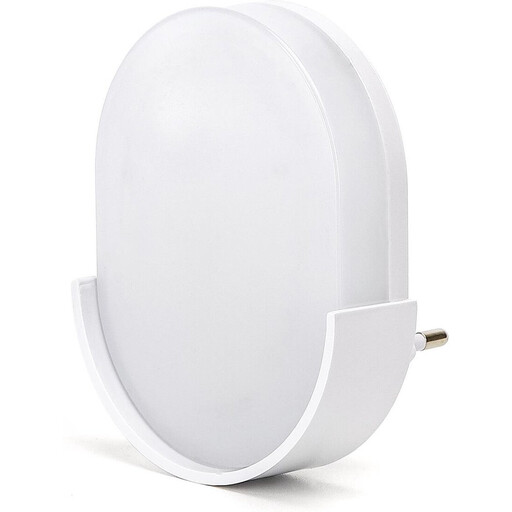
Why it suits this profile: This plug-in model is designed for indoor use and does not require separate batteries or charging. It is suitable for a hallway, bedroom or nursery with a fixed socket.
The product description specifies a light sensor, 40 lm, 1 W power and indoor use. This makes it clearer what the model is and is not intended for.
Plug-and-play, 230 V, 120° beam angle and stated energy consumption of 0.5 kWh per 1,000 hours.

Why it suits this profile: For an entrance, patio or exterior wall, this model offers a solar solution with two lighting modes, a motion sensor and 1000 lm according to the product specifications.
The IP44 rating is clearly specified. This means the light is splash-resistant, but not suitable for immersion or direct water jets.
3000 K warm white, two lighting modes, integrated LED and no fixed mains connection required.

Why it suits this profile: This sensor cabinet light is designed for kitchen cabinets, shelves and wardrobes. The two lights are 40 cm long and run on a rechargeable battery.
The specifications state a PIR range of 3 to 5 metres, three colour temperatures and a 1100 mAh battery. This makes the intended use and charging requirements easy to check.
61 LEDs, warm white to cool white, USB charging and drill-free installation with mounting tape.

Why it suits this profile: This rechargeable sensor light is wireless and can be mounted magnetically. It is therefore suitable for balconies, patios, hallways or entrances without fixed wiring.
The product information explicitly states IP44 and warns that the light is not waterproof. A firm, flat mounting surface is also recommended.
300 lm, 3000 K, built-in motion sensor, USB-C charging and magnetic mounting.
We have put together a complete, up-to-date list of products that fully meet these strict selection criteria and the applicable European safety regulations.
Install an outdoor motion sensor light on a stable wall or fence, facing the route people use. With a solar wall light, the solar panel must receive enough direct daylight. Keep the sensor clear of branches and check that the light is not pointing towards a window or public road if this could cause unnecessary activation.
The operating time depends on the type. A plug-in light does not have a battery that needs charging. With a rechargeable sensor light, operating time is affected by brightness, the number of activations and battery capacity. With solar lighting, sunlight hours, the season and dirt on the panel all play a part. A stated LED lifespan does not guarantee the same lifespan for the battery or sensor.
An LED sensor light generally uses little energy when it only operates for short periods. Exact consumption depends on the wattage and operating time. With a solar outdoor light, energy comes from the solar panel; for mains-powered models, you can calculate consumption using the formula: wattage × operating hours ÷ 1000. For rechargeable models, also consider how often charging is required.
