
Vandaag of morgen in huis

Kwaliteit gegarandeerd

Welkomstaanbiedingen ontgrendelen: GRATIS bezorging | Tot 80% korting | Gratis 30 dagen JoyPlus-proefperiode
Download de app
An LED sensor light can automatically illuminate a dark hallway, wardrobe or kitchen cupboard. But it’s easy to buy a light that disappoints in practice. For example, a motion sensor might respond too slowly, the battery might need frequent charging, or the light might be too bright for a bedroom.
So don’t focus only on the number of LEDs or the colour shown in the product photo. Pay particular attention to the type of sensor, power supply, dimensions and how you plan to use the light.
Not every automatic light uses a motion sensor. Some models respond only to changes between day and night. This type of light sensor switches the light on when the surroundings get dark, but doesn’t necessarily respond to someone walking past.
For a hallway, staircase or bedroom, you’ll usually want a night light with a motion sensor. A light sensor plugged into a hallway socket may be all you need.
For a motion-sensor model, check:
A rechargeable sensor light saves you from using disposable batteries, but it does need to be charged regularly. How long it lasts depends on the battery capacity, brightness and number of times it detects movement.
A light with a built-in 500 mAh battery is compact, while a model with 1100 mAh has a higher capacity. The stated operating time is a product specification; actual battery life may vary depending on the brightness setting and usage pattern.
If you don’t want to charge a light at all, look for a plug-in model. Just check where the socket is and how much space there is around the plug.
A light can give off warm white, neutral white or cool white light. The difference is practical:
A model with several colour temperatures offers more flexibility, but check whether you choose the setting manually or it changes automatically. A dimmable LED light is also more practical beside a bed than one with only a single brightness setting.
A PIR sensor detects movement by sensing changes in its surroundings. The stated range for the cabinet lights described here is around 3 to 5 metres. That’s useful for a wardrobe or kitchen, but it won’t necessarily be suitable for a long hallway.
Some models only switch on when the ambient light level is 20 lux or lower. This means the light stays off during the day. Check that this behaviour suits the place where you plan to install it.
Measure the available space before ordering. For example, a slim light measuring 40 cm long and 10 mm high might fit beneath a kitchen cupboard, while a compact wall light may work better in a small hallway.
With wireless cabinet lighting, installation is also important. Self-adhesive tape means you don’t need to drill, but the surface must be clean, dry and flat. In a bathroom or above a hob, pay extra attention to moisture, heat and care instructions. Don’t assume an indoor model is suitable for a wet area.
Lumens indicate how much light a lamp gives off. A 20 lm model is mainly suitable as a night light for finding your way. A light of 30 lm or more may be more practical in a cupboard or on a shelf. The stated CRI, or colour rendering index, indicates how naturally colours appear. A value of CRI >85 is listed in the product specifications for several models in this selection.
A low dimmer setting is often more comfortable in a bedroom. For kitchen lighting with a motion sensor, a brighter setting can be more useful when you’re looking for ingredients. Also check whether the light has a memory function to retain your chosen brightness.
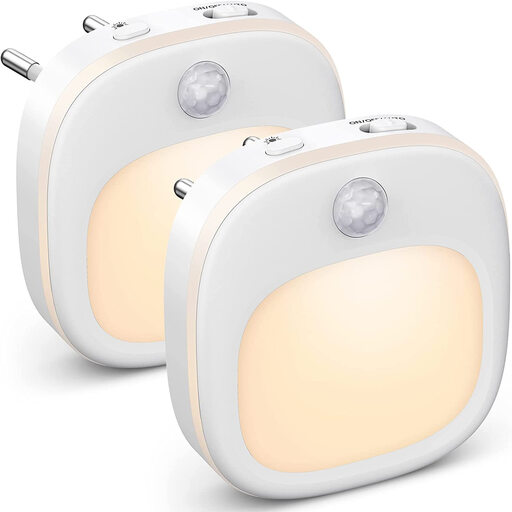
Why it suits this type of buyer: A pack of two is handy for places such as the bedroom and hallway. According to the product information, there are three colour temperatures and five dimming levels.
The specifications list both motion detection and five brightness levels, so you don’t have to settle for a single fixed brightness setting.
Two lights per pack, three colour temperatures and a stated power rating of 1 W per light.

Why it suits this type of buyer: This isn’t a motion-sensor light, but it’s an option if you want smart mood lighting as well as practical sensor lighting. The strip is dimmable, can be cut to size and can be controlled using the Hue app.
At 5 metres long, the strip can also be cut to size, making it easier to measure up in advance.
Dimmable, suitable for indoor use, controllable via app or voice, and supports Matter according to the product description.

Why it suits this type of buyer: This set is designed for kitchen cupboards, wardrobes and shelves where a longer light bar is useful. The lights are USB rechargeable and each has a built-in 1100 mAh battery.
The 400 mm length, 3–5 metre PIR range and three colour temperatures are all clearly stated.
61 LEDs per light, three light colours, USB charging and tool-free installation with self-adhesive tape.
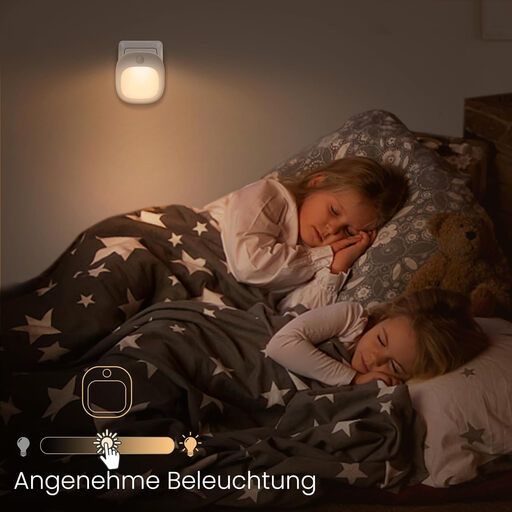
Why it suits this type of buyer: This compact set is a good fit for a bedroom, nursery or hallway where dim lighting is preferred. According to the product information, each light has five dimming levels and three colour temperatures.
According to the description, the light works in sensor mode when there’s little ambient light, and can also stay on continuously. The stated sensor range is 3–5 metres.
USB charging, 30 lm light output, CRI >85 and a stated operating time of up to 10 hours in sensor mode.
We’ve put together a complete, up-to-date list of products that meet these strict selection criteria and applicable European safety regulations.
Clean and dry the surface, measure the position you want and check the sensor range first. If you’re using self-adhesive tape, it’s best not to disturb the light for a while after installation. Remember to leave access to the USB port when fitting a rechargeable light.
It depends on the battery capacity, brightness, how often it’s used and how long it stays on automatically. So don’t compare only the capacity in mAh; check the stated operating time and charging time too. A plug-in light doesn’t have an internal battery, but it does need to stay connected to a socket.
A sensor light usually only stays on while it detects movement, so its energy use depends on how often it switches on. Models in this selection list power ratings including 0.5 W or 1 W. For a fair comparison, look at the power rating, operating time and brightness setting, rather than relying only on the words “energy-efficient” in an advert.
