
Vandaag of morgen in huis

Kwaliteit gegarandeerd

Welkomstaanbiedingen ontgrendelen: GRATIS bezorging | Tot 80% korting | Gratis 30 dagen JoyPlus-proefperiode
Download de app
An LED sensor light switches on automatically when it detects movement or when it gets dark. That’s handy in a hallway, bedroom, nursery, cupboard, kitchen, garden or by the front door. But not every light is right for every spot. A bright outdoor model can feel harsh indoors, while a small LED night light won’t give enough light for a driveway.
As a Joybuy Product Recommendation Officer, I filter product information down to concrete specifications. That way, you can see which features actually matter and which marketing claims you should double-check before ordering.
A light with a motion sensor reacts to movement within a certain range. A light sensor night light, on the other hand, switches on as soon as the ambient light level drops below a certain threshold. Some models combine both functions, but that’s not always the case.
For a corridor you walk through at night, a motion sensor is practical. For a plug-in light that comes on automatically when it gets dark, a light sensor is a better fit.
A high lumen count means more light, but it doesn’t automatically mean more convenience. In a nursery, soft warm white light around 2700–3200 K can be more pleasant than cool white light. For a kitchen worktop or a dark storage room, a higher light output and a more neutral colour temperature may be more useful.
Also check whether the light is dimmable. A model with dimmable LED lighting gives you more control, but only if the dimming function is clearly stated in the product specifications.
An ordinary wireless wall light isn’t automatically suitable for rain. For outdoor lighting with a sensor, check the IP rating:
A solar wall light with a motion sensor also needs direct sunlight to charge its battery during the day. Placing it on a north-facing wall, under a canopy or behind a tall fence can limit its performance.
Look at the stated range, detection angle and how the light responds. The 40 cm cupboard light below, for example, lists a PIR sensor with a range of 3–5 metres. That’s suitable for a kitchen cupboard, wardrobe or short passageway, but it doesn’t mean the light can illuminate a large garden.
Also pay attention to the shut-off delay. If it’s not stated, you won’t know in advance how long the light stays on after movement stops.
A plug-in model works without recharging, but needs a suitable socket. A rechargeable LED light is more flexible to position, but needs regular charging via USB. A solar outdoor light with a motion sensor uses an integrated battery that charges during the day through the solar panel.
For rechargeable models, check:
Warm white around 2800–3200 K often suits bedrooms, hallways and night lighting. More neutral or cooler light can work better as cupboard lighting with a sensor or task lighting in the kitchen.
Measure the installation spot beforehand. The ultra-slim models at 30 and 40 cm are 10 mm thick according to the product information. That means they fit on narrow shelves and in cupboards, but the length needs to match the surface area.
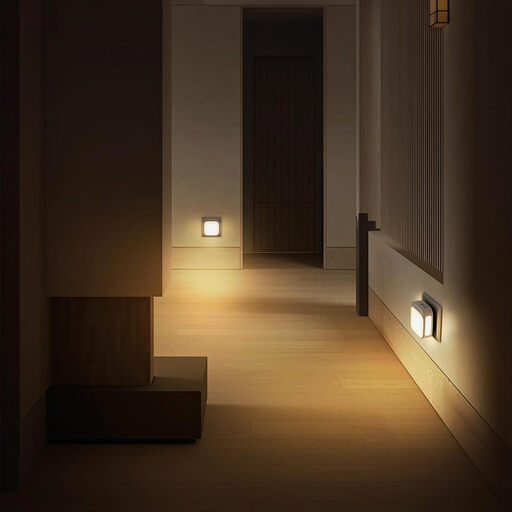
Why this fits: For a hallway, bedroom or route to the toilet where you want automatic light without motion detection.
The product specifications mention an automatic light sensor that switches on at up to 20 lux and turns off during the day.
Set of two, 0.3 W consumption per light, warm white 2800–3000 K and stepless dimming from 10% to 100%.
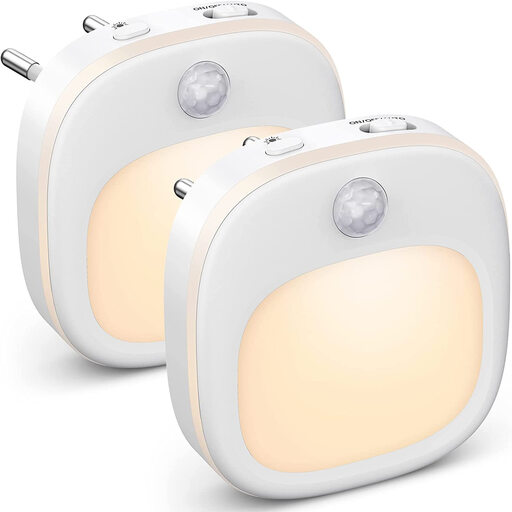
Why this fits: For families who want to use different light levels in bedrooms, nurseries and hallways.
The product title mentions three colour temperatures and five dimming levels, so you’re not stuck with one light setting.
Works on 100–240 V according to the stated specifications and combines motion detection with adjustable colour and brightness.

Why this fits: For kitchen cupboards, wardrobes and shelves where there’s no plug socket.
The stated dimensions of 400 × 38 × 10 mm make it easy to check the available space beforehand.
Set of two, 61 LEDs per light, PIR range of 3–5 metres, three colour temperatures and an integrated 1100mAh battery.
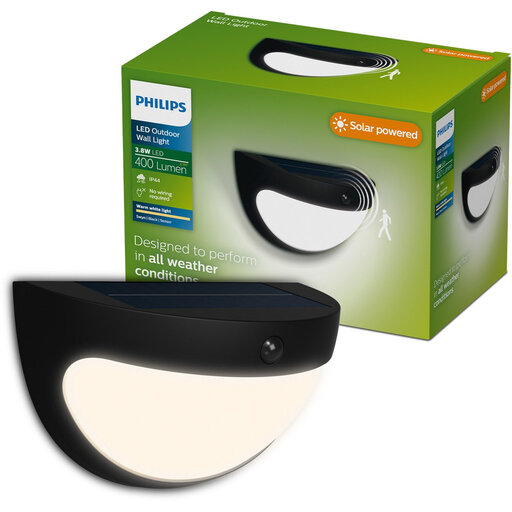
Why this fits: For an exterior wall by an entrance, patio or garden where there’s no fixed wiring.
The product information states a daylight sensor, motion sensor and IP44 rating. The light is not designed for use underwater.
Runs on solar power, has 2700 K warm white light according to the product specifications and two lighting modes.
Browse a current selection of LED lights with motion sensor and compare sensor range, power source, light colour and IP rating for each application.
That depends on the wattage and how long it’s on. A 0.3 W model uses very little energy according to the product specification, but the total consumption depends on how often and for how long the light switches on. With a solar outdoor light, the energy comes from the integrated battery, which charges during the day through sunlight.
Position the sensor clear of obstacles and point it towards the walking route. For a cupboard, a range of a few metres is usually enough. For a driveway or garden, also check the detection angle and mounting height. Follow the included installation instructions and fix a heavier wall light to a stable surface.
The lifespan varies by product and usage conditions. Check whether the manufacturer states a lifespan and whether the LED light source is replaceable. With integrated LED lighting, the light source is often not designed to be replaced by the user. Clean sensors and solar panels regularly with a soft cloth and avoid moisture on models that aren’t protected against it.
