
Vandaag of morgen in huis

Kwaliteit gegarandeerd

Welkomstaanbiedingen ontgrendelen: GRATIS bezorging | Tot 80% korting | Gratis 30 dagen JoyPlus-proefperiode
Download de app
An LED sensor light can be useful in the hallway, kitchen, bedroom, wardrobe, on the balcony or next to the front door. The light switches on automatically when it gets dark or when movement is detected. However, not every light is suitable for every location. A cheap purchase can disappoint because of a weak battery, an unsuitable IP rating or a sensor that only responds once you have already walked past it.
With these buying tips, you can compare specifications, installation and running costs without relying solely on marketing claims.
A high lumen count sounds appealing, but it does not tell you everything about the lighting. A narrow beam can brightly illuminate a driveway while leaving the sides in darkness. So also pay attention to the beam angle, the number of light heads and the position of the sensor.
For a cupboard or bedside table, a modest light output is often more practical. A garden, garage or driveway may require a wider spread of light.
A light designed for outdoor use is not automatically waterproof. In practice, IP44 means protection against splashing water and solid objects of a certain size. This makes the light suitable for a sheltered outside wall, but not for immersion or a direct jet of water.
IP65 offers greater protection against dust and water jets. Nevertheless, check the installation instructions and do not unnecessarily place the product somewhere exposed to prolonged heavy rain or high water pressure.
An outdoor solar sensor light uses energy stored in the solar panel during the day. On a north-facing wall, beneath a balcony or between tall trees, the battery may not charge as effectively. Runtime can also vary in winter and on cloudy days.
Position the panel as openly as possible and clean it regularly. A USB-rechargeable light is more practical when the installation receives little direct sunlight.
Look at three points:
An outdoor light with motion sensor should be installed so that the sensor is not constantly aimed at a busy road or moving branches. A shorter detection distance is usually sufficient for a hallway or staircase.
There are three common options:
A plug-in LED night light with sensor is easy to use in a hallway or nursery. When using it around children, pay particular attention to safe positioning so that cables and sockets are out of reach.
Colour temperature is measured in kelvin:
A dimmable LED light gives you greater control in spaces where you need both practical and softer lighting. Check whether dimming is controlled via a switch, remote control or built-in setting. A model with multiple colour temperatures is not automatically dimmable.
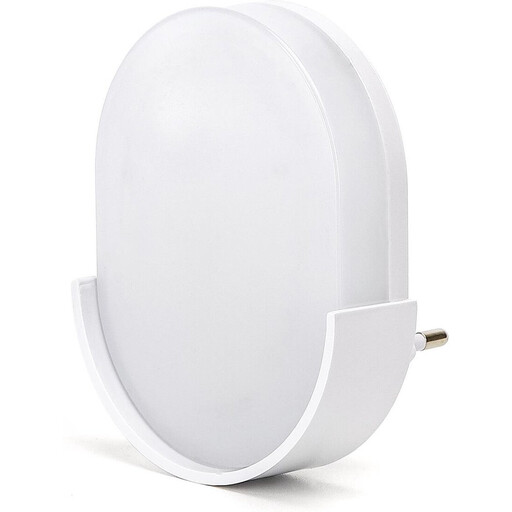
Why it suits this profile: This plug-in model is designed for indoor use and does not require batteries or a USB charger. It is suitable for a hallway, bedroom or nursery where automatic lighting from a fixed socket is preferred.
The product details specify 40 lm, 1 W, a light sensor and an indoor environment. This makes its intended use clearer than that of an outdoor light incorrectly used for every room.
Plug-and-play operation, an automatic day–night function and a stated lifespan of 25,000 hours according to the product information.
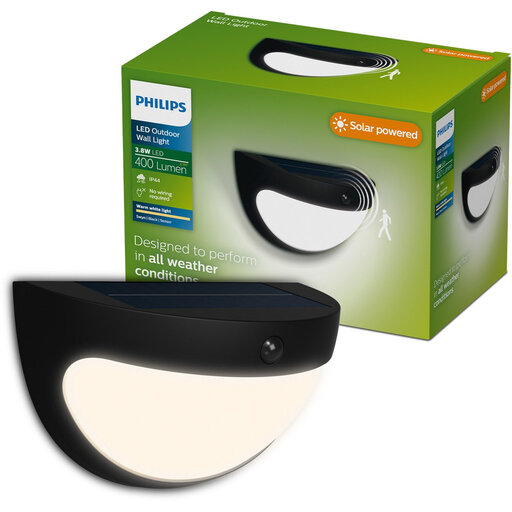
Why it suits this profile: This solar wall light is intended for a fixed outdoor location, such as an entrance, balcony or garden wall. The product information states 400 lm per light, two lighting modes, a motion sensor and IP44.
The IP44 rating makes it clear that this is splash-resistant outdoor lighting, not a light designed for immersion. Positioning it on a sheltered wall remains important.
Solar power, a warm 2700K colour temperature and automatic operation via dusk and motion sensors.

Why it suits this profile: This model is designed for larger outdoor areas, such as a driveway, garage, patio or garden. The product description specifies three light heads, a detection distance of 60 feet, a detection angle of 180° and three modes.
The wide arrangement with three adjustable heads is clearly specified and can be checked. The stated IP65 rating is higher than IP44, but installation and solar-panel maintenance remain decisive.
302 LEDs, a stated luminous flux of 3000 lm, a 1800 mAh lithium-ion battery and wall mounting without fixed wiring.

Why it suits this profile: This cupboard lighting with motion sensor is designed for kitchen cupboards, wardrobes and shelves. The two lights run on a built-in 1100 mAh battery and are charged via USB.
The dimensions of 400 × 38 × 10 mm and the PIR range of 3–5 metres make its intended use clear. According to the description, the product is not designed for damp locations.
Three colour temperatures, two lights per set, adhesive installation without drilling and USB charging via a suitable charger.
We have compiled a complete, up-to-date list of products that fully meet these strict selection criteria and the applicable European safety regulations.
Mount a light securely on a flat surface and check beforehand that the supplied fixings are suitable for brick, wood or metal. With magnetic models, the mounting plate must have sufficient load-bearing capacity. When installing outdoor lighting, take rain, wind and the IP rating into account.
For a solar outdoor light:
When using a rechargeable sensor light, only use a suitable USB power supply in accordance with the product information. An integrated LED light source is often not replaceable, so check this before buying.
A light with a PIR sensor responds to changes in infrared radiation associated with movement. A light sensor also measures the ambient light level. This means that automatic lighting can, for example, switch on only when it is dark. The exact detection distance, angle and switch-on delay vary from model to model.
An LED light generally uses little electricity, but consumption depends on wattage, runtime and the number of times it switches on. A solar sensor light does not use mains electricity during normal operation, while a USB model needs to be recharged regularly. So do not look only at the number of lumens; also consider wattage, battery and runtime.
Its lifespan depends on the LED module, battery, electronics, installation and surrounding conditions. A stated lifespan, such as 25,000 hours, is a product specification and not a guarantee that every component will last that long. With solar lighting, the battery and exposure to weather and cold can have a particularly significant effect on performance.
