What should you look for when choosing?
First decide whether your main aim is to compare colours, show the whole swatch evenly, or bring out texture and damage. Then choose a light source, lighting direction, mounting option and power supply to suit the shot.
| What to consider |
What to look for when buying |
Who is this important for? |
| Repeatable colour reproduction |
Check whether you can keep the white-light setting consistent and whether a colour reference fits your workflow. |
If I compare swatches at different times, I want to be able to repeat the shooting conditions and white balance. Around 36% of consumers put colour comparison first. |
| Even lighting |
Consider whether the panel size and placement suit the width and reflective surface of the swatch. |
For an overview shot, I want the whole swatch to be clearly visible, without the lighting direction drawing extra attention to one area. Around 29% of consumers prioritise an evenly lit overview. |
| Showing texture or damage |
Check whether you can adjust the lighting direction and mounting for a separate close-up. |
If I want to show the weave or damage, I need more than an overview: I also need light that can skim across the surface. Around 21% of consumers give documenting texture top priority. |
| Portability and setup |
Check the power supply, stated runtime and included mounting accessories for the exact version on offer. |
When I work in different locations, I want to be able to take the light with me and mount it suitably without relying on a mains socket. Around 14% of consumers say portability is their main requirement. |
Joybuy products for different setups
These product choices suit portable photography and a fixed workspace. Check that each light source and mounting option works with the size of your swatch.
 No image available
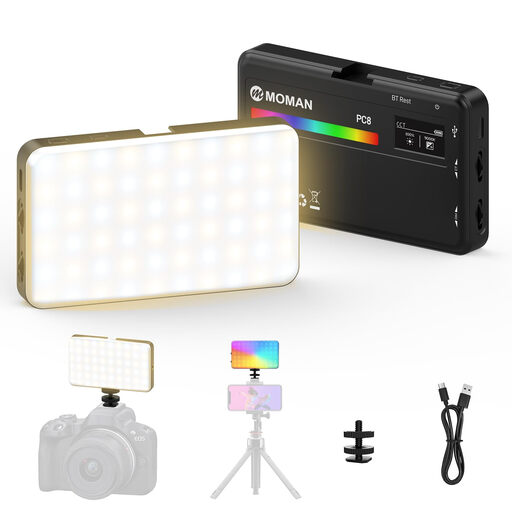
Moman PC8 RGB camera light
Suitable for small swatches and photography on location; check whether the compact light source gives an even enough result at your shooting distance.
Adjustable colour temperature of 2500–9000 K and brightness of 0–100%. According to Moman, the built-in battery has a capacity of 3100 mAh and lasts around 80 minutes at 100% brightness.
The product description lists a 1/4-inch mount and a cold shoe adapter.
View at Joybuy
 No image available
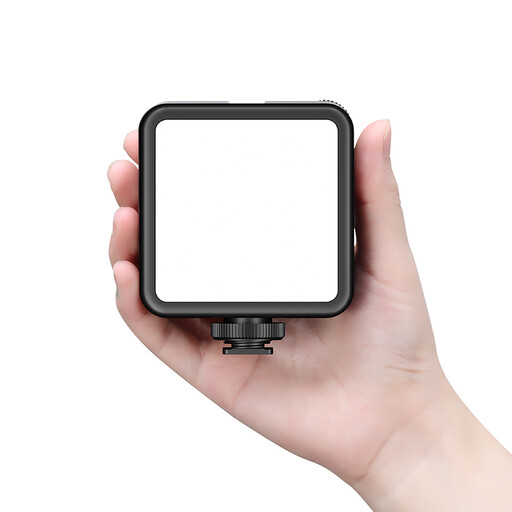
Ulanzi VL81 rechargeable LED video light, black
This rechargeable light may suit a portable setup; check that its lighting direction and surface area work for the shot you want of the swatch.
The product description lists an 81-LED array, stepless brightness control and a colour temperature of 3200–5600 K.
The product description mentions mounting on cameras and tripods.
View at Joybuy
 No image available
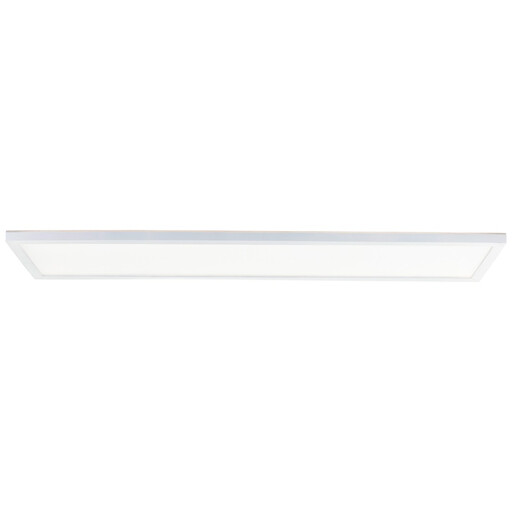
Brilliant LED panel, 96 × 25 cm, 3000 lm, 3000–6500 K
The described ceiling mount suits a fixed workspace; check whether the position works for the lighting direction you need for the swatch.
Dimensions: 96 × 25 cm. The product description lists 3000 lm, dimming and an adjustable colour temperature of 3000–6500 K.
Designed for fixed surface-mounted ceiling installation; the product description doesn’t mention a rotatable or swivelling function.
View at Joybuy
Frequently asked questions
Is a high CRI rating enough to record the colour of a textile swatch reliably?
No. A CRI rating describes one property of the light source, not the whole photograph. Keep your lighting and camera settings consistent, and include a colour reference when accurate colour comparison matters. Assess the finished photo as part of that workflow.
How should I position the light for an overview shot and a photo of the weave?
For an evenly lit overview, the Canadian Conservation Institute describes using two lamps, one on each side, at a 45-degree angle. For a separate shot of relief or damage, the institute describes using raking light, with a lamp positioned low in relation to the surface. These are documentation techniques, not mandatory positions for every swatch.
What should I check about power and mounting before photographing on location?
Check whether the adapter, stand and battery are actually included with the version you’re buying. Neewer says the NL660 version with a stand differs from the other version; the manufacturer states that NP-F batteries aren’t included with the amaran P60x. Moman states that the PC8 has a built-in battery and lasts around 80 minutes at 100% brightness. Follow the manual for your chosen model when charging and using it.
Should fragile historic textiles be lit differently?
Yes. The Canadian Conservation Institute describes light damage to fragile textiles as cumulative and irreversible; both the amount of light exposure and its duration matter. Prepare your setup in advance and limit exposure to what’s needed for the shot. This isn’t a universal setting for all textile swatches.
In the Netherlands, am I always entitled to just two years of legal protection for an LED panel?
No. According to the Dutch government, the Netherlands has no fixed legal guarantee period. What you can expect in terms of a product’s lifespan depends on factors including the product and the information provided. If a product is faulty, contact the seller. A manufacturer’s guarantee is in addition to your statutory rights.


