What should you look for in an LED panel?
One adjustable panel
Choose this if: you’re filming a small detail or want to use raking light to show brushwork.
Bear in mind: you may get shadows or uneven brightness; one panel doesn’t guarantee even lighting.
Two independently adjustable panels
Choose this if: you want to film a larger area and have space on both sides of the artwork.
Bear in mind: you’ll need more room and equipment; more even light can reduce the shadows that bring out brushstrokes.
Compact camera-mounted panel
Choose this if: space or portability is a priority, and a test clip shows that the detail is lit well enough.
Bear in mind: a small panel won’t automatically light a larger painting evenly; also check the mounting and battery life at your chosen brightness.
The key trade-off is whether you want to minimise reflections, assess colour, light your chosen detail evenly or create a practical setup. Visualmedia Panthera and IdeelArt explain how glossy paint can reflect light and how the direction of the light makes brushstrokes visible.
| What to consider |
What to check before buying |
Who is this most relevant to? |
| Reflections and brush texture |
Check whether you can angle the panel outside the reflection angle and use diffusion; film a test clip of both glossy and textured areas. |
If you want to reduce glare while keeping brushstrokes visible, managing reflections should be your priority. Around 36% of consumers say this is their main buying concern. |
| Colour in the footage |
Compare the stated CRI of the exact model and set the white balance under the light you’ll use for filming; assess the result in a test shot. |
If you want your online shop video to show the artwork’s colours faithfully, check both the light and the camera settings. Around 29% of consumers give colour rendering the highest priority. |
| Lighting across the detail |
Test the edges of the frame; only compare lux readings if the measurement distance and conditions are the same. |
When filming a larger detail of a painting, you’ll want to know whether the light reaches the edges too. Around 21% of consumers prioritise how evenly the detail is lit. |
| Setup and power |
Check the dimensions, mounting, included adapter or battery, and any stands for the exact version. |
If you have little room beside your workspace or want to move the light around, mounting and power will determine what setup works for you. Around 14% of consumers name this as their main buying concern. |
Product picks at Joybuy
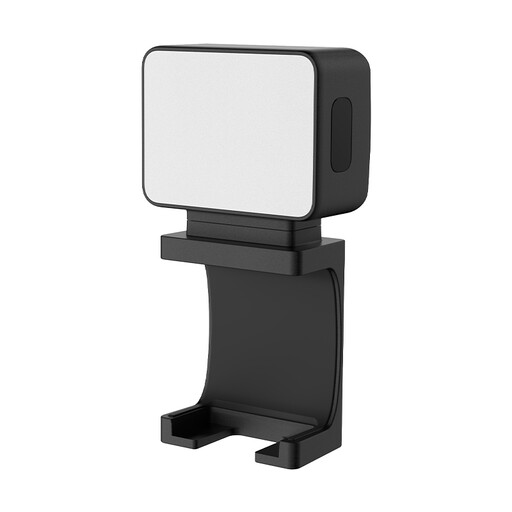
A compact light for a filming space with limited room, or if you want to move your lighting around.
 No image available
Ulanzi LM001 portable mini fill light, 500 mAh battery
A compact option for a filming space with limited room, or if you want to move the light between setups.
View at Joybuy
Frequently asked questions
Should you position both lights at a 45-degree angle?
Two lights positioned at an angle of around 45 degrees can be a starting point for even reproduction, but they won’t necessarily prevent reflections on textured oil paint. If you want to bring out the brushstrokes, also compare a test clip with light coming more from one side.
Why do the colours look different even though the panel has a high stated CRI?
The stated CRI doesn’t describe the entire imaging process. Set the camera’s white balance for the light actually falling on the painting, then check the result with a test shot.
Does every LED panel come with a stand, battery and mains adapter?
No, the contents vary by version. NEEWER lists two stands and adapters for the NL660 two-panel kit; check the contents list for the exact version and don’t assume NP-F batteries are included.
What product requirements should you check for an LED panel in the Netherlands?
Electrical equipment placed on the market in the Netherlands must meet the applicable EU product safety requirements. Business.gov.nl states that, once conformity has been demonstrated, the manufacturer must affix the required CE marking and draw up an EU declaration of conformity; the applicable requirements also depend on the version and any wireless features. A CE marking on its own isn’t independent proof of image quality.
What cancellation period and guarantee apply to an online purchase in the Netherlands?
For eligible online consumer purchases, you generally have 14 days to change your mind, starting the day after delivery; check the exceptions and any return costs. According to Business.gov.nl, the statutory guarantee takes precedence over any additional commercial guarantee. Consumer rules don’t automatically apply when you buy for a business.


