
Maker working with glossy tiles
You want to show the colours and grout lines without distracting highlights on glazed or polished areas.


For a full mosaic, a larger, diffused panel is an option if you have enough space to set it up. For close-up details or a worktable that needs to be cleared quickly, a compact light is easier to move. Diffused light can soften reflections, but it can also make texture less visible, while a small light source won’t necessarily illuminate the whole mosaic evenly. Compare test shots and check the white-light setting, power supply and included mounting equipment for the exact version.
You want to show the colours and grout lines without distracting highlights on glazed or polished areas.
You photograph different samples or sessions and want a repeatable white balance and lighting setup.
You need to move or put away the light and its mount after use, so you’re weighing up a larger light surface against a compact setup.
Best when: you have enough space and want to light a larger mosaic.
Trade-off: strong diffusion can soften reflections, but it can also flatten grout lines and differences in height.
Best when: you want to position the light close to a detail or need to clear the worktable quickly.
Trade-off: a small light surface won’t necessarily be large enough to illuminate the whole mosaic evenly.
| What to consider | What to look for when buying | Who is this important for? |
|---|---|---|
| Controlling reflections | Check whether you can reposition the light and diffuser, and take a test shot from the angle you plan to use. | When I photograph glossy tiles, I want to be able to control distracting highlights without losing all the shine. Around 31% of consumers put controlling reflections first. |
| Comparing colour between shots | Compare the white-light range of the exact version and note down the light settings; use a white balance reference if needed. | When I compare samples from different sessions, I want to be able to repeat the same lighting and camera setup. Around 25% of consumers prioritise colour consistency. |
| Keeping texture and grout lines visible | Compare an angled light with a diffused setup and assess the results on the actual sample. | If grout lines and differences in height are important, I want to see whether the light brings out the texture. Around 25% of consumers put visible texture first. |
| Setting up and packing away | Check the panel dimensions, mount, adapter, battery type and package contents for the exact version. | If I need to clear the shared worktable quickly after use, a compact setup matters. Around 19% of consumers put limited workspace first. |
Soft, even light can reduce reflections, but it can also make the texture of a mosaic less visible.
Take one test shot of the same sample with diffused light and another with angled light, then compare the grout lines and shine.
What’s included varies by model and bundle. For example, the Godox LEDP260C manual says that two NP-F970 batteries must be purchased separately for battery operation; the stand included with the NEEWER NL660 varies by version.
Before buying, check the package contents and power connection for the exact version.
Depending on the version you choose, you may also need a suitable battery, stand or holder.
Portability alone doesn’t tell you whether a mini light can illuminate a whole mosaic evenly.
Check the coverage with a test shot taken from the distance you’ll actually use to photograph the sample.
The LEDP260C and LP series offer panel options for different setups and illuminated areas.
The NL660 is a bi-colour panel with an adjustable bracket and barn doors to direct the light.
The PavoSlim 60B is a slim bi-colour panel supplied with light-shaping accessories.
The VL120 RGB is a compact light that’s quick to position for close-up details.
The MC Pro is a mini panel for focused detail lighting and flexible mounting.
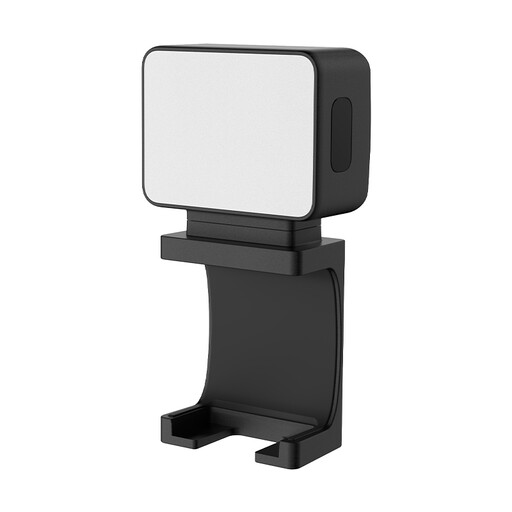
This Joybuy selection focuses on a portable mini light for detail work and a shared worktable that needs to be cleared after use.
 No image available
This portable mini light is well suited to a workspace that needs to be cleared quickly after use.
The product details list a built-in 500 mAh battery and magnetic mounting. For the exact version, check the relevant EU product information and, where required, the CE marking and EU Declaration of Conformity.
No, two panels aren’t always necessary. Two similar soft light sources can provide even illumination, while a single light source deliberately positioned at an angle can be useful for bringing out texture. Compare reflections and grout lines in test shots of your own sample.
Note down the light and camera settings, and photograph a white balance reference under the same lighting. This lets you compare the white balance between shots; a stated colour temperature range alone doesn’t guarantee identical colours in your photos.
It varies by model and version. For battery operation, the Godox LEDP260C manual specifies two NP-F970 batteries, which must be purchased separately. According to the product information, the stand is only included with the ‘with Stand’ version of the NEEWER NL660; check the package you’re choosing.
No, a logo on its own isn’t an independent safety test and doesn’t confirm that a specific listing meets all applicable requirements. Business.gov.nl and the European Union’s Your Europe explain that, for products covered by the relevant EU rules, the responsible manufacturer must apply CE marking where required and draw up an EU Declaration of Conformity.
Set up the panel securely in a dry place, following the manual, and keep any ventilation openings clear. Nanlite warns that the surface of the PavoSlim 60B can become hot after prolonged use; this warning applies to that model.