
Photographers capturing knitted details
You want to show the stitches and outline of a hat while keeping the dark background dark. Nikon USA explains how to control light falling on unwanted areas, so light placement is an important consideration.


Start with a panel you can angle towards the hat and control the spread of light from. Take a test shot to check that the stitches are visible without lighting up the background. A compact battery-powered panel suits a small tabletop set-up, while a larger panel or a kit may offer more options for a permanent set-up. Check the power supply and included light modifiers for each version.
You want to show the stitches and outline of a hat while keeping the dark background dark. Nikon USA explains how to control light falling on unwanted areas, so light placement is an important consideration.
You photograph several wool colours and want to be able to repeat your lighting and white balance each time. Canon Europe emphasises setting the white balance to achieve the colour result you want.
You switch between a small table and other shooting locations. The panel size, mounting, power supply and what’s included in the box all affect how you can position the light.
First, decide how you want to direct the light onto the hat and whether you’ll be lighting the whole hat or focusing on details. Then compare colour control, the space you need and what’s included with the exact version.
| Consideration | What to look for | Who is this important for? |
|---|---|---|
| Knit and background | Check that you can angle the panel and control the spread of light. Assess the shot with the actual hat and background. | If I want to show the stitches and edge without lighting up the dark background, I prioritise light placement. Around 36% of consumers prioritise separating the subject from the background and showing texture. |
| Wool colours | Compare the adjustable colour temperature of each version, and keep the lighting and camera white balance consistent across similar photos. | When I photograph different wool colours, I want to be able to repeat the lighting and check the colour against the actual yarn. Around 29% of consumers give colour rendering and consistency the highest priority. |
| Permanent set-up | Check what’s in the box, the mounting and the power supply. Find out whether the diffuser or light modifier you need is included. | If I want to use the panel in the same place each time, I want to know whether the version I choose is complete and can be mounted securely there. Around 21% of consumers prioritise a practical permanent set-up. |
| Portability | Compare the size, mounting and power supply of the exact version. Take a test shot to check that the light reaches the whole hat. | When I move between shooting locations, I want to be able to carry and set up the panel easily without losing sight of how well it covers the hat. Around 14% of consumers give portability the highest priority. |
Light output figures measured at different distances aren’t directly comparable. A figure on its own also doesn’t tell you how the light will fall on your hat and background.
Only compare figures measured at the same distance, then take a test shot with the panel in the position you want to use.
The listed contents vary between versions. A panel doesn’t automatically come with a stand, battery or the light modifier you want.
Check the contents and mounting for the exact version before deciding whether the kit will suit your set-up.
If a stand, battery or light modifier you need is missing, you may have to buy it separately.
A stated CRI alone doesn’t prove that every wool colour will look right in the final photo. The lighting and camera white balance also play a part.
Keep your settings consistent across a product range and compare the photo with the actual yarn.
The NL-116AI is a compact battery-powered panel for a small set-up; the NL660 is a larger bi-colour panel for use as a separately positioned key light.
The P60x is a bi-colour panel for anyone who wants to shape the light with a softbox and grid.
The P260C Pro is a slim bi-colour panel with built-in diffusion and adjustable white light.
The P96 is a mini panel for portable detail or fill lighting.
The VL49 RGB is a compact supplementary panel for details or a narrow edge.
This selection focuses on portable supplementary lighting for a mobile photography set-up.
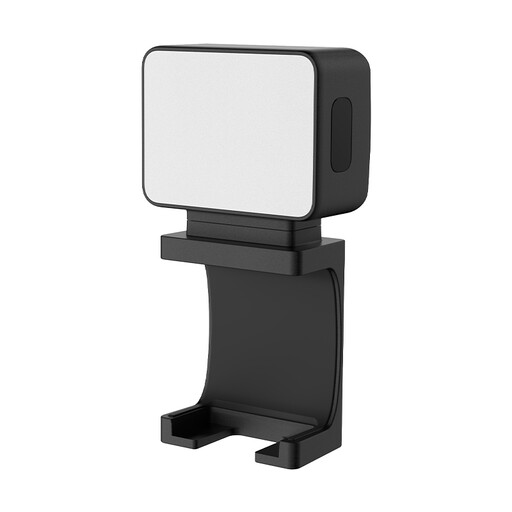 No image available
The product title describes a portable mini light with a magnet for photography, suited to a set-up you want to move around.
The product title specifies a 500 mAh battery and a waterproof design.
Angle the light towards the hat and assess both the stitches and the background in a test shot. Barn doors or a grid can help control the spread; the right positioning depends on your set-up.
No, RGB lighting effects aren’t necessary for this. Consistent white light and camera white balance are important for comparable product photos; check the result against the actual yarn.
Check that the version you choose includes the stand, adapter and light modifier you need, and that its mounting suits your workspace. Follow the instructions for the exact product when powering and charging it, and protect the battery from excessive heat and liquids.
For an applicable online consumer purchase, you generally have 14 days to change your mind, subject to legal exceptions. A product must also meet what you could reasonably expect from it. ACM ConsuWijzer explains that the seller is your point of contact for the statutory guarantee, which has no fixed duration in the Netherlands.
EU rules may require electrical and electronic equipment to carry a CE marking, depending on the requirements that apply to the specific product. Check the product and adapter information for the exact version; a CE marking doesn’t tell you whether the panel is suitable for your photography set-up.