
Photographers of prints behind glass
You can see the lights or room reflected in the glass, and want to adjust the set-up so the print remains clearly visible.


For framed prints, lamp placement is a more important starting point than wattage alone. Two lamps that you can angle towards the print from either side provide a starting point for even lighting, as described by the Canadian Conservation Institute. Take a test shot to check whether the glass reflects the light sources, then choose a panel size, adjustable white light and power supply that suit your print and workspace. A compact panel does not guarantee even lighting across a large print.
You can see the lights or room reflected in the glass, and want to adjust the set-up so the print remains clearly visible.
You photograph prints for documentation or presentation and want to set the white light and camera white balance consistently. High light output alone will not resolve colour differences.
You want to position lights beside the frame and put them away after use, so size, mounting and power all matter.
Start with a test shot from the final camera position. The Canadian Conservation Institute describes two lamps positioned at a 45-degree angle as a starting point for evenly lighting objects. If you are photographing glass, check for any remaining reflections yourself.
| What to consider | What should you check? | Who is this important for? |
|---|---|---|
| Reflections in the glass | Position each light separately and take a test shot from the camera position; if needed, try a suitable polarising filter. | If I’m photographing a print behind glass, I want to be able to move the lights so their reflections don’t obscure the image. Around 33% of consumers cite reducing reflections in glass as their main concern when buying. |
| Colour control | Compare the white light range of the exact model and check the camera’s white balance under that lighting. | When I’m documenting reproductions, I want to keep the lighting and camera white balance consistent. For around 27% of consumers, colour control is a top priority. |
| Even lighting | Measure your frame and compare the centre with the corners in a test shot; check the diffuser supplied with the exact model. | For a larger frame, I want to see whether the centre and corners are lit similarly in the shot. Around 27% of consumers prioritise even lighting across the whole print. |
| Space and power | Check the dimensions and mounting; compare mains power, battery power and the accessories included with the model you choose. | In a small home studio, I want to position, power and store the light easily. Space, power and storage are the main buying concern for around 13% of consumers combined. |
Reflections also depend on the position of the light, camera and glass. Camera white balance also affects how the print’s colour is captured.
Test the light angles and set the white balance with your frame in place before comparing models by their specifications.
A compact size is convenient for storage, but does not guarantee even lighting across a larger area.
Check the centre and corners in a test shot, and make sure you know which diffuser is included with the exact model.
The product specifications for the Ulanzi VIJIM VL120 Bi-Color and the VL120 RGB relate to different models.
Compare the full model name and white light range, not just the name VL120.
The P260C Pro is an example of a larger panel with adjustable white light for a permanent set-up.
Bi-colour panels, including the P60x, are worth comparing for an adjustable permanent set-up.
PavoSlim panels are worth considering if you want to compare a slim light with the light modifiers included.
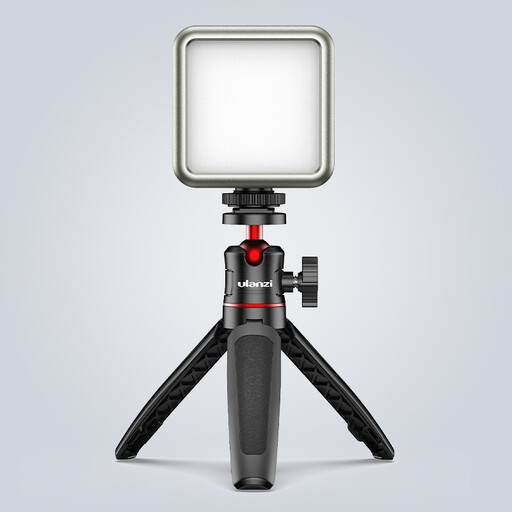
Compact battery-powered panels can suit a space-saving set-up, such as the VIJIM VL120 Bi-Color.
These Joybuy picks are compact, portable lights for photography. Take a test shot to see whether the size of the lit area and the positioning suit your framed print.
 No image available
This portable model is designed for a compact, mobile photography set-up.
The product specifications list a magnetic base, 1/4-inch thread and a 500 mAh battery.
 No image available
This compact light is an option if you’re looking for a small, portable light source with adjustable output.
The product title lists dimmable output, a range of 2500–9500 K, a 2000 mAh battery and a magnet. Use a standard 5V adapter; keep it away from moisture and don’t look directly into the light.
Not necessarily. The Canadian Conservation Institute describes this positioning as a way to light objects evenly, but check whether the glass in your framed print reflects the lights from the camera position. A polarising filter can reduce some reflections; Nikon describes this effect too.
Set both lights to the same level and adjust the camera’s white balance to match the lighting. Canon Europe explains that white balance helps you capture the desired colours in challenging lighting conditions; a stated CRI rating does not replace this camera adjustment.
Not necessarily: a small panel does not guarantee even lighting across a large area. Compare the centre with the corners in a test shot, and consider using two separately positioned lights if you have the space.
For online consumer purchases, you generally have a statutory 14-day cooling-off period after delivery, subject to exceptions; ACM ConsuWijzer explains this period. You are also entitled to a statutory guarantee if a product does not perform as you could reasonably expect under normal use. According to ACM ConsuWijzer, there is no general fixed two-year guarantee period in the Netherlands.
Electrical appliances placed on the EU market must meet the applicable product requirements; the Dutch government lists a CE mark as a requirement for such products. According to Your Europe, the mark is the manufacturer’s declaration that the product met EU requirements when it was placed on the market. It does not independently assess colour reproduction or suitability for photography.