Who is this choice relevant to?

Photographers of prints behind glass

You want to position the light so it doesn’t create distracting reflections in the glass from your camera position. Where you place the light matters more than the stated brightness of a single panel. The Canadian Conservation Institute describes light placement as part of photographing heritage objects.

Creators of colour-critical reproductions

You want to capture print colours consistently, so you’ll need to consider adjustable white light, a fixed white balance and a test shot with a colour reference. Manufacturer specifications for colour rendering don’t measure the colour accuracy of your finished photograph.

Photographers of large or varied prints

You want to check that the entire print is evenly lit and that the panels, stands and power supply suit your workspace. The Canadian Conservation Institute describes using lights on either side to illuminate objects evenly.

Which buying considerations matter most?

Two adjustable panels

Best suited to: illuminating a larger print or a series of reproductions, with the flexibility to position each light separately on either side.

Bear in mind: two lights and stands take up more space and require more set-up time. An angle of around 45 degrees is a starting point, not a guarantee against reflections.

One panel with light modifiers

Best suited to: illuminating a smaller print or a single workspace, with the option to shape the light using a diffuser or grid.

Bear in mind: one light source may create differences between the centre and edges of a wide print; a softbox won’t automatically eliminate reflections in the glass.

Compact battery-powered light

Best suited to: photographing a small print or working in different locations where portability matters.

Bear in mind: check that the compact panel can provide the distance, angle and coverage you need for your print.

Consideration What to look for when buying Who is this important for?
Reflections in glass Check that the lights can be repositioned and that there’s room to move them from side to side. If I’m photographing a print behind glass, I want to be able to adjust the light position from where I’m shooting. Around 33% of consumers give reducing reflections top priority.
Colour and white balance Check the adjustable white-light range and take a test shot with a colour reference. If I want to capture print colours consistently, I look for consistent white light and a fixed white balance. Around 27% of consumers prioritise colour control.
Coverage of the print Measure your largest print and compare the centre and corners in a test shot; only compare lux values at the same distance and setting. For a large print, I want both the centre and corners to be well lit. For around 27% of consumers, full coverage is the most important buying priority.
Space and power Check how much room you’ll need to set everything up and which adapters, batteries, stands and light modifiers are included with the model. If I photograph in different workspaces, I want to know in advance how I can position and power the panel. Around 13% of consumers prioritise portability.

Common buying mistakes

  • Assuming a high lux value means even lighting

    A lux value applies to a specific measurement distance and setting, and doesn’t tell you how evenly the whole print will be lit. Take a test shot of the entire print.

    Only compare values at the same distance and light setting. Godox specifies a measurement distance of 0.5 m for the LEDP260C; Nanlite gives a value for the PavoSlim 60B at 1 m.

  • Assuming diffusion will eliminate reflections in the glass

    The angle of the light partly determines what the camera picks up in the glass. A diffuser can shape the light, but it can’t guarantee that reflections will disappear.

    First decide where to position the camera, then test the distance and angle of the lights. The Canadian Conservation Institute describes lighting from either side as a starting point for even illumination, not a guarantee for every frame.

  • Comparing kits without checking what’s included

    A panel or kit will only work for your set-up if you have the necessary power supply, mounting equipment and light modifiers.

    Check what’s included with the exact model: NP-F batteries aren’t supplied with the NEEWER NL660 kit or the amaran P60x.

    You may need to buy batteries separately for these models; also check whether you’ll need to arrange a second light or stands.

Brands to consider

Godox

The LEDP260C is an adjustable white-light panel for anyone who wants to choose the positioning and whether to use a second light source.

  • The Godox manual specifies a colour temperature of 3300–5600 K and CRI >95. The stated illuminance is 2050–2200 lux at 0.5 m, depending on the setting.
  • For battery use, the manual lists NP-F970 batteries, which must be bought separately. The specifications don’t prove that a shot will be free from reflections.

Nanlite

The PavoSlim 60B is a panel for anyone looking to include diffusion, a grid and flexible light placement in their set-up.

  • For this model, Nanlite specifies 2700–6500 K, CRI 95 and 8156 lux at 1 m at 5600 K. The product information lists a softbox and grid among the included accessories.
  • These are manufacturer specifications; the lux value is based on the stated measurement distance and setting.

amaran

The P60x is a bi-colour panel supplied with a softbox and grid, for anyone who wants to set up a single panel with light modifiers.

  • The manufacturer specifies a colour temperature of 3200–6500 K and CRI ≥95.
  • The Dutch product information lists mains power or two NP-F batteries; the batteries aren’t included. Check the power supply and contents of the model you choose.

NEEWER

The NL660 two-light kit includes two bi-colour panels, diffusers and stands, so you can try positioning lights on either side.

  • NEEWER specifies 3200–5600 K, CRI 96+ and up to 3300 lux at 1 m per panel.
  • The kit includes adapters but no NP-F batteries. The manufacturer’s specifications aren’t an independent assessment of colour rendering for framed prints.

Ulanzi

The VL49 RGB is a compact, rechargeable option for small scenes or a portable set-up.

  • Ulanzi describes adjustable white light from 2500–9000 K and states that battery life depends on the brightness setting.
  • The manufacturer doesn’t describe any tested results for evenly lighting a large framed print.

Joybuy products

These Joybuy products are compact photography and fill lights for portable set-ups. Take a test shot to check that the light reaches the whole print and doesn’t create distracting reflections in the glass.
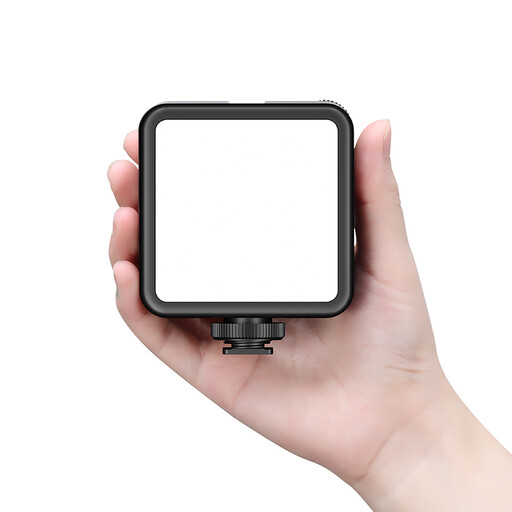
Ulanzi VL81 Rechargeable LED Video Light Black

Ulanzi VL81 Rechargeable LED Video Light Black

A rechargeable video light for a portable photography or video set-up; check that it provides the coverage you need for your print.

View at Joybuy
Ulanzi LM001 Portable Mini Fill Light, Magnetic LED Photography Light, 500 mAh Battery

Ulanzi LM001 Portable Mini Fill Light

A mini fill light for product photography when you need a compact, portable set-up.

The product name specifies a magnetic base and a 500 mAh battery.

View at Joybuy

Frequently asked questions

Does positioning the lights at 45 degrees prevent all reflections in the glass?

No, an angle of around 45 degrees doesn’t guarantee that every reflection will be avoided. The Canadian Conservation Institute describes placing lights on either side at 45 degrees as a way to achieve even illumination and reduce glare. Check the glass from your camera position and move the lights if a reflection is still visible.

Should you remove the glass for a colour-critical reproduction?

If you can safely remove the print from its frame and want to photograph the print itself, Printbeat recommends taking it out from behind the glass to avoid reflections that can be difficult to correct. If you need to photograph the complete framed presentation, leave the glass in place and assess the lighting with test shots.

What should you check about power and safe use?

Follow the instructions for the exact panel and check which adapter and batteries are included. The Godox manual warns against exposure to moisture, among other things, and lists NP-F970 batteries as an optional extra that must be bought separately.

What can you do if a product is faulty, and how does the online cooling-off period work?

For a consumer purchase in the Netherlands, the seller must offer a solution if a product is faulty; there is no fixed statutory warranty period that applies to every product. For a standard online purchase, you generally have 14 days from delivery to change your mind, subject to statutory exceptions.

What product safety requirements apply to LED panels in the Netherlands?

Applicable European safety requirements apply to electrical and electronic equipment. The Dutch government describes CE marking and an EU declaration of conformity as part of the applicable compliance requirements; the relevant directives also depend on the exact model. A CE logo isn’t an independent quality mark for light performance.
