
Bag maker with colour variations
Photographs the same bag in different fabrics or colours and wants the colour to remain recognisable between shots. Adobe says product photos can show details such as colour, size and silhouette.


For photos of a whole bag, an adjustable panel with a diffuser or suitable softbox is a sensible starting point; for seams and other small details, a compact panel may be enough as a fill light. Compare the adjustable white-light colour, power options and what’s included, then take test shots to assess colour and shadows in your setup. Manufacturer specifications such as CRI and lux don’t determine the final image on their own.
Photographs the same bag in different fabrics or colours and wants the colour to remain recognisable between shots. Adobe says product photos can show details such as colour, size and silhouette.
Wants to light a whole bag and its background effectively, with room to assess shadows and light placement.
Works at a small table and wants to highlight specific areas, such as fabric, seams or fastenings.
Suitable if: you regularly photograph a whole bag from the same position. The manufacturer lists adjustable white light, a diffuser and a mains adapter for the NEEWER NL660.
Trade-off: check whether your version includes a stand; not every NL660 set does.
Suitable if: you want to use a separate softbox to soften the light. amaran lists a compatible softbox and mains power for the P60x.
Trade-off: allow space for the panel and softbox, and check current availability.
Suitable if: you have limited workspace or want to light seams and other small areas separately. The manufacturer describes the Ulanzi VL49 with fixed white light as a compact lamp with a built-in battery.
Trade-off: the VL49 with fixed white light has no adjustable colour temperature; the VL49 RGB is a different version.
Start with the type of photo you need: comparing colour variations, showing fabric texture, lighting a whole bag or creating a compact setup. Adobe describes product photography as a way to show details including colour and silhouette, so assess your test shot too—not just the panel specifications.
| What to consider | What should you check? | Who is this important to? |
|---|---|---|
| Recognisable fabric colour | Check the white-light range, keep your setup consistent and compare a test shot with the bag. | If I photograph colour variations, I want the fabric colour to remain recognisable between shots. Around 36% of consumers give colour consistency their top priority. |
| Soft shadows and visible texture | Check whether a diffuser or compatible softbox is included or available, and try different light angles. | When I photograph seams and weave, I want soft shadows without losing the texture. Around 29% of consumers prioritise shadow control while keeping the fabric texture visible. |
| Coverage of the whole bag | Compare the bag and shooting area with the panel setup; only compare lux figures at the same measuring distance and relevant light setting. | For full-bag photos, I want even my largest bag to be lit effectively. Around 21% of consumers give coverage of the whole bag top priority. |
| Compact, complete setup | Read the contents listed for the exact version: check the panel, diffuser, stand or clamp, mains adapter and any battery. | When I work at a small table, I want to know which parts will complete my setup. Around 14% of consumers prioritise a compact, practical and complete setup. |
A lux figure measured at 0.5 m cannot be directly compared with one measured at 1 m. Godox specifies the measuring distance for the LEDP260C, as does NEEWER for the NL660.
Only compare figures taken at the same measuring distance and relevant setting. Then take a test shot to see whether your largest bag is lit effectively in your setup.
What’s included varies by model and sometimes by version. A diffuser, softbox, stand or battery may not be included.
Check what’s in the box and whether the accessories are compatible with the exact version before comparing models.
The manufacturer describes different lighting features for the VL49 with fixed white light and the separate VL49 RGB version.
Check the full model version and its white-light specifications, not just the VL49 name.
The LEDP260C is a bi-colour panel for a fixed product photography setup.
The NL660 is an adjustable bi-colour panel. What’s included varies between the lamp on its own and the version with a stand.
The P60x is a bi-colour panel for which the manufacturer lists a matching softbox.
The VL49 with fixed white light is designed for a compact detail setup; the VL49 RGB is a separate version.
This Joybuy option is a compact fill light for highlighting specific product details, such as fabric or seams; the available product information does not show it to be a proven replacement for the main light when photographing a whole bag.
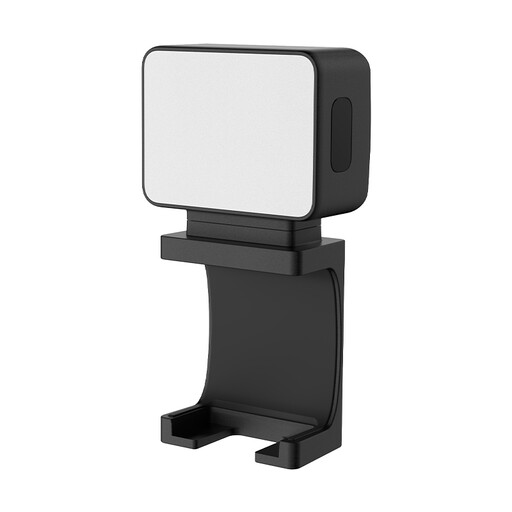 Image unavailable
This portable mini fill light is designed to provide extra lighting for product photography. The product title mentions magnetic attachment and a 500 mAh battery.
Start with a single diffused main light placed at an angle, then take a test shot of the whole bag and a fabric detail. Adjust the light angle or diffusion until the seams and weave remain clear. Diffused light can soften harsh shadows, but placement also affects how much texture is visible.
Mixed light sources and automatic white balance can change how colours appear. Keep the lighting setup consistent between shots, set the white balance appropriately and compare test images with the actual fabric.
It depends on the exact version. According to the manufacturer, the NEEWER NL660 is available as a lamp on its own or as a version with a stand; NP-F batteries are not included. Godox lists an adapter with the LEDP260C and offers NP-F970 batteries separately as an option. Also check whether your set includes a compatible diffuser or softbox.
If the product is faulty, contact the seller. According to the Dutch government, the seller must resolve the problem, and the manufacturer’s guarantee is in addition to your statutory rights. The Dutch government says there is no fixed statutory guarantee period in the Netherlands. Different terms may apply to business purchases, so check the relevant terms and conditions of sale.
No. According to the European Union, CE marking is required only for products covered by harmonised rules that require it. The manufacturer applies the mark as a declaration of conformity; check the information for the specific version and power supply.