Who is this for?

Embroiderers filming thread colours

If you want to capture different thread shades and stitches clearly, check the lighting set-up and camera white balance for each recording. Canon Europe explains how to review and adjust images on the camera screen.

Crafters making embroidery demonstrations

In videos where your hands move over an embroidery hoop, the position of the light and shadows on the stitches are important considerations. Canon Europe describes fill light as a way to reduce shadows cast by the main light source.

Filming at a small worktable

When there’s little room for a light, camera and embroidery, size, mounting and power all matter. A compact panel may be easier to position, but check that it lights the embroidery hoop evenly enough.

What should you look for?

Larger bi-colour studio panel

A good fit if: you want to light an embroidery hoop and moving hands across a larger area, and have room for a panel beside the table.

Trade-off: check whether the version you choose includes a stand and whether you can position the light safely.

Flat panel with adjustable white light

A good fit if: you want to adjust the colour temperature to suit changing daylight and room lighting.

Trade-off: check the power supply and mounting for the version you choose. Stated colour values don’t prove how thread will look on your camera.

Compact RGB battery-powered panel

A good fit if: a larger panel won’t fit beside your embroidery table, or you’re looking for a portable fill light.

Trade-off: focus on the adjustable white light and check that the embroidery hoop is lit evenly at your chosen distance.

What to consider What to look for when buying Who is this important for?
True-to-life thread colours Film test footage with different thread shades and check the white balance and adjustable colour temperature. I want to be able to assess different thread shades and stitches clearly on screen. Around 31% of consumers say true-to-life thread colours are their top buying priority.
Shadows from your hands Check whether you can adjust the panel angle and whether a diffuser or fill light will work in your set-up. If my hands cast shadows over the stitches while I embroider, I want to be able to position the light so the details remain visible. Around 25% of consumers say reducing shadows from their hands is their top priority.
Light bands in video Test the light with your own camera, usual shutter speed and intended dimming level. I want to avoid distracting bands in my embroidery videos, so I test using my own recording settings. Around 25% of consumers say flicker-free video is their top buying priority.
Space, mounting and power Check the dimensions, included mounting equipment, whether a stand is supplied and whether the power supply will suit the length of your recording sessions. My light needs to fit on my small worktable without blocking the camera or embroidery. Around 19% of consumers say limited workspace and positioning are their top buying priority.

Common pitfalls

  • Assuming a high CRI guarantees accurate thread colours

    A CRI value is a stated light specification. The final colour rendering also depends on your camera and lighting set-up.

    Film different thread shades under the lighting you plan to use and check the white balance.

  • Assuming every panel version comes as a complete set

    The stand included with the NEEWER NL660 varies by version; the manufacturer states that compatible NP-F batteries are not included.

    Before buying, check the exact version, what’s in the box and how it mounts.

    You may need a separate stand or compatible battery for your set-up.

  • Comparing lux figures without checking the measurement distance

    Ulanzi states that the VL49 RGB delivers up to 800 lux at 0.5 m. This isn’t directly comparable with a figure measured at 1 m.

    Only compare figures measured on the same basis, and test whether the whole embroidery hoop gets enough light at your intended distance.

  • Assuming ‘suitable for video’ means there’ll be no light bands

    In some set-ups, LED lighting and camera settings can produce visible bands. Nikon explains that using the right shutter speed settings may help with certain cameras.

    Test with your own camera, shutter speed and dimming level before using the set-up.

Brands and models to consider

NEEWER

The NL660 is a bi-colour studio panel for anyone who wants to control the direction of the light and the panel angle around a worktable.

  • NEEWER lists a diffuser, mains adapter, adjustable colour temperature of 3200–5600 K and CRI 96+ for the NL660.
  • Whether a stand is included depends on the package version; the manufacturer says compatible NP-F batteries are not included. These specifications are not independent colour or flicker measurements.

Godox

The P260C Pro is a flat bi-colour panel for anyone looking for a wide white-light adjustment range and several control options.

  • Godox lists a colour temperature of 2800–6500 K, average CRI/TLCI of at least 98, and control on the light or via Bluetooth for this model.
  • The claim that it produces softer light comes from the manufacturer. Check the power supply and mounting for the version on offer.

amaran

The P60x is a bi-colour panel for a set-up where adjustable white light and control on the light or via an app are useful.

  • Aputure lists 3200–6500 K, CRI ≥95, TLCI ≥97 and active cooling for the amaran P60x.
  • The specifications don’t say whether the cooling fan is audible when recording sound; test it in your own set-up.

Ulanzi

The VL49 RGB is a compact panel for lighting your work up close or as a fill light when table space is limited.

  • Ulanzi lists a 2000 mAh battery, adjustable white light from 2500–9000 K and up to 800 lux at 0.5 m.
  • This maximum illuminance isn’t directly comparable with panel figures given at 1 m. Check whether your chosen set-up lights the embroidery hoop evenly enough.

Joybuy products for a compact set-up

These Joybuy products are compact, portable LED video lights for a small embroidery workspace or as fill lights.
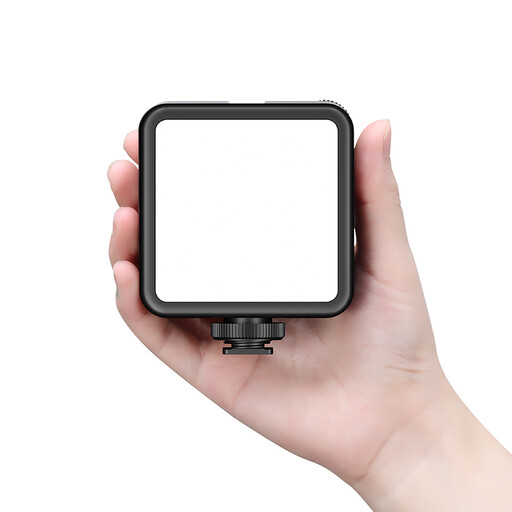
Ulanzi VL81 Rechargeable LED Video Light Black

Ulanzi VL81 Rechargeable LED Video Light Black

The built-in battery and compact, lightweight design make it a good fit for a portable set-up around your worktable.

According to the product description, the light has adjustable brightness and a colour temperature of 3200–5600 K.

The product description mentions USB-C and a cold shoe mount.

View at Joybuy
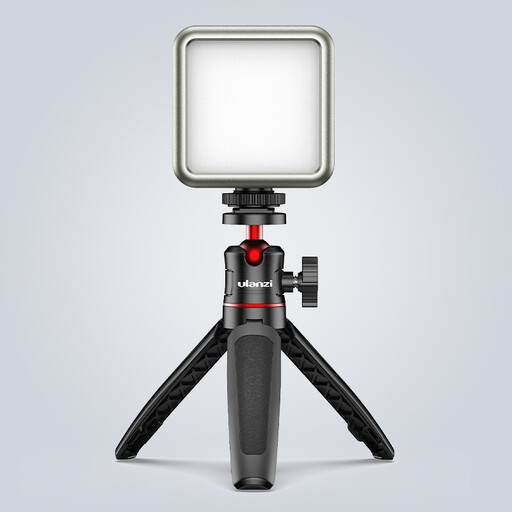
Ulanzi VL49 RGB Video Light with 2000 mAh battery

Ulanzi VL49 RGB Video Light, 2000 mAh

The compact design and magnet can be useful when you have little room for a freestanding panel.

The product title lists an adjustable colour temperature of 2500–9500 K and a 2000 mAh battery. Ulanzi lists CRI >95 for this model; this doesn’t guarantee how thread will look on your camera.

Ulanzi gives a maximum illuminance of 800 lux at 0.5 m; check how well it covers your embroidery hoop at the distance you film from.

View at Joybuy

Frequently asked questions

Can I judge thread colours based on a high CRI value alone?

No. A stated CRI doesn’t guarantee how your thread will look in a specific camera recording. Film test footage with several shades and check the lighting and white balance.

Where should I position the light if my hand casts a shadow?

Start with a main light angled beside your work and make a test recording while you embroider. If the shadow hides details, try a different panel angle or soft fill light on the opposite side. Canon Europe describes fill light as a way to reduce shadows from the main light.

What should I check about the stand, battery and consumer rights?

Check whether the version you choose includes a stand and a suitable power supply. The stand included with the NEEWER NL660 varies by version, and the manufacturer says NP-F batteries are not included. When you buy as a consumer, you have a legal guarantee from the seller. Online purchases generally come with a 14-day cooling-off period after delivery, subject to legal exceptions; ACM ConsuWijzer explains these rights.

What should I know about electrical safety and disposal in the Netherlands?

Electrical equipment sold in the Netherlands must comply with the applicable European product rules. Business.gov.nl states that the responsible manufacturer must arrange the required conformity assessment, CE marking and EU declaration of conformity; a CE mark is not an independent quality mark. According to European WEEE information, discarded electrical equipment should be collected separately and not put in unsorted waste.
