
Coffee photographer working at a small table
You photograph a single cup or glass and want to direct and soften the light without setting up a large studio.


Choose a compact panel if you’re photographing a single cup or often move your light around. A larger studio panel is better if you also want to light a background or several objects and have room for your setup. In either case, consider reflections, the light modifier, power supply and mounting: extra lighting effects matter less than light you can direct and soften effectively.
You photograph a single cup or glass and want to direct and soften the light without setting up a large studio.
You want to photograph coffee, milk and any packaging under artificial light, so you pay attention to the light colour and white balance.
You set up each shoot from scratch and want to know in advance which power supply, mounting options and accessories come with your chosen kit.
Choose this if: you usually photograph a single cup or a small scene and often move your light around.
Trade-off: a smaller light source requires careful positioning to manage reflections. Also check the runtime and what’s included in the kit.
Choose this if: you also want to light a background or several objects and have room to position the panel beside or behind the drink.
Trade-off: the setup takes up more space. Check whether your chosen kit includes a stand and the power supply you need.
| What to consider | What should you check? | Who is this important for? |
|---|---|---|
| Reflections and shadows | Check the size of the light source, whether a diffuser is included and whether you can direct the panel from beside or behind the drink. | If I want to control unwanted reflections on a cup or glass, I focus on the position and softness of the light. Around 30% of consumers making this choice prioritise controlling reflections. |
| Colour rendering | Check the stated colour temperature and colour rendering for the exact version, then take a test photo with the white balance set. | When the colour of the coffee, milk and background matters, I want to assess colour temperature and colour rendering separately. Around 30% of consumers making this choice prioritise natural-looking coffee colours. |
| Light at the shooting distance | If a lux figure is given, check the measurement distance and assess the light on your own table using the settings you plan to use. | If I need enough adjustable light at my chosen distance, I only compare figures when they’re based on the same measurement conditions. Around 20% of consumers making this choice prioritise light output at the shooting distance. |
| Setup and power | Check the mounting options, adapter and kit contents, and whether any battery you need is sold separately. | When I often photograph in different locations, I want to know how to mount the panel and power it. Around 20% of consumers making this choice prioritise a practical setup and power supply. |
A lux reading relates to a specific measurement distance and set of settings. For example, NEEWER specifies 600 lux at 0.5 m for the NL-116AI; this figure can’t be directly compared with one measured at a different distance.
Only compare illuminance figures measured on the same basis, and test your chosen diffuser at the distance you’ll be shooting from.
What’s included can vary between versions. NEEWER specifies an adapter for the NL660, but NP-F batteries aren’t included; whether a stand is included also depends on the kit you choose.
Check the contents of the exact version and make sure they suit your preferred mains or battery power and mounting requirements.
Colour temperature describes the colour of the light; colour rendering is a separate property of the light source. An RGB effect therefore won’t necessarily provide controlled white key light for coffee and milk.
For your key light, assess the white-light settings and colour rendering. Use RGB when you deliberately want to add a splash of colour, and check the white balance of your shot.
NEEWER offers, among other products, a compact tabletop panel and a larger bi-colour panel. The models differ in their setup and power options.
The Godox LEDP260C is listed in the manual for uses including product photography.
The amaran P60x is a bi-colour panel whose stated package contents include light modifiers.
According to Ulanzi, the Ulanzi VL49 RGB is a compact, rechargeable panel that you could consider as an accent or fill light.
These compact LED video lights are designed for portable or supplementary lighting in product and coffee photography. An RGB model can work as an accent or fill light; if you’re buying a bundle, also check that the included mount fits your camera.
 No image available
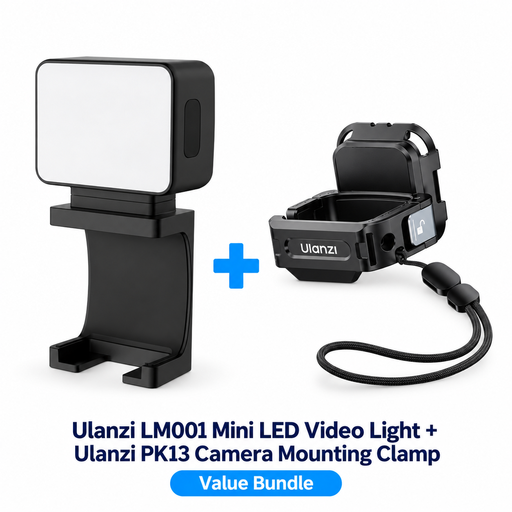
The compact light is described as supplementary lighting for indoor shoots.
Built-in 500 mAh battery; the bundle includes a PK13 clamp designed for the DJI Osmo Pocket 3.
 No image available
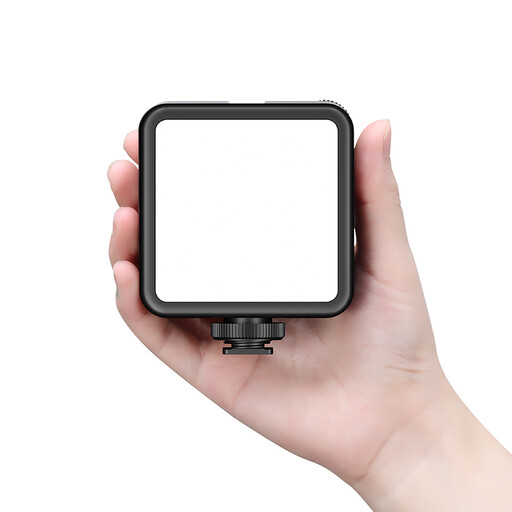
The product description mentions product photography and a portable setup with a built-in battery.
81 LEDs, cold shoe mount, stepless brightness control and adjustable colour temperature from 3200–5600 K.
 No image available
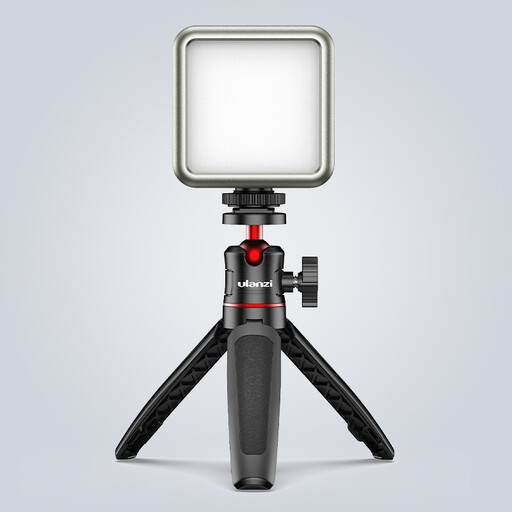
This compact RGB light works well as an accent or fill light if you already have a suitable key light. To keep coffee colours looking natural, assess reflections and white balance.
Dimmable, with a built-in 2000 mAh battery and a magnet on the back.
Try side lighting and backlighting, then compare the reflections on the cup, glass and surface of the drink. Adjust the position and softness of the light before adding more lamps.
White balance can help correct a colour cast, but colour temperature and a light source’s colour-rendering properties are not the same thing. Set the white balance carefully and, ideally, assess colours while you’re shooting too.
Check the power options for the exact model and what’s included in the kit. According to NEEWER, the NL-116AI has a built-in battery; NEEWER lists NP-F batteries, sold separately, for battery power with the NL660.
According to the Dutch government, when you buy from a business at a distance, you generally have a 14-day cooling-off period, although applicable exceptions may apply. If a product is faulty, the seller is your point of contact for the statutory guarantee. There is no fixed statutory guarantee period in the Netherlands.
No. The European Commission explains that by applying the CE marking, the manufacturer declares that a product meets the applicable EU product rules; there is no central EU body that issues general CE approval. The requirements that apply depend on the specific product.