
Food photographer focused on colour accuracy
You want cheese, fruit and garnishes to look true to life under artificial light. Compare adjustable white light and take a test shot using a suitable white balance.


For a cheeseboard under artificial light, choose an adjustable white LED panel that can illuminate the whole board from your preferred position. For natural-looking colours, check the stated colour rendering and adjust the white balance. A compact battery-powered panel takes up less space, while a larger panel with a diffuser needs more room. Check the power supply and what’s included in the set you choose. Nikon USA recommends using directional light from the side or at an angle from behind for food photography.
You want cheese, fruit and garnishes to look true to life under artificial light. Compare adjustable white light and take a test shot using a suitable white balance.
You photograph a wider arrangement and want to control the shadows. The panel size, diffusion and where you can position the light all play a part.
You work at a small table or often change locations. Look for a built-in battery, a suitable mounting option and the accessories included in the set you choose.
First decide what matters most to you: colour rendering, even light across the whole board, a flexible setup or a complete kit.
| Buying concern | What to look for | Which shoppers prioritise this? |
|---|---|---|
| Colour rendering | Compare the stated CRI and colour temperature of the exact model, then adjust the white balance to suit the light in the room. | If I want to capture cheese and garnishes as faithfully as possible, colour rendering is my main consideration. Around 36% of shoppers say colour rendering is their biggest buying concern. |
| Soft shadows | Check the panel size, diffuser and dimming controls, and think about where you can position the light next to the board. | If I want to light the whole board without harsh shadows, I look at the light source and how I can direct it. Around 29% of shoppers prioritise soft, adjustable lighting. |
| Flexible positioning | Check the dimensions, mounting options and power supply, and see whether the version you choose includes a tabletop stand. | When shooting in a small or changing space, I want to be able to position the light without relying on a fixed setup. Around 21% of shoppers give top priority to flexible positioning. |
| Complete kit | Compare the contents list for the exact version and check whether a stand, power supply and diffuser are included. | If I want to put together a usable setup straight away, I want to know in advance what else I’ll need. Around 14% of shoppers consider a complete kit most important. |
The adjustable range alone doesn’t tell you how natural the cheese will look in a photo. Colour rendering and white balance matter too.
Compare the colour specifications of the exact model and take a test shot under the lighting you plan to use.
RGB features don’t tell you whether a small panel can adequately light the whole cheeseboard from the distance available.
First assess coverage and shadows using white light. Choose RGB if you’ll actually use the colour effects too.
The contents vary between the NEEWER NL660 versions reviewed; an NP-F battery mentioned in the specifications is not included.
Before buying, check the contents list and power specifications for the exact version you’re choosing.
The features mentioned apply to the listed models and versions; this isn’t an independent comparison of brands.
Worth considering for a small tabletop setup with the NL-116AI or a larger arrangement with the NL660. Check which version you’re choosing.
The VL49 RGB is worth considering if you’re looking for a small panel for accent lighting or a compact setup.
The P96 is a compact bi-colour panel for a small setup where portability matters.
The P260C Pro is a larger bi-colour panel for anyone with room to position lights around a wide setup.
Joybuy picks for compact, portable LED lighting for photography.
 Image unavailable
Suitable for a small, portable photography setup.
Magnetic attachment and 500 mAh battery; described in the product name as a waterproof camera light.
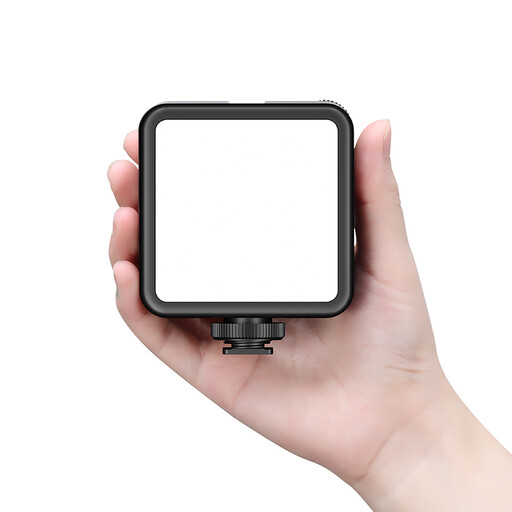 Image unavailable
A rechargeable LED video light for a shooting location where you don’t want to use mains power.
Black version.
Start with one panel beside or at an angle behind the board, then check the shadows in a test shot. Try a diffuser for softer light and, if needed, a white card on the opposite side. Nikon USA describes directional side lighting or backlighting as an approach to food photography.
Yes, but take a test shot to check whether differences in colour temperature affect the colour of the cheese. Nikon USA notes that shooting in RAW gives you more scope to adjust the white balance afterwards; also assess the light as you shoot.
According to ACM ConsuWijzer, with a standard online purchase you generally have a 14-day cooling-off period after delivery, although exceptions apply. You’re also entitled to a legal guarantee if the product doesn’t do what you could reasonably expect under normal use. In the Netherlands, there’s no fixed period that applies equally to all products.
According to the European Union’s Your Europe website, CE marking is required for products covered by applicable EU rules. Check the information for the panel and any mains adapter; a CE mark on its own doesn’t prove photographic colour quality.
Not necessarily: the European Commission distinguishes between light sources and complete luminaires. Energy labelling rules for light sources don’t automatically apply to a complete luminaire; the classification of the specific product determines which rules apply.