
Sellers of full calligraphy sheets
You want to capture the paper and writing clearly from edge to edge, and can test where to position a key light.


For a full sheet of calligraphy, choose a panel you can position outside the camera’s field of view and use to assess how evenly the light covers the whole sheet. A larger panel with a diffuser is a sensible starting point. For a small workspace or close-up shots, a compact panel may be enough as a fill light, but test for reflections and check the white balance with your own paper.
You want to capture the paper and writing clearly from edge to edge, and can test where to position a key light.
You want to reduce distracting bright spots without losing important strokes and details from view.
You’re looking for a light that’s easy to set up and put away, and want to check whether a compact panel covers enough of the sheet from your chosen distance.
Suitable if: you regularly photograph a full sheet and have room to position the light beside the camera.
Keep in mind: check how evenly the light covers your own sheet, and allow room for the panel and, if needed, a stand.
Suitable if: your workspace is small, you want to put the light away after use, or you mainly photograph details.
Keep in mind: at your intended shooting distance, check whether the panel covers a full sheet evenly enough.
| What to consider | What to look for | Who it matters to |
|---|---|---|
| Even light across the whole sheet | Compare the panel size and positioning distance. Take a test shot of the full sheet and check the edges as well. | When I photograph the full sheet for my online shop, I want the writing to remain clearly legible right to the edges. Around 36% of consumers prioritise even lighting across the whole sheet. |
| Reflections on glossy ink | Choose a light you can direct or soften, and adjust the angle during a test shot. The Smithsonian Institution Archives describes reflection hotspots on highly reflective optical discs, so assess the result on your own paper and ink. | When using glossy ink, I want to avoid bright spots obscuring important strokes. Around 29% of consumers give controlling reflections top priority. |
| Paper and ink colour | Check the colour temperature and colour rendering of the exact model, and also check the camera’s white balance with a test shot. | If I want to show different shades of paper and ink, I want to assess the image using the same lighting settings each time. Around 21% of consumers prioritise recognisable paper and ink colours. |
| Positioning and power | Check the mount and find out which adapter, battery, diffuser or stand is included with the exact version. | For a small table, I want to know whether the light and camera will both fit, and whether the power supply works with my setup. Around 14% of consumers give practical positioning and power top priority. |
A compact mount or portable design doesn’t prove that the light will cover a full sheet evenly.
First, photograph the whole sheet from your intended distance and check the centre as well as the edges.
Depending on your setup, you may also need a second light source, a mount or a diffuser.
A CRI rating is a manufacturer’s specification; white balance also affects how the camera captures paper and ink.
Keep your lighting settings consistent and compare a test shot with the original work.
The VL120 RGB and VIJIM VL120 Bi-Color have different stated colour settings. A battery may also be missing from some versions.
Before buying, check the full model name, the power supply for the Netherlands and what’s included in the box.
If a battery, suitable adapter or mount is missing, you may need to buy an extra part.
The P260C Pro is a larger bi-colour panel worth considering for a permanent setup around a full sheet.
The NL660 is an adjustable bi-colour panel to compare if you’re looking for a larger light source with a separate power supply.
The VIJIM VL120 Bi-Color is a compact, rechargeable panel for close-up shots or use as a fill light.
The P96 is a small camera panel for mobile use or focused fill lighting.
This selection includes related LED photography and video lights, from rechargeable camera and fill lights to a light for specific action cameras. Not all of them are larger panels designed to act as a key light; check each model’s intended use, version and suitability for your setup.
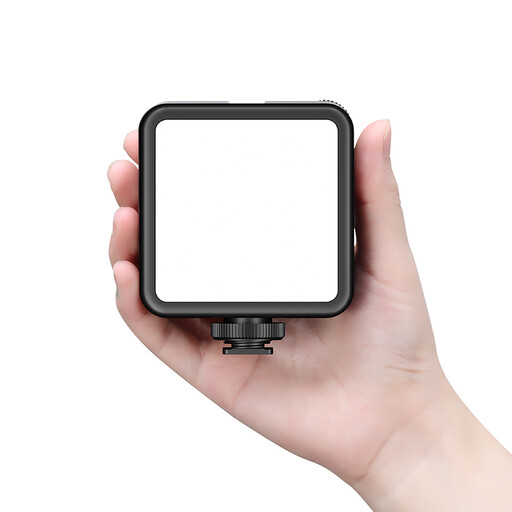 No image available
The product name describes a rechargeable LED video light for photography.
Version: Black.
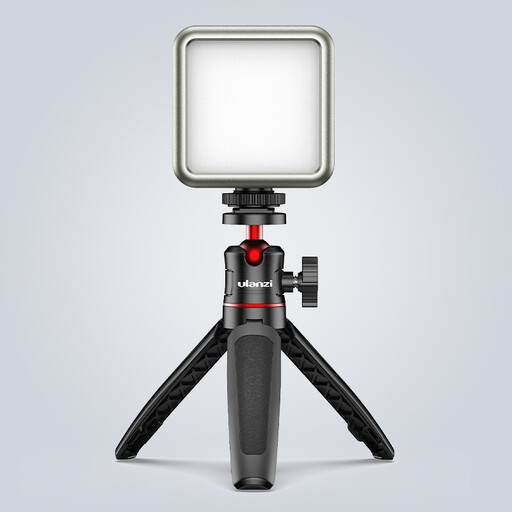 No image available
This portable video light may suit a setup where you want to adjust the colour temperature and brightness.
RGB; 2000 mAh battery; 2500 K–9500 K; four brightness levels; 187 g; rear magnet.
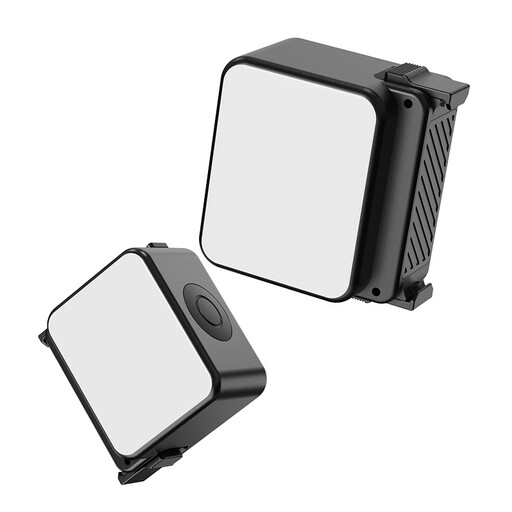 No image available
The product name positions this magnetic light as an accessory for cages for the DJI Osmo Action cameras listed; check that it’s compatible with your camera.
Magnetic light for DJI Osmo Action 3/4/5/5 Pro.
 No image available
The product name describes this model as a mini fill light for photography.
Magnetic LED light; 500 mAh battery.
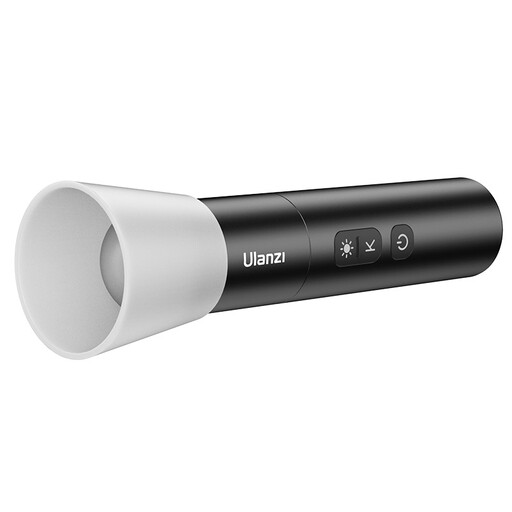 No image available
The product name describes this model as a photography torch, so it’s not the same type of product as a larger panel for a full sheet.
Bi-colour; 2000 K–5500 K; four brightness levels; zoom function; 2000 mAh battery; 187 g.
Start with a light you can direct and soften, positioned outside the direct reflection into the lens. Take test shots while adjusting the angle. The Smithsonian Institution Archives describes reflection issues with optical discs, not one fixed angle for calligraphy, so assess the results on your own paper and ink.
No. A CRI rating alone doesn’t guarantee the colour of the final photo. Manufacturers state the CRI for specific models; also check your camera’s white balance and compare a test shot with your own paper and ink.
It depends on the version and your setup. NEEWER lists an adapter with the NL660 version described, but no NP-F battery; SmallRig lists a built-in battery and cold shoe mount for the P96. Also check how you’ll position the panel on your table or stand.
For an online purchase as a consumer, you generally have 14 days from delivery to change your mind, subject to exceptions, according to ACM ConsuWijzer. This consumer rule doesn’t automatically apply to a business purchase for an online shop. The Dutch government also explains that statutory guarantees don’t have a fixed legal time limit.
According to the European Commission, CE marking is required when the relevant harmonised EU rules say it applies to the product. The marking alone doesn’t show how a panel will light a calligraphy sheet; check the product information for the exact version.