
Maker working with shiny beads
If you photograph glass or polished beads, you’ll want to show the detail without distracting hotspots. Nikon and broncolor explain how diffusion and light placement can affect the appearance of reflections.


Start by getting to grips with the lighting: a diffuser or light tent can soften reflections on shiny beads, but light placement still matters. Then choose a panel with a size, colour temperature setting and power supply to suit your photo table. A small battery-powered panel takes up less space, while a larger one needs more room. Manufacturer specifications cannot guarantee that your beads will look true to colour on camera or appear without distracting reflections.
If you photograph glass or polished beads, you’ll want to show the detail without distracting hotspots. Nikon and broncolor explain how diffusion and light placement can affect the appearance of reflections.
If you photograph beads in different colours, you’ll want to adjust the lighting and white balance. Canon Europe and Shopify Netherlands cover the importance of white balance and exposure in product photography.
If you need to position the light close to a single bracelet or want to pack everything away after a session, size, mounting and power all matter. SmallRig lists a cold shoe mount for the P96; for battery operation, Godox specifies separate NP-F970 batteries for the LEDP260C.
First, see whether you can control reflections using diffusion and a different angle of light. Then choose a panel size and power supply to suit your space and the way you take photos.
| What to consider | What should you check? | Who should pay more attention to this? |
|---|---|---|
| Reflections and shadows | Check whether you can use a diffuser or light tent, and whether the panel can be positioned at a useful angle without appearing in the shot. | If I photograph shiny beads, I want to be able to move bright reflections without losing sight of their shape. Around 36% of consumers put reflection control first. |
| Consistent colour reproduction | Compare the adjustable colour temperature of the exact model and take test shots using the lights and white balance you intend to use. | When photographing beads in different colours, I want my photos to remain comparable under the same lighting setup. Around 29% of consumers give consistent colour reproduction top priority. |
| Positioning on a small table | Check the panel dimensions and mounting. Test whether the light reaches the whole bracelet without getting in the way of your camera or hands. | If my work table has limited space, I want to position the light close to the bracelet and pack it away easily afterwards. Around 21% of consumers put compact positioning first. |
| What's included and how it is powered | Check whether an adapter, compatible battery or stand is included with the specific version, and which connection it requires. | If I want to use the setup straight away, I want to know whether I’ll need to buy a stand or battery separately. Around 14% of consumers value a complete kit with a suitable power supply most. |
A stated colour rendering value alone doesn’t tell you how your beads will look on camera. The light source and your camera’s white balance also affect the image.
Compare the specifications for the exact model and take test shots of your own beads under the lighting you plan to use.
Reflections can still be visible on small, shiny jewellery. Simply adding a light won’t automatically solve the problem of where to position it.
Try diffusion and move the light around to see how the reflections change before opting for more power.
NEEWER distinguishes between versions of the NL660 with and without a stand. NEEWER says NP-F batteries are not included.
Check the box contents and power specifications for the exact version you’re considering.
Godox lists different colour temperature ranges and features for these panels. Specifications for one version don’t necessarily apply to the other.
Check the full model number and compare only the details that apply to that version.
The LEDP260C and P260C Pro are different bi-colour panels for setups with more space.
The NL660 is a bi-colour panel for setups where you have room to position the light.
The P60x is a bi-colour panel for anyone weighing up app control or a more focused beam of light.
The P96 is a small battery-powered panel for a single bracelet or a tight shooting space.
The VIJIM VL120 Bi-Color is a compact, rechargeable panel for a portable setup.
This selection focuses on a compact, portable LED light for photography. Take a test shot to see whether the light spread suits your beaded bracelet.
 No image available
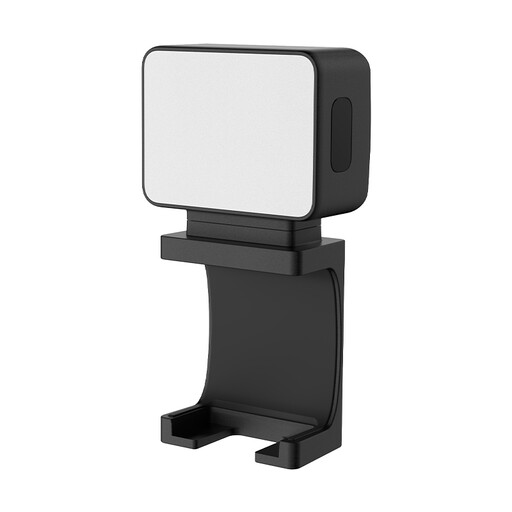
This portable mini fill light could suit a small or portable setup. Take a test shot to check whether it provides enough light for the bracelet.
Magnetic LED photography light. Battery: 500 mAh.
A light tent can spread and soften the light. Nikon explains this in its guide to jewellery photography. Take a test shot and, if needed, change the angle of the light to control reflections on your beads. Nikon’s example uses flash units and isn’t a test of an LED panel.
Take a test shot using the lighting you’ll actually use and adjust your camera’s white balance accordingly. An adjustable colour temperature or a high stated CRI doesn’t replace this check; Canon Europe and Shopify Netherlands cover white balance and exposure in product photography.
That depends on the version and the power source you want to use. NEEWER says NL660 Only includes a power adapter and diffuser, but no stand; the NL660 with Stand version also includes a stand. Separate compatible NP-F batteries are required for battery operation.
For a consumer purchase, contact the seller to find a solution. The Dutch government says there is no fixed statutory guarantee period in the Netherlands; what you can expect from a product depends, among other things, on the product itself and the information provided. A manufacturer’s warranty is in addition to your statutory rights.
CE marking is relevant when the applicable EU rules require it for the product. The Netherlands Food and Consumer Product Safety Authority explains the requirements for electrical products. The Low Voltage Directive applies to electrical equipment with a rated AC voltage between 50 V and 1000 V, while other rules may apply to different products. Don’t assume a specific light or adapter complies based on its product description alone.