
Seller of glossy cards
You want to take clear card photos without reflections obscuring the text or details. PSA explains that some card flaws only become visible when a card is tilted under light.


For glossy trading cards, a panel that lets you adjust its position and lighting angle is generally a better choice than focusing solely on high light output. Adobe explains that direct light can create harsh shadows and bright highlights, while diffusion can soften the light. Choose a larger standalone panel if you have room to position the light away from the camera angle. A compact battery-powered panel is better suited to a small or flexible workspace, but check the lighting with test shots and match the colour setting to your white balance. Before buying, check the power supply, included accessories and product information for the exact version.
You want to take clear card photos without reflections obscuring the text or details. PSA explains that some card flaws only become visible when a card is tilted under light.
As well as an overall shot, you want to show the edges, surface and any imperfections from a different lighting angle. According to PSA, subtle flaws can become visible when you tilt a card under light.
You want to move the light around easily and need to consider how it is mounted, its power supply and the area it illuminates.
First, work out whether you can position the light outside the reflection angle and soften it. Then compare the colour settings, power supply and space the setup will take up.
| What to consider | What should you look for? | Who should prioritise this? |
|---|---|---|
| Reflections on foil, sleeves and slabs | Check whether you can tilt or position the panel separately, and whether that version comes with a suitable diffuser or light modifier. | When photographing glossy cards, I want to be able to move the light spot without losing the text. Around 33% of consumers give reflection control top priority. |
| Edges and surface condition | Check whether the light can be dimmed and moved; take close-up photos from another lighting angle if needed. | When I want to show the edges and surface, I need to be able to move the light and take additional close-up photos. Around 27% of consumers prioritise visible card condition. |
| Accurate colours under artificial light | Compare the colour temperature range of the exact model and assess a test shot using a fixed white balance or reference card. | If I want cards to look consistent in colour across repeated photo sessions, I consider how the light and white balance work together. Around 20% of consumers give colour consistency top priority. |
| Space, mounting and power | Check the mounting options, adapter, package contents and whether you need to buy a battery separately. | At a small table or in a workspace that changes, I want to know where the light can go and what else I’ll need. Around 20% of consumers prioritise space, power and complete package contents. |
Light output figures can only be compared directly when the measurement distance and settings are the same.
Compare figures taken under the same measurement conditions and assess the lighting with a test shot at your own working distance.
Package contents vary by version. The NP-F970 battery for the Godox LEDP260C is sold separately; whether a stand is included with the NEEWER NL660 depends on the version you choose.
Before choosing a setup, check the package contents and power connection for the exact version.
Diffusion can soften harsh hotspots, but subtle card flaws may become visible when you view the card from another lighting angle.
As well as an overall shot, take extra photos to show the card’s condition from another lighting or card angle if needed.
According to Godox, the LEDP260C is designed for uses including macro and product photography. It’s a bi-colour panel for a standalone setup.
According to NEEWER, the NL660 is a bi-colour panel that can be positioned separately. The brand also describes a version that comes with a stand.
The P60x is a bi-colour panel worth comparing if you want to use a softbox and grid in a fixed setup.
According to SmallRig, the P96 3286BC is a compact bi-colour panel for a portable or small setup.
This selection features compact Ulanzi lights for a portable photo setup. Use test shots to see how evenly the light covers your cards.
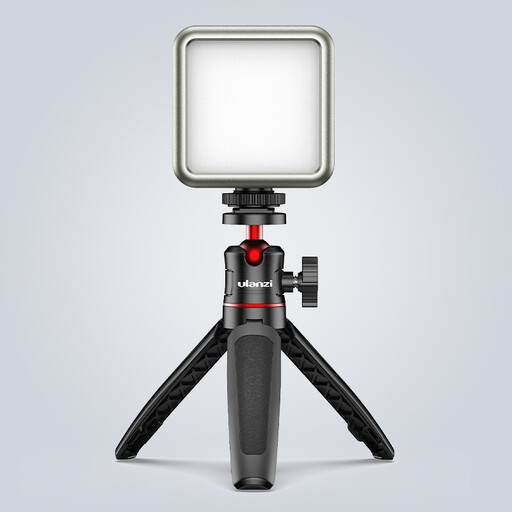 No image available
The title mentions macro shots and product photography. Take a test shot to assess how well the light covers a card.
The title lists RGB, dimming, a magnetic back, a 2000 mAh battery and 2500K–9500K.
 No image available
This compact light is described as a photography light. Use a test shot to check whether it suits your card size and setup.
The product name lists a magnetic back, a 500 mAh battery and a waterproof camera light.
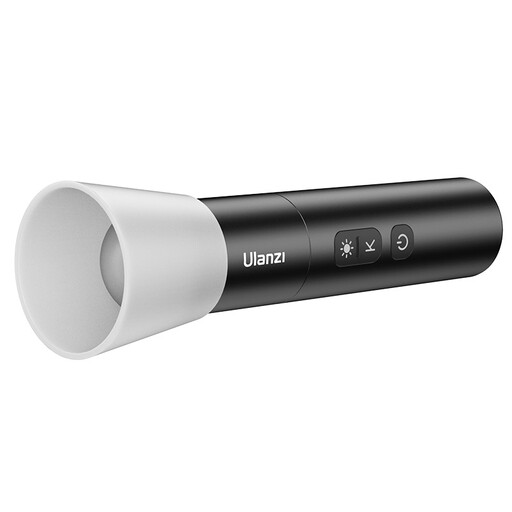 No image available
The product name also describes the LM07 as a torch. Use a test shot to check whether its beam suits your card photos.
The title lists 2000 K–5500 K, four brightness levels, a 2000 mAh battery, a weight of 187 g and a zoom function.
Start with a test shot, positioning the panel away from directly opposite the camera. Try a diffuser if sharp hotspots obscure details, and adjust the lighting angle for condition photos if needed. There’s no single angle that works for every card.
Keep your lighting setup and camera white balance as consistent as possible, and check a test shot against a neutral reference. Adjustable colour temperature gives you room to make changes, but a high stated CRI alone doesn’t determine how colours will look in the final photo.
No. Products sold in the Dutch market must carry a CE mark when the applicable EU harmonisation rules require it. Business.gov.nl and the European Union’s Your Europe explain that CE is a manufacturer’s declaration of compliance, not an independent quality mark for photography. Check the product information for the exact version.
No, there is no fixed statutory warranty period in the Netherlands. The Dutch government explains that a product must meet reasonable expectations and that you can contact the seller if it is faulty. ACM ConsuWijzer also explains that online consumer purchases generally come with a 14-day cooling-off period after delivery; statutory exceptions may apply.